Egyptian polymer banknotes…when will they be issued?
Egyptians are eagerly awaiting the release of new polymer banknotes in denominations of 10 and 20 Egyptian pounds. This marks the second or third time these banknotes have been expected to be issued, initially last November, but no action has yet been taken to introduce them to the market. It appears that Egypt is aiming to become the fourth Arab country to issue polymer banknotes. Kuwait was the first Arab nation to do so in 2013, followed by Saudi Arabia and the United Arab Emirates. Will we see these new banknotes in our hands soon?
2001 (The Beginning)
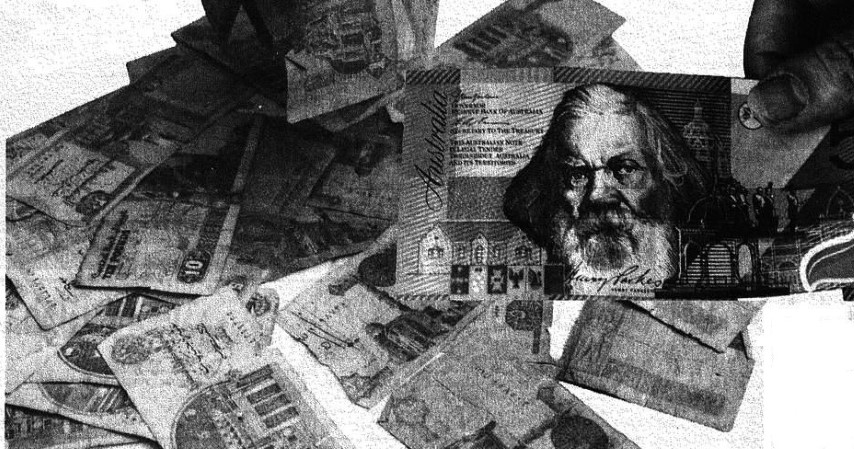
Details of polymer banknotes began to appear on the Egyptian scene in 2001 after the Egyptian newspaper Al-Ahram published a news item entitled “Plastic money that can withstand abuse,” which included details of a seminar organized by the Australian Embassy in Cairo in conjunction with the company that markets and promotes polymer technology. The seminar was attended by experts from the Central Bank and experts from Egyptian banks, as well as experts in forgery and counterfeiting research, the General Directorate of Financial Investigations, and the Criminal Investigation Department.
The seminar presented the characteristics and advantages of polymer banknotes, which are distinguished by their durability and four times the lifespan of traditional paper money, as well as their advanced protection against counterfeiting and their cleanliness due to their non-porous nature and the fact that dust does not stick to them. The company's sales manager emphasized at the seminar the advantages that the Egyptian currency will enjoy, which will be achieved by printing polymer paper, and that this will be reflected in the appearance and luster of Egyptian banknotes.
 Egyptian experts expressed their admiration for polymer banknotes, yet they held differing opinions. Mr. Ali Najm, the former governor of the Central Bank, stated that he witnessed the initial trials of manufacturing and printing polymer banknotes in 1985. The result was that they were completely unusable in terms of printing quality and ease of counterfeiting, leading to their rejection by most countries at the time. However, in 1990, more precise trials were conducted using advanced manufacturing and printing technology. “What I saw during the seminar was of a very high standard, and the use of technology was at the highest level. It was undoubtedly better than previous experiences.”
”But I cannot say for certain that this experiment can be generalized in Egypt… If we look at polymer, it is a material that is originally plastic, and the level of security it contains is different from the level of security in paper currency. The watermark and security thread are included in the paper itself during manufacturing, along with the printing of the paper, and its thread is made by computer and cannot be removed in any way as it is in paper currency…”
I also point out that although polymer has good features, on the other hand it can be counterfeited and polymer banknotes are heavier in the case of “bundles”, and the experiment is undoubtedly worthy of serious study, as we are in greater need of it because the circulation of paper currency in our country is in a deplorable state.
2018
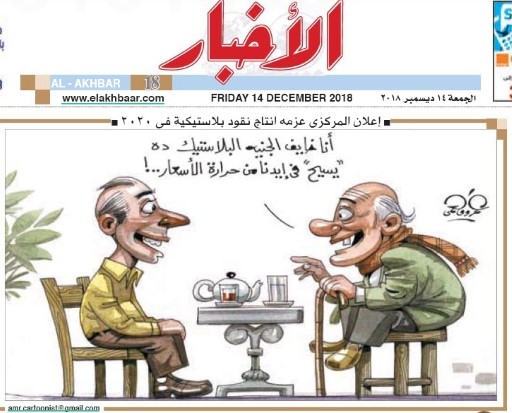
The issue of polymer banknotes was not discussed for several years until 2018 when statements by the Central Bank of Egypt, regarding its intention to produce and print plastic banknotes made of “polymer” material in 2020, sparked widespread controversy in economic and popular circles about this currency and its expected repercussions in various fields, and that the plastic currency would be produced through the new Central Bank printing press, which would be based in the new administrative capital, so that Egypt would bid farewell to the era of paper money and enter the era of plastic money.
2020
In March 2020, the Central Bank of Egypt revealed details of its plans to produce the new 10-pound note in polymer form, coinciding with the launch of its new printing facility in the New Administrative Capital. This announcement was made on the sidelines of the Arab Banks Risk Management Forum in Hurghada. The Central Bank of Egypt announced the establishment of the new printing house in the New Administrative Capital, equipped with state-of-the-art production lines. Engineer Khaled Farouk, Deputy Governor of the Central Bank for the Currency Printing House, stated that the new printing press has four production lines, making it the largest in Egypt, and can print all denominations of paper and polymer banknotes. He indicated that the new printing house was scheduled to open in June.
It was expected that the 10-pound note would be issued in plastic form before the end of 2020, as it is the most widely circulated denomination, noting that the issuance of other denominations was being studied later. However, the Egyptian government was unable to issue banknotes this year, and the delay is likely due to the emergence of the Coronavirus pandemic. Later, banking sources stated that Egypt will print the Egyptian currency denominations of 10 pounds and 20 pounds from polymer material, known in the media as ”plastic money,” during the next year, 2021, with the start of the printing press in the new administrative capital.
2021
In April 2021, the Egyptian president inaugurated a complex for issuing secure and smart documents, which issue holographic tags. We shared some photos of the inauguration in a post on our page. Arab collector On Facebook, which we mentioned may be related to the new paper currency.
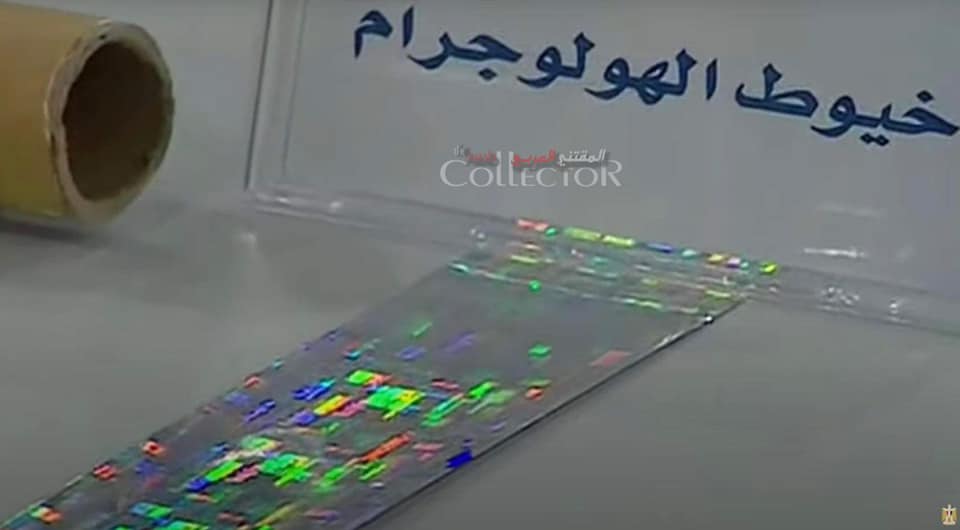
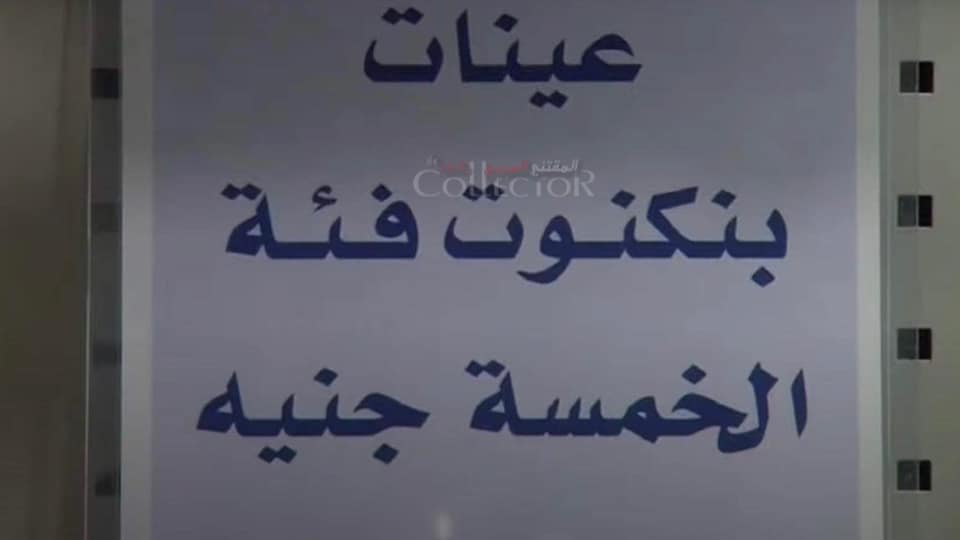
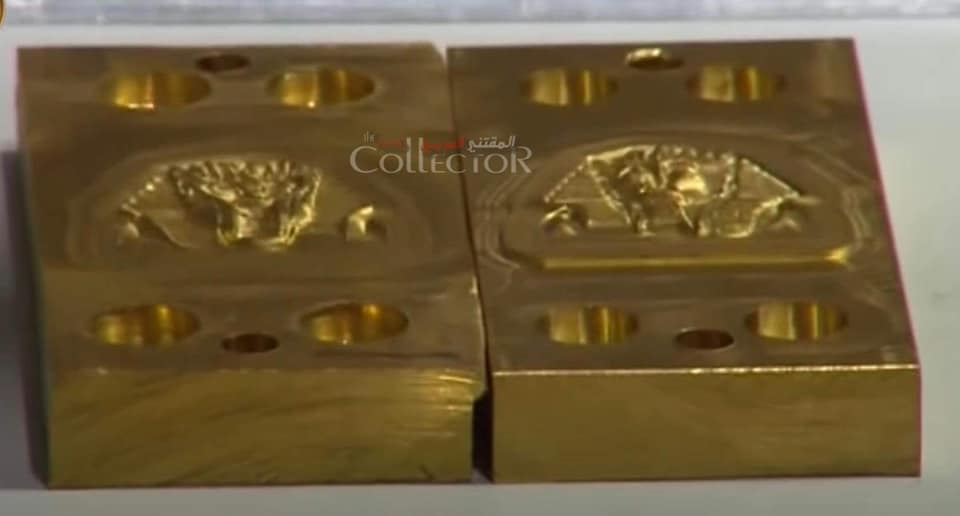
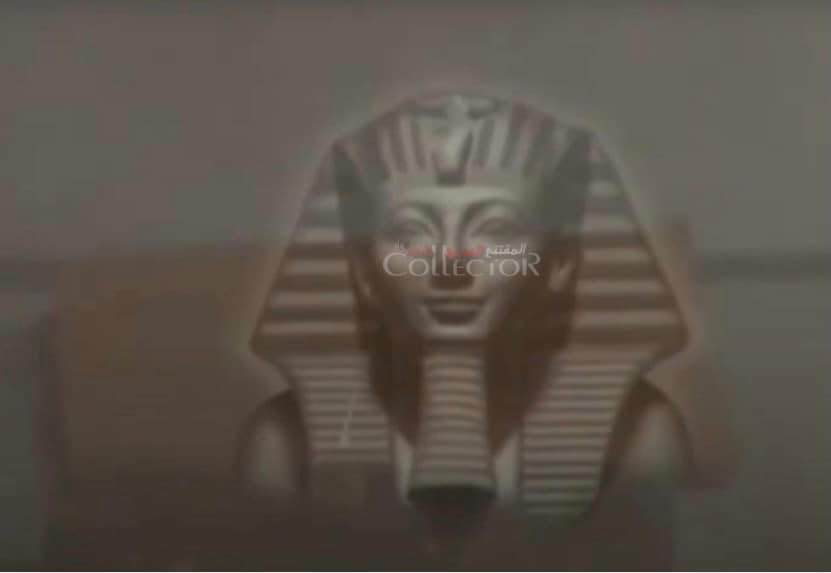
In August of the same year, samples of the new banknotes were presented to the President of the Republic during his meeting with Dr. Mustafa Madbouly, the Prime Minister, and Tarek Amer, the Governor of the Central Bank. It was announced that the currency would be issued to the markets by November, but this was postponed after the currency's design sparked widespread controversy in the Egyptian street. This led the Central Bank to announce that the presented design was not final and that the most suitable design would be chosen as soon as all the designs were completed.
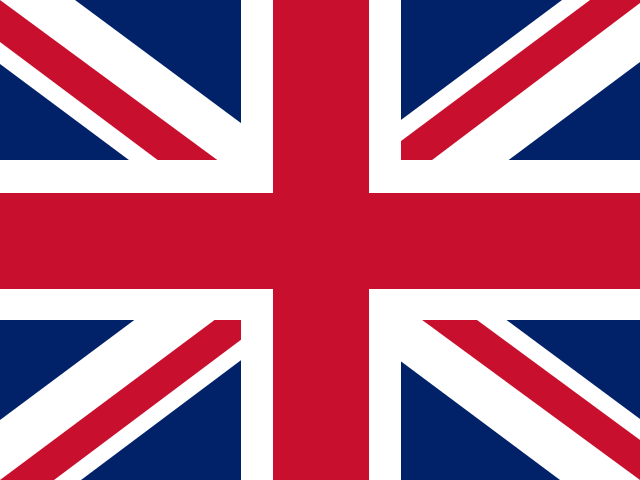
Although the criticism leveled at the currency was due to the reflection of the spectrum colors on the holographic watermark, we had a solution. Arab collector Another opinion from the hobbyist perspective was that the most controversial issue for us was the similarity in terms of design and colors between the Egyptian ten pound note and the English ten pound note. The elements of the shape were similar in both pieces, as the image of Queen Elizabeth was replaced with the Al-Fattah Al-Aleem Mosque, with the use of a unified location for the background and watermark.
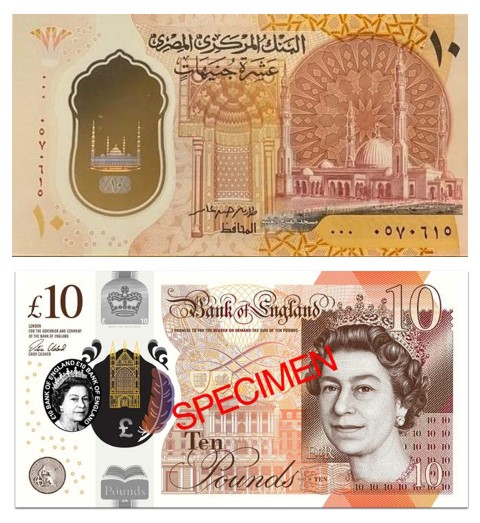
Moreover, a similar shade of brown was chosen for the ten-pound note, and on the back, we see a striking resemblance that prompts some questions:
Have Egyptian design talents failed and been unable to create a distinctive design, resorting instead to copying from other designs? Or are there specific design standards compatible with printing paper? It is most likely that the paper was imported from the United Kingdom.
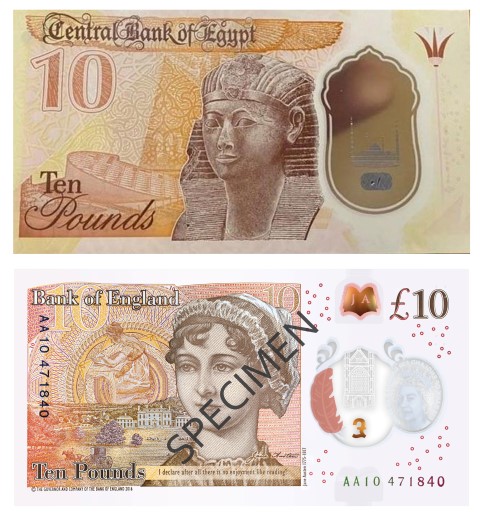
It may all be a coincidence, and time, whether in the coming days, months, or years, will reveal the explanation for these designs…
Sources:
Al-Ahram newspaper, various issues
Al-Akhbar newspaper
Central Bank of Egypt
You can find more similar topics on the Arab Collector website. the Link the next:
https://arabcollector.com/%d8%aa%d8%b9%d8%b1%d9%81-%d8%b9%d9%84%d9%89-%d8%b9%d9%84%d8%a7%d9%85%d8%a7%d8%aa-%d8%a7%d9%84%d8%a3%d9%85%d8%a7%d9%86-%d9%84%d8%a3%d9%88%d9%84-%d8%b9%d9%85%d9%84%d8%a9-%d8%a8%d9%84%d8%a7%d8%b3%d8%aa/
Also read about plastic money that can withstand abuse.
Plastic money that withstands abuse