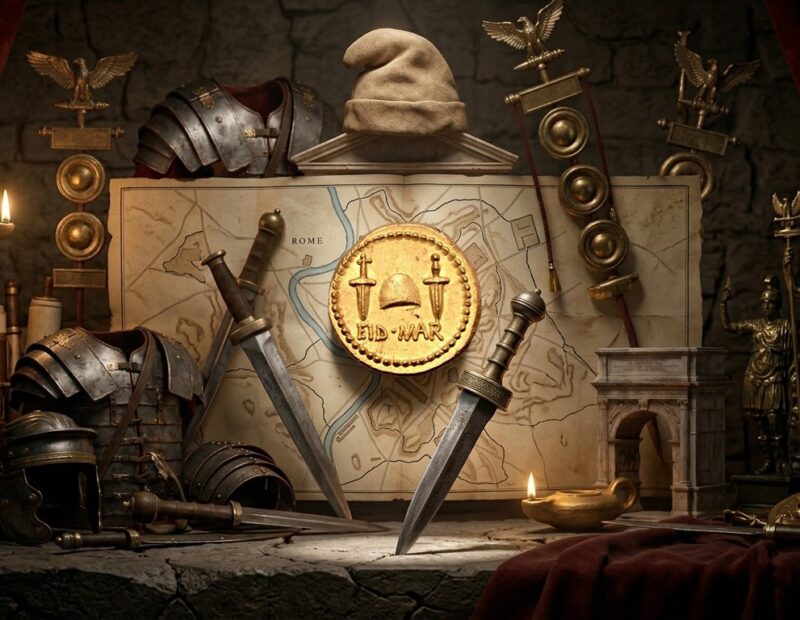
The coin of the assassination of Julius Caesar
On March 15, 44 BC, Rome was shaken to its core by an event that changed the course of human history: the death of Julius Caesar. This brilliant military leader, born in 100 BC and who extended Rome's influence from Gaul to Britain, could not have foreseen that his greatest victories would be the cause of his dramatic end.
His ambition led to his assassination
After his victory over his arch-rival Pompey, Caesar became the de facto and sole ruler of the Roman Republic. However, his tendency towards absolute power and his open defiance of the Senate's decisions alienated the political elite. In a conspiracy led by his closest friend, Marcus Junius, Caesar seized power. BrutusHe was assassinated with 23 treacherous stab wounds during one of the council sessions, in what became known historically as the “March Feast”.
The war that gave birth to the empire
The assassination was not the end of the story, but rather the spark that ignited a devastating civil war. Rome split between the camp of the conspirators, led by Brutus, and the camp of Caesar's supporters, led by Octavian and Mark Antony. The conflict ended with the defeat of the conspirators and the suicide of Brutus, paving the way for Rome's transformation from a republic to an empire under Octavian (Augustus).
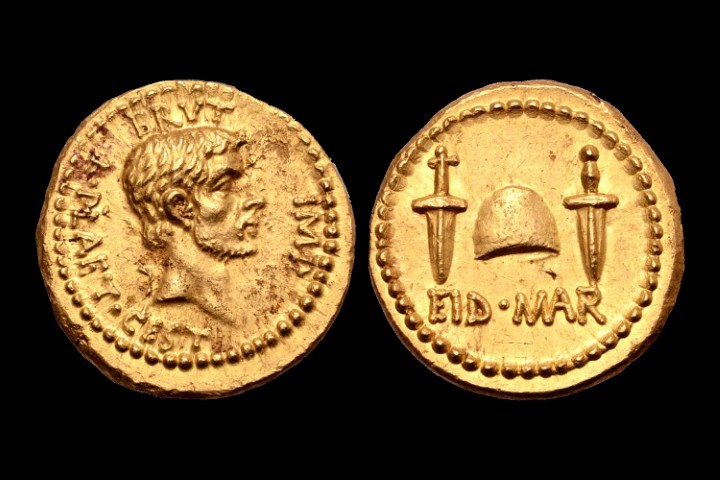
The Assassination of Julius Caesar coin (EID MAR)
During that civil war, Brutus needed to pay his armies, so he minted one of the most famous coins in history, which was not just a means of payment, but a mobile “political leaflet.”
-
Rarity: The coin was issued in both gold and silver denominations. While there are approximately 100 silver copies today, only three gold copies remain in the entire world, making it a legendary prize for numismatists.
-
The irony is in the first side: the coin bears the image of Brutus. The irony here is that Caesar's having his image on coins (while he was still alive) was one of the reasons that led to his execution, yet Brutus imitated the same act to assert his own authority.
-
Symbols of “liberation” on the reverse: The back of the coin bears eloquent symbols:
-
Two daggers: They symbolize the weapon used to assassinate Caesar.
-
The Pileus hat: a hat worn by slaves upon gaining their freedom, signifying that Rome was being "liberated" from Caesar's tyranny.
-
The abbreviation EID MAR refers to the phrase Eidibus MartiisMarch 15, the date that Brutus considered the day of Rome's "liberation".
-
Brutus wanted this coin to tell the world that he was not “the assassin of Julius Caesar,” but rather the “liberator” who freed Rome from the yoke of dictatorship, but history has turned this coin into a silent witness to one of the most famous acts of treachery in the world.
For more similar topics, you can browse the Arab collector's website through the Link the next: