Numismatics
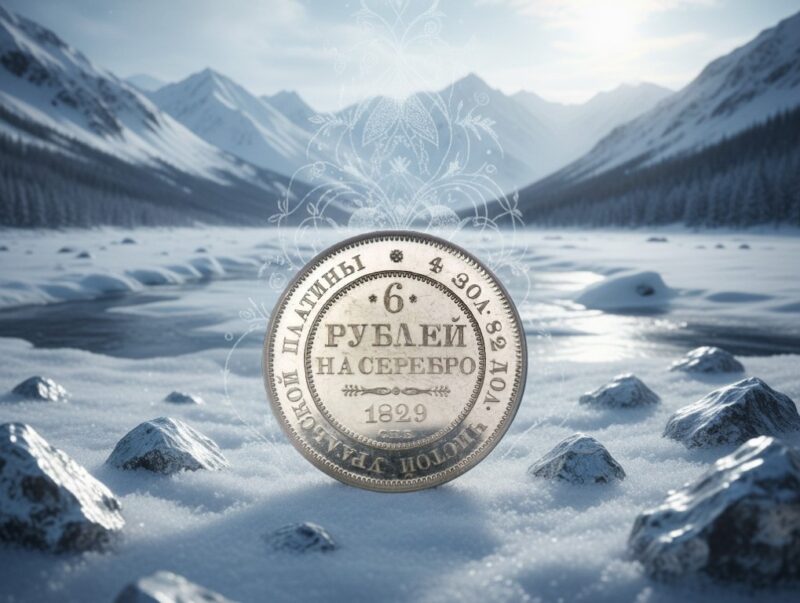
Russian platinum coins
Discovery of platinum in Siberia
Platinum was discovered in Siberia in Tsarist Russia In 1819, economically viable quantities of it were found, and in 1824, its newly developed mining methods enabled Russia to obtain large quantities of it, making it one of the world's largest exporters, and inspired the Russian monetary authorities to consider using platinum in minting coins.
Why did Russia choose the 3, 6 and 12 ruble denominations?
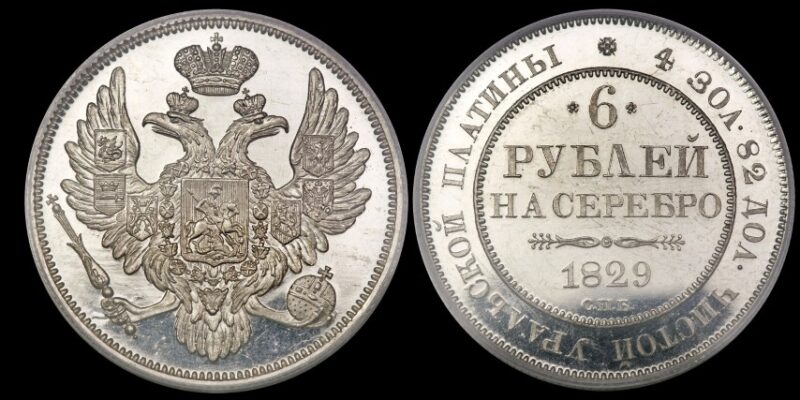
The minting of platinum coins for circulation began in 1828 and continued until 1845. It started with coins of the 3 ruble denomination, followed by coins of the 6 ruble and 12 ruble denominations in 1829 and 1830 respectively.
Platinum coins carried the same designs as traditional silver coins, but the high density of platinum made these coins twice as heavy as silver. Since the price of platinum at that time was six times the price of silver, the silver quarter-ruble coin became worth 3 rubles when the same coin with the same dimensions and weight was minted from platinum (twice the weight and six times the value gives 12 times the quarter-ruble, i.e., three rubles). This explains the unusual nominal values of these issues.
End of the experiment: Why were the coins melted down?
The minting of these coins did not last long, as the high cost of manufacturing them (platinum is harder than silver and gold) in addition to fears of a decrease in the value of platinum prompted the authorities to withdraw these coins from circulation, melt them down and replace them with other circulating currencies in 1845.
Thus ended the first and last experiment in the world to mint coins from platinum for circulation, which made Russian platinum coins from that period coveted by collectors from all over the world.
It is worth noting that some countries issue platinum bullion coins not for trading purposes, but for investors who wish to acquire this precious metal.
Why are these coins considered a "treasure" for collectors today?
-
Uniqueness: Russia is the only country in history to have issued platinum coins for everyday use (and not just as commemorative coins).
-
Scarcity: After the decision to melt down the coins in 1845, the majority of the issues were lost, and only a few remain in museums and private collections.
-
Dual value: Its value comes not only from the price of raw platinum metal (which sometimes exceeds the price of gold), but also from its historical value as a rare work of art from the time of the Caesars.
For more similar topics, you can browse the Arab collector's website through the Link the next:
The Gold Chervonets: The Story of a Peasant Currency Rejected by the World