Encyclopedia and Catalog of Egyptian Money
Encyclopedia and Catalog of Egyptian Money
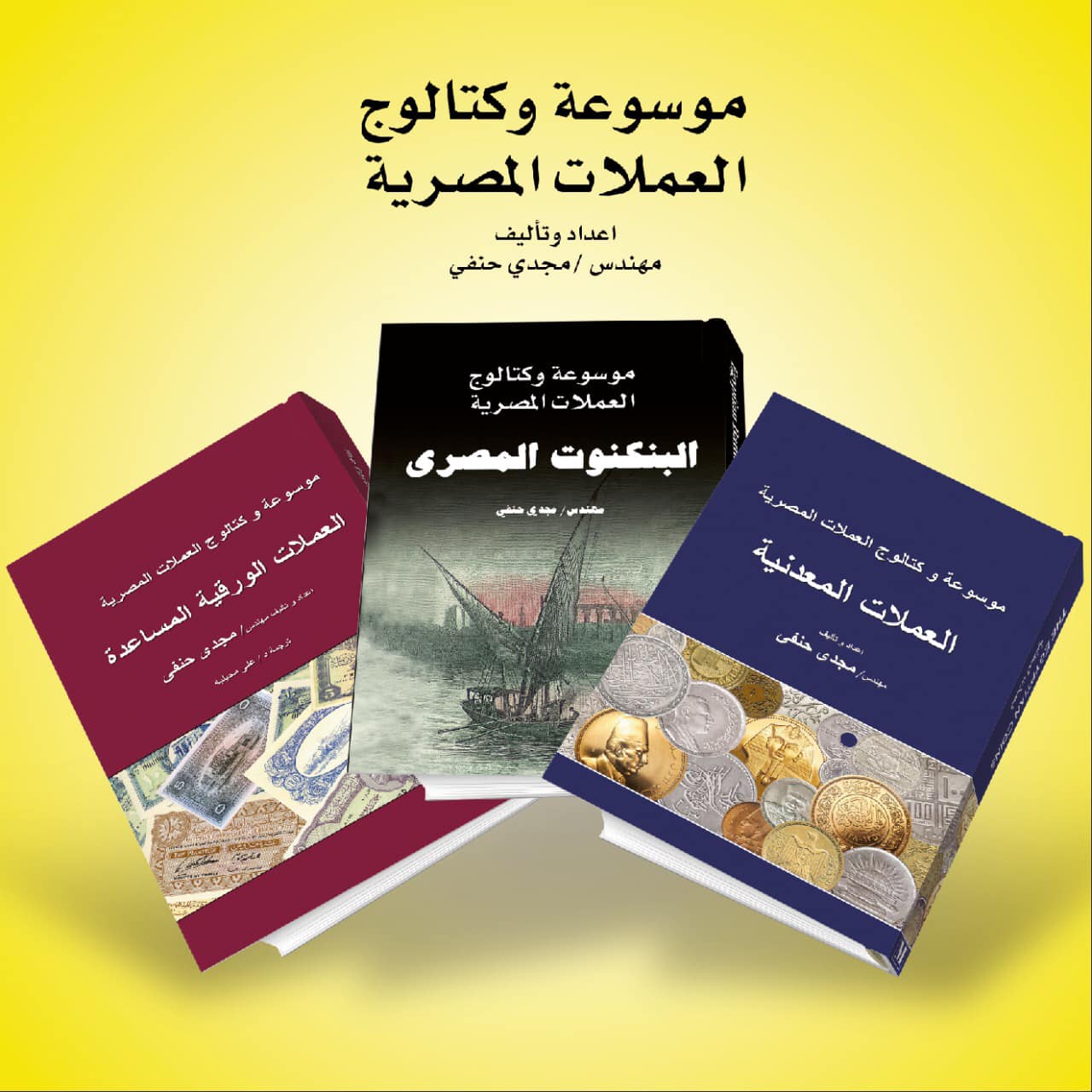
The Encyclopedia and Catalog of Egyptian Currencies is a comprehensive series of books that documents Egyptian metal and paper currencies. It was published by Engineer Magdy Hanafi to compile information pertaining to modern Egyptian currency, both metal and paper, and is considered the largest specialized scientific encyclopedia in the world of Egyptian currency. Engineer Magdy was able to write, in a precise historical sequence, everything related to Egyptian currencies from various issues and dates.
The encyclopedia is published in Arabic and English, and has become a reference for any Egyptian coin sold at international auctions, as well as a reference when evaluating Egyptian coins by international coin valuation companies.
Author's Profile

Name: Magdi Hanafi Mahmoud.
Title: Dean of Coin Hobbyists in Egypt
Occupation: Telecommunications engineer, then he left engineering and turned to coin collecting.
It has received an international certificate for the best book in the world on money and currencies, out of hundreds of international references and books, and it has been ranked as the best book on currencies in the world.
He has received many certificates of appreciation inside and outside Egypt and is considered one of the main intellectual references on Egyptian currency.
Egyptian Banknotes – Part One (First Edition) – 2004
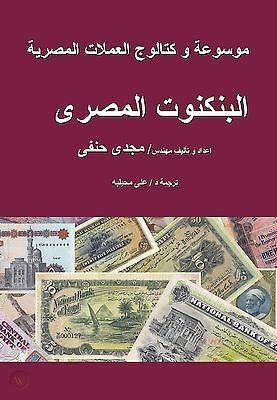
Book specifications: 320 pages, A4
It is the first part of Encyclopedia and Catalog of Egyptian Money It is considered the largest specialized scientific encyclopedia on the world of Egyptian banknotes, presented in color and with detailed explanations of all issues from the 25-piaster to the 100-pound denomination, including signatures, serial numbers, features, and more. The book contains six chapters, each briefly summarized as follows:
Chapter One:
This guide explains abbreviations, concepts, and terms relevant to coin enthusiasts and researchers, including definitions such as replacement banknotes, overlap and subscription numbers, group codes, serial numbers, letters used as symbols on banknotes, complete information on all governors who signed Egyptian banknotes, and explanations of all watermarks on them.
Chapter Two:
It contains complete information about all the banknotes issued by the National Bank of Egypt and then the Central Bank of Egypt, from the 25 piaster denomination up to 100 Egyptian pounds. It is a comprehensive explanation with colored pictures.
Chapter Three:
It contains a detailed history, including the day, month, and year, of all Egyptian banknote issues, as well as images of all signatures, symbols, and substitutions.
Chapter Four:
Detailed assessment of the currency's condition and global assessment abbreviations.
Chapter Five:
Special issues such as Gordon Pasha papers, Mediterranean Fund coins, and Kom Ombo issues.
Chapter Six:
It includes a full explanation of the banknote printing process, starting from the design stage, then separating colors, patterns, and printing elements.
2005 – Egyptian Banknotes – Part Two (Auxiliary Currencies)
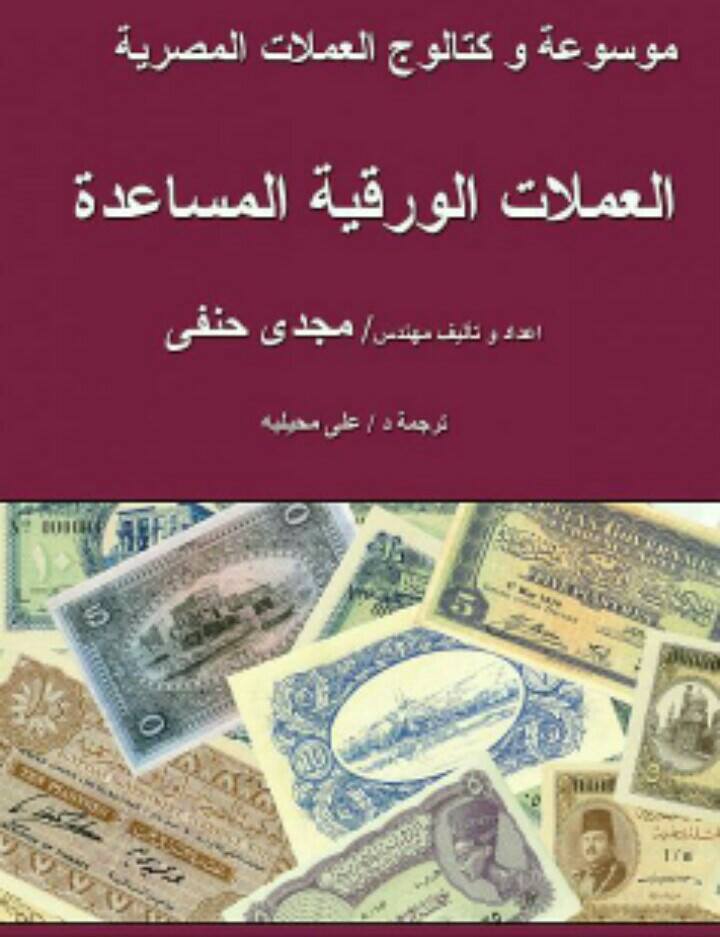
Book specifications: 127 pages, A4
It is the second part of the Encyclopedia and Catalog of Egyptian Currencies. The second largest scientific encyclopedia specializing in money comes to light after the release of the first encyclopedia of banknotes, also in color and with a detailed explanation of all issues from the 25 piaster denomination to the 100 pound denomination, with signatures, numbers, features, and others. The author also owns the second part of the Encyclopedia of Currencies, also for the subsidiary paper currencies of the 5 piaster and 10 piaster denominations from the era of the Egyptian Sultanate to the latest issue in the modern era, with errors and experiments in his previous encyclopedia of banknotes, “paper currencies.”.
Coins – Part Three – 2015
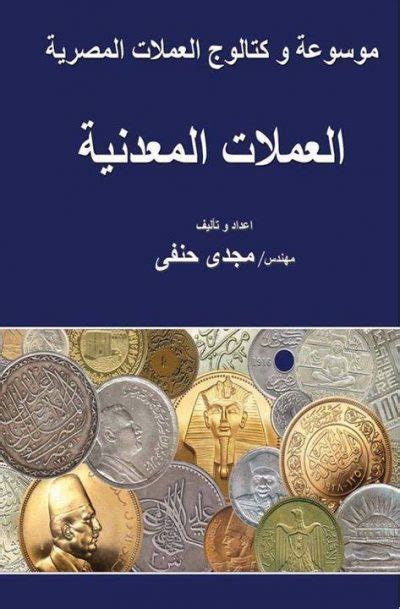
Book specifications: 502 pages, A4 size, in both Arabic and English
This is the third part of the Encyclopedia and Catalog of Egyptian Currencies, specifically the section on subsidiary paper currencies. The author of this encyclopedia, which is significant as it is the first of its kind in Egypt and the world, embarked on a rare comparison between counterfeit and genuine currency, providing a historical account of currencies that had almost been lost. It is divided into six chapters:
Egyptian Banknotes – Part One (Second Edition) – 2021
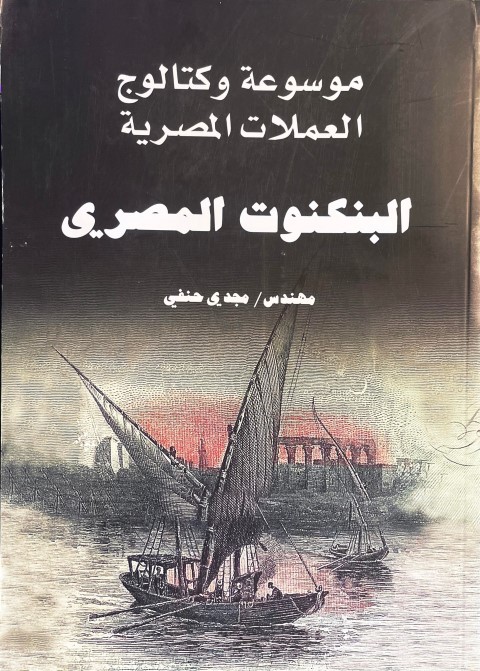
Book specifications: 500 pages, A4 size, in both Arabic and English
It is the first part of the encyclopedia and catalog of Egyptian coins. Second Edition From the first part of the Egyptian banknote, which is a new addition and a supplement to the information of the first issue. Therefore, there are no new editions of the first issue, and the information it contains can be replaced by this second issue.
Magdi Hanafi began his encyclopedia from the era of the governor Muhammad Ali Pasha, who took over the rule of Egypt in 1805 AD. The money in circulation in Egypt at that time was mostly Turkish, English, and French, and a little Egyptian money. In it, Engineer Magdi Hanafi explains the stages of printing banknotes, the most important turning points that they went through, the rules that were followed to prevent their counterfeiting, as well as how the currency is destroyed, its lifespan, and the strict rules of destruction, starting from collecting, counting, stamping with a damaged seal, perforating it, then destroying it in special incinerators or in the incinerators of the Iron and Steel Company under the supervision of special committees, or after that destroying it by shredding. .
The details of printing Egyptian banknotes were also listed, including each currency since its printing and the quantities printed of it, and during the tenure of the Ministers of Finance or the Governors of the Central Bank. Initially, banknotes were printed bearing the signature of the Minister of Finance, then the signature of the Governor of the Central Bank when central banks were established, which became responsible for printing banknotes. The accounts, balances, and quantities of each banknote were kept in them, while the signature of the Minister of Finance was limited to the small paper, or what is called subsidiary currency, in the denominations of ten and five piasters, which were canceled and disappeared, and the coins of their denomination were sufficient.
Hanafi also revealed in the encyclopedia the rare coins that were printed and what they contain in terms of designs, drawings and their number, which raises their value, especially among lovers of collecting old coins and banknotes and hobbyists who date the currency and evaluate its value through its number, the time in which it was issued and the events that coincided with its issuance, starting from the era of the Kingdom of Egypt during the reign of Hussein Kamel and Farouk until the current era of the Republic and the plastic or polymer banknotes, which are characterized by a longer lifespan. .
Fourth Edition – Egyptian Tokens and Coupons
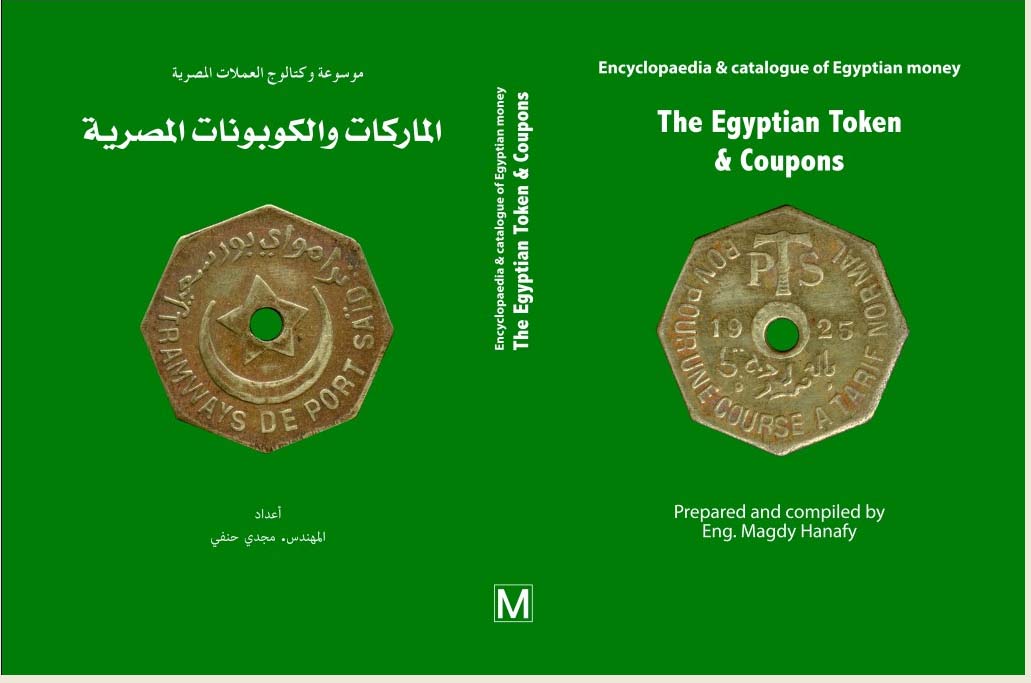
Engineer Magdy Hanafy announced the release of the fourth volume of the encyclopedia in June 2022, revealing and documenting an important part of modern Egyptian history—a part that may be overlooked but is as significant as Egyptian coins and banknotes: Egyptian marks and coupons. This is the first work of its kind in Egypt and the Arab world.
It discusses a marginalized historical part of Egyptian history about the marks, or tokens as they are called, which are symbolic currencies that were issued by both governmental and private entities in Egypt.
See topic Egyptian brands and coupons
Where can I buy the encyclopedia?
Update 2026: Due to popular demand, we are pleased to announce that this encyclopedia is now available for purchase directly through our website in collaboration with the author.Click here to order your copy now through the Arabic Collectibles Books Store].
For more similar topics, you can browse the Arab collector's website. the Link the next: