Numismatics for Beginners: Start Collecting Coins with Confidence
If you have ever held an old coin and felt that it was different; a little heavier, or of a strange color, or bearing an unfamiliar history, then you have already taken your first steps into the world of “numismatics” without intending to.
Numismatics, simply put, is the study of coins (and sometimes banknotes and medals) in terms of their history, minting, rarity, condition, and all the minute details that make a small piece of metal tell the story of an entire country. And the best part? You can start this quiet hobby on a very modest budget.
Let's take it step by step together, avoiding complications or exaggerated prices and auctions from day one.
What is numismatics? And why are people attracted to it?
It's more than just "collecting coins." Collecting might mean putting any old coin in a drawer and that's it, but numismatics is driven by curiosity and research; it raises questions such as:
-
Where was this currency minted?
-
Why did this design change?
-
What is the meaning of these symbols and inscriptions?
-
Does it contain a coinage error? Is it rare?
-
Is it in excellent condition or has it been worn out in trading?
Some love this hobby because it represents tangible history, others see it as an enjoyable challenge, while still others consider it a future investment. But to get started properly, make the hobby your first priority; the rewards will come later with experience.
Why is the term "coins" used?
The term numismatics is commonly used in Arabic to refer to the science of numismatics, because coins have historically been the most widespread and enduring form of currency.
However, this usage, despite its prevalence, does not reflect the full scope of the science, as numismatics also includes unminted monetary materials.
Before you buy: Choose your path
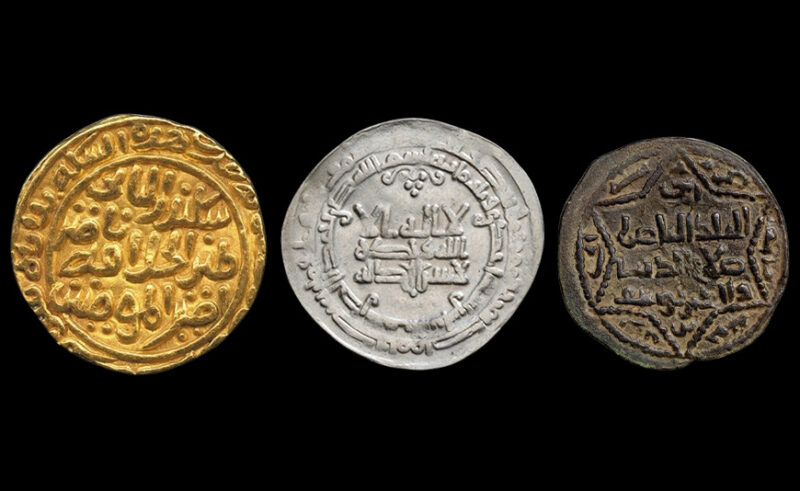
This is the most important point for beginners; randomly buying items will lead you to discover later that your collection lacks cohesion. Here are some popular options for beginners:
-
Your country's currencies through the years: The easiest paths; such as collecting your country's currencies for each decade, or documenting political transitions (monarchy, republic), or commemorative issues.
-
Collecting by “theme”, such as collecting coins that bear images of (animals, plants, kings, monuments, ships).
-
Grouping by time period: such as coins of the 20th century only, or the pre-independence period, or the Ottoman era.
-
Combining metals by category: (copper, nickel, silver, gold). For beginners, it's recommended to start with copper and nickel as they are more budget-friendly.
Tip: Choose one path for the first two months to avoid distractions, and don't necessarily stick to it forever.
The difference between numismatics and coin collecting
It is important to distinguish between numismatics and coin collecting, as many people confuse the two concepts:
| Collecting coins | Numismatics | Comparison point |
| Acquisition | Study and analysis | The goal |
| hobby | Scientific and investigative | Curriculum |
| Limited by personal interest | comprehensive | range |
| Personal or business | My research and documentation | Usage |
It can be said that collecting coins may be an introduction to numismatics, but it does not replace it.
Simple and effective tools
You don't need a laboratory, just simple tools that make a difference:
-
Magnifying glass: for reading dates, mint marks, and fine details.
-
Cotton gloves: to protect shiny pieces from hand oils that may affect the metal.
-
Albums or capsules: Good storage is the protective shield for your collection.
-
A small digital scale: to detect weight differences that may indicate the authenticity of the item.
-
Good lighting: to see details that might be hidden by shadows.
Currency status assessment (price key)
You might find two coins from the same year, but one could be worth ten times more than the other due to its condition. Here are some simplified levels:
-
Weak/corroded: Missing details and obvious scratches.
-
Good: The text is legible, but the wear and tear is evident.
-
Excellent: Relatively sharp details and slight wear.
-
Uncirculated (UNC): Looks like it just came out of the mint, and is usually the most expensive.
Important warning: Avoid cleaning the coin! Cleaning with chemicals may reduce the value of the piece because it destroys the original “antiquing” layer (patina).
Where do you get the coins?
-
Family: Look through the memory boxes of your parents and grandparents.
-
Coin and antique shops: their advantage is direct viewing, and their disadvantage is the slightly high price.
-
Exhibitions and conferences: an excellent environment for visual learning even if you don't buy anything.
-
Online platforms: require caution; buy from a highly rated seller and make sure there are clear pictures and a return policy.
How can you verify the authenticity of a currency?
-
Visual comparison: Compare your piece to reliable images of the same version and scrutinize the lines and numbers.
-
Physical inspection: Check the weight, diameter, thickness, and conformity to official specifications.
-
Magnet: A quick way to detect metals incompatible with the original version.
How is currency priced?
This is a point where many people get confused; you might see someone offering a “very rare” coin at a high price, and you automatically assume that your coin is worth the same amount.
Realistic pricing is based on precise criteria:
-
Year of issue and mint: Sometimes the currency is from the same year, but the difference in the “mint” makes one rare and the other common.
-
Quantity minted: The fewer pieces that were officially issued, the higher the value.
-
Condition: As we mentioned, is the decisive factor in determining the final price.
-
Supply and demand: The piece may indeed be rare, but there is no demand for it from collectors at the moment.
-
Actual sales prices: The key is not the “price offered” but the “price actually paid” in previous transactions.
The best advice for beginners: Look for the “completed sales” option or online sales platforms if possible; because the advertisements currently displayed are not conclusive evidence of the true value, but are merely the wishes of the sellers.
Common mistakes to avoid
-
Clean the currency with lemon or vinegar.
-
Impulsive emotional buying without research.
-
Poor storage in random plastic bags.
-
Absolute trust in the word “rare” without evidence or reference.
The importance of numiology
The importance of numismatics lies in its being a precise tool forThe history of periods and countries andUnderstanding economic transformations and Documenting political changes and Studying official symbols and logos andDetecting counterfeit currency.
Therefore, it depends Museums وacademic institutions On coins as reliable historical sources.
Conclusion
Numismatics doesn't require you to be a historical expert from day one, but it does require a keen eye and unwavering curiosity. Start with what you have at hand, gradually expand your knowledge, and find a story for each piece in your collection that justifies its acquisition.
The difference between numismatics, philately, and paper currency