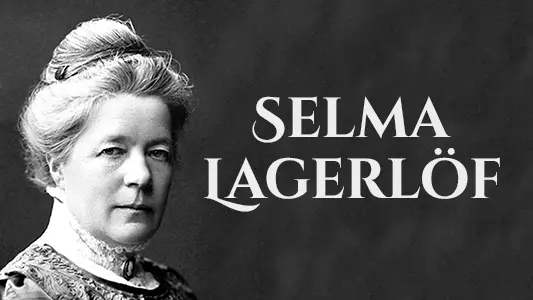
Selma Lagerlöf: Sweden honors her with a coin, and the world with a postage stamp.
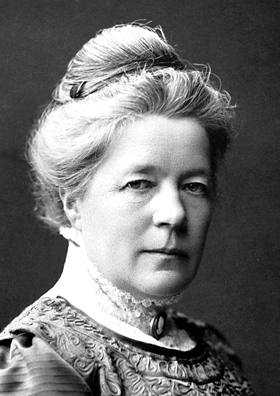
Selma Lagerlöf A beloved figure among children, she won the Nobel Prize in Literature in 1909, becoming the first Swedish woman to receive the award. Five years later, in 1914, our heroine became the first woman to be elected to the Swedish Academy, and she also served on the Nobel Prize committee.
introduction
Selma Lagerlöf was born in a border province between Sweden and Norway, the fifth of her siblings. After completing her early schooling, she went to a teachers' college in Stockholm. In 1885, she became a teacher at a girls' secondary school in Landskrona. She had been writing poetry since childhood, but did not publish anything until 1890, when a Swedish weekly magazine awarded her first prize in a literary competition.
In 1891, she published her first novel, *The Saga of Gösta Berling*, but it went largely unnoticed until it was translated into Danish. The novel and its author received widespread critical acclaim, paving the way for her continued success in Sweden and elsewhere. In 1895, financial support from her family and the Swedish Academy encouraged her to give up teaching altogether.
After that, offers from publishing houses poured in, and her fame spread everywhere. But what was remarkable was that she became beloved by children, not only in Sweden but all over the world, because she dedicated herself to writing for them and excelled at it, especially her famous novel, which was adapted into a television series and an educational cartoon for children and translated into several languages. The series drew on Nils's famous journey around Sweden, narrating details of values, courage, and tolerance through the trip, and telling stories to help children learn from this experience. The cartoon series gained widespread popularity worldwide and was dubbed into several international languages.
The beginning of the journey to international fame
The Wonderful Adventures of Nils
(The Wonderful Adventures of Nils)
The genesis of Nils's Marvelous Journey began with a letter to Selma from the National Union requesting an educational children's book that would spark their interest in Swedish geography. The letter stated, "We urgently need a textbook that children will enjoy reading in classrooms, one that will ignite their interest in their country's geography so they will learn more about it and grow to love it. We hope the book will engage them not only with geography but also with history and folklore." This sparked Selma's enthusiasm, and the book took her approximately three years to complete. She dedicated those three years to travel, reading, and researching Swedish geography, customs, traditions, folk tales, and heritage arts, ultimately producing a comprehensive book about all parts of her country. The book was well-received by all who read it and pondered its contents, and it has been translated into 30 languages, including Arabic.
The story was about a bad-tempered boy named Nils, known for his laziness and cruelty to animals and birds. One day, he saw a dwarf rummaging through his mother's belongings, so he caught him in a net. The dwarf begged for his freedom and offered him gifts if he would release him. When the dwarf regained his freedom, he slapped Nils, knocking him into a coma and transforming him into a dwarf himself. He then gave Nils the ability to communicate with animals. When Nils awoke, he searched for the dwarf to make amends and return to his former self.
Nils tried to enlist the help of some animals and birds to find out where the dwarf was, but his constant abuse of them made them refuse to help him and they also mocked him.
A flock of wild geese flew over the farm where Nils's house was located. The geese landed near him and called, "Come with us! We're heading up the hills!" Nils decided to take on the challenge and adventure. He grabbed the goose by the neck, and together they rose up. Holding the goose, Nils looked down at the square green fields, orchards, and forests.
Nils found himself with a flock of wild geese, consisting of thirteen geese led by the wise old goose Aka.
Here, Nils’ previous traits changed, and he began to help weak birds and animals. Nils became acquainted with many animals and birds that he had never seen before. He also became acquainted with many castles and churches with high towers, lakes and rivers, and saw roads and railways. He passed through many islands, bays, highlands, valleys, cities and villages, and enjoyed the beautiful nature of his country. He learned a lot about its history, customs, legends and folk tales.
Nils’ journey went through many situations until he returned to his farm, and he returned as he was before. Children learned a lot about their country from this story, which became taught in the Swedish curriculum. The rest of the world’s children benefited from it, learning several lessons that helped them in their lives. The story even inspired many countries to change their geography and history books to convey the idea quickly to the child through a picture story for some lessons, because some children complain about boredom. Geography became the favorite subject in Swedish schools because of this story.
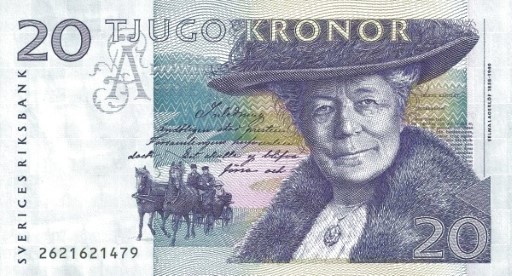
This story became the talk of the town, and the Swedish government even honored novelist Selma Lagerlöf for this novel by placing her picture on the official 20 kronor banknote on the front, and on the back a picture of the child Nils on the back of a goose.
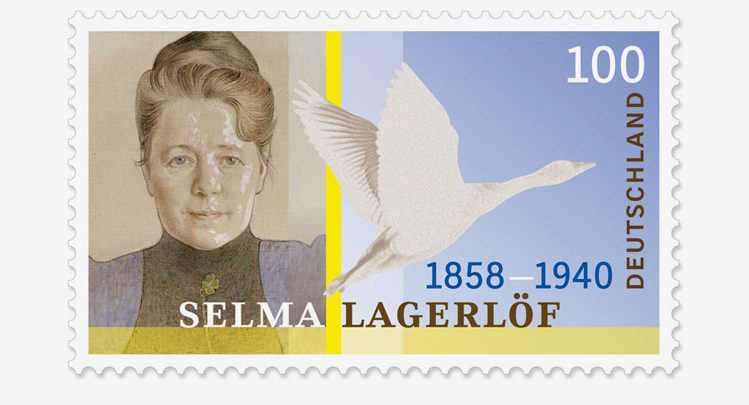
Postage stamps were issued in her honor, featuring her image as the boy Neliz, the hero of the most important international children's story, and a statue of her was made in the city of Karlstad.
Selma Lagerlöf died on March 16, 1940, and her house in Morbach was turned into a museum bearing her name, housing her important belongings.
Sources:
For similar topics, you can browse the Arab Collector website. the Link the next:
Postage stamps…an unconventional weapon in 2022
Royal Opera House Muscat: 10 Years of Excellence