History
The Story of Nefertiti's Head – Chapter Two
When was Nefertiti's head discovered?
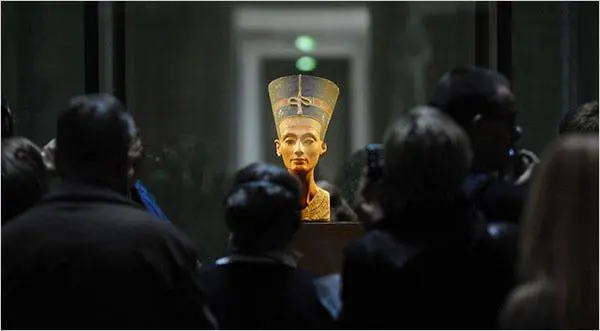
Head of Queen Nefertiti
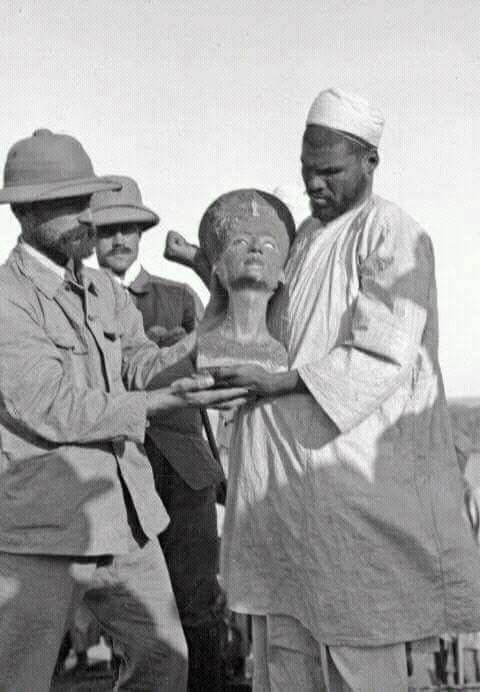
December 6, 1912, good morning“Ludwig“And you, my dear Ernest, the weather is truly beautiful today… a welcome change for the better – the weather in Minya Governorate is usually anything but welcoming, but that's the fate of explorers, my friend! I sent Hammad and the other men to retrieve the remaining statues from Thutmose's workshop today. Who knows? Perhaps we'll discover a valuable statue instead of the pile of stones we've found so far!“
Statue size
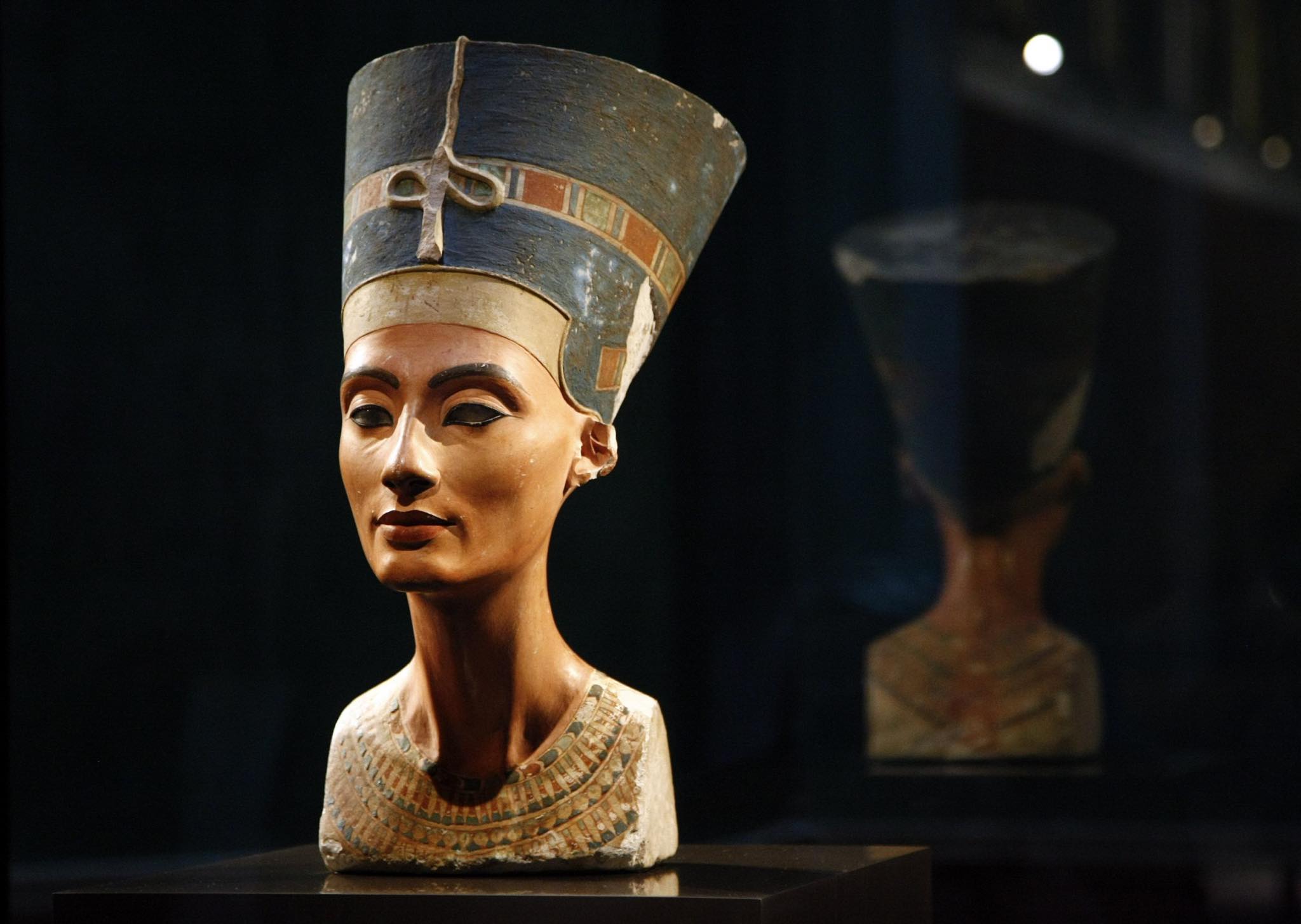
"Her, Bochard! Oh, Bochard! Come here!" Ludwig turned towards the sound and saw Awad, the dark-skinned son of Hammad, running barefoot towards him, his robe billowing behind him. They must have found something! He wasted no time asking questions but ran himself towards the excavation site. There he saw her. He wrote in his journal, "Today we have found in our hands the most lifelike statue of Egypt ever. You can almost believe that its owner will move her eyes and smile at any moment… You can never imagine her beauty; you must see her to be sure!" The name of Queen Nefertiti has not been revealed to this day.
The statue wasn't enormous; on the contrary, it appeared life-size, or perhaps slightly smaller, depicting a stunningly beautiful girl with distinctly Egyptian features, wearing a conical crown. The statue's colors were calm and harmonious, reflecting refined taste—Thutmose had truly outdone himself this time! It looked as if it were newly made, but Ludwig knew perfectly well that Nefertiti had remained trapped in the sand for over 3200 years… He studied her face, her eyes, her smile… He sensed a mystery, but couldn't quite define it until it suddenly dawned on him… The statue lay on the ground, 20 centimeters high, yet it looked as if she were looking down at it, not the other way around!
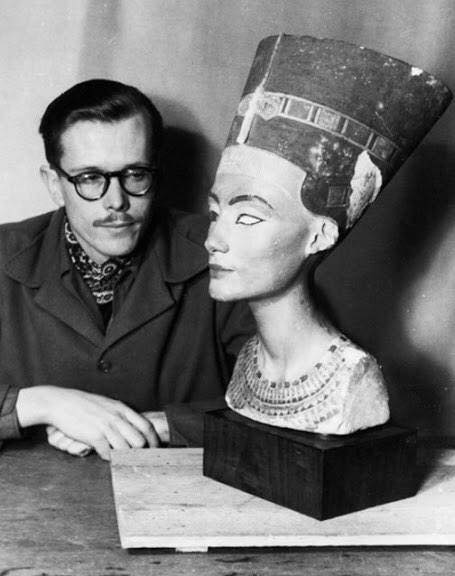
Ludwig Burkhard and Nefertiti
It seems that Ludwig Burchardt was completely captivated by the statue. At the time, the law stipulated that any archaeological discovery was to be divided equally between Egypt and the discovering expedition, with the Egyptian government retaining the right to choose. All the discovered pieces were divided into two sections, as usual: one section containing the head and the other containing the base of a pharaonic column of great historical value. The Egyptian Antiquities Authority chose the column and its accompanying pieces for their historical significance, leaving the other section, which had artistic value. The expedition obtained the necessary export permits, and the statue was shipped to Germany, where it disappeared.
The statue did not officially appear until 1923, and it began to attract the attention of Egyptian students residing in Germany. Questions abounded, and members of the Egyptian Antiquities Authority justified their decision not to select the statue by stating that the Egyptian Museum was primarily a museum of antiquities, not art, and therefore their duty required them to choose important artifacts, not merely beautiful ones. All hell broke loose in Egypt, especially given the heightened nationalist sentiment following the 1919 revolution, the declaration of the Kingdom of Egypt, and the establishment of a strong constitution. All of this led to popular demands for the statue's return to Egypt, to the point that several Egyptian newspapers spearheaded a fierce campaign to boycott everything German.
However, the campaign did not achieve anything on the ground, and Germany refused to even raise the issue, citing the decision to approve the export, which was issued officially. After a period of relative calm, the issue returned and was raised timidly before King Fuad's visit to Germany in 1927, and side talks did take place, which were disappointing to the Egyptians… who felt that there was no use, as the matter required a miracle from God for the Germans to agree to negotiate, and this miracle did indeed happen when a new man took over the position of Chancellor of Germany, and this man was called “Adolf Hitler”.
Moheb Rizkalla
You can continue the chapter the first From the article at the following link:
You can follow similar topics on the Arab Collector website through The following link:
Belgium and Egyptology postage stamps