Belgium and Egyptology postage stamps
The Belgian postal service has released postage stamps to honor Egyptologist Jean Cabart, who is considered the founder of Egyptology in Belgium.
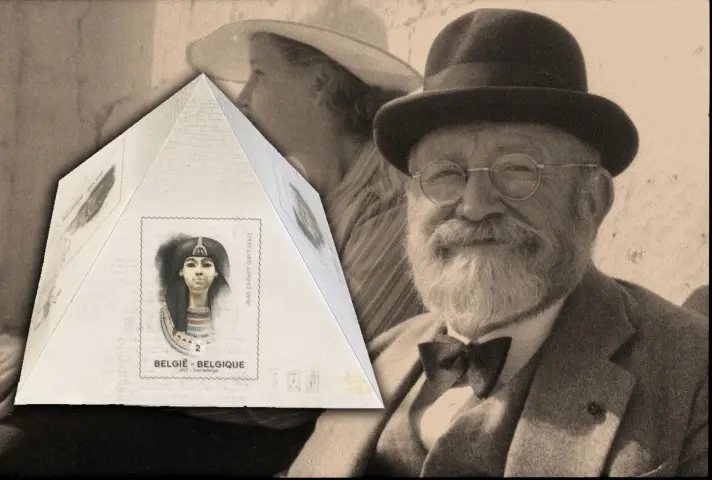
pyramid shape
The Belgian Royal Mail has released five commemorative postage stamps in honor of the Belgian founder of Egyptology. Jean CabartThe new commemorative postage stamps feature five images of ancient Egyptian and Pharaonic artifacts and statues, each printed on a separate part and side. When these parts are assembled, they line up together to form the pyramid shape, which is a symbol of ancient Pharaonic civilization.
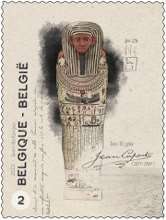
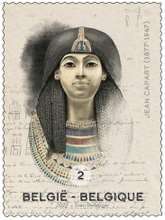
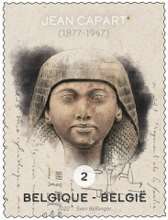
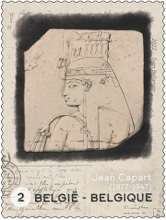
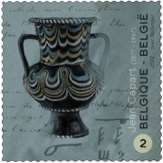
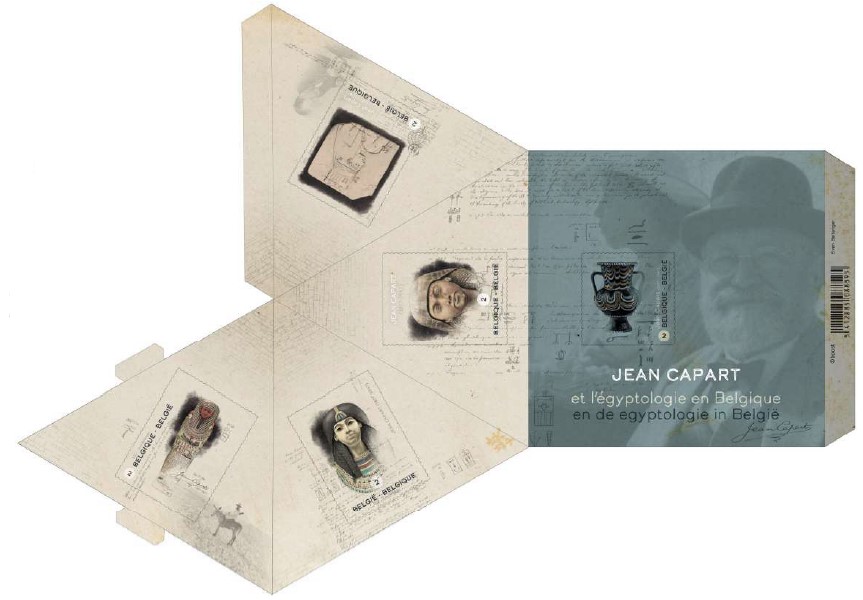
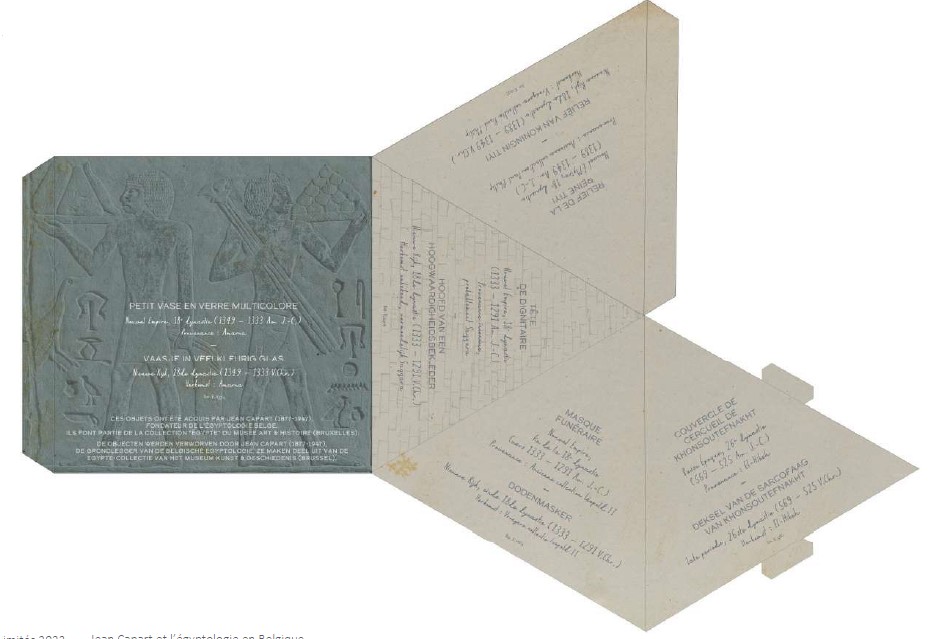
The postage stamps depicting Egyptology were designed by a Belgian artist. Sven BellangerThe front and back of the stamps consist of excerpts from notes written by Jean Cabart, as well as his signature and some photographs showing him.
More information about the artifacts depicted on the stamps can be found on the back of the sheet. The sheet is specially cut so that it can be folded into a pyramid shape.
The stamps were printed using offset technology and are sold for the equivalent of 11 British pounds.

Jean Cabart and Egyptology
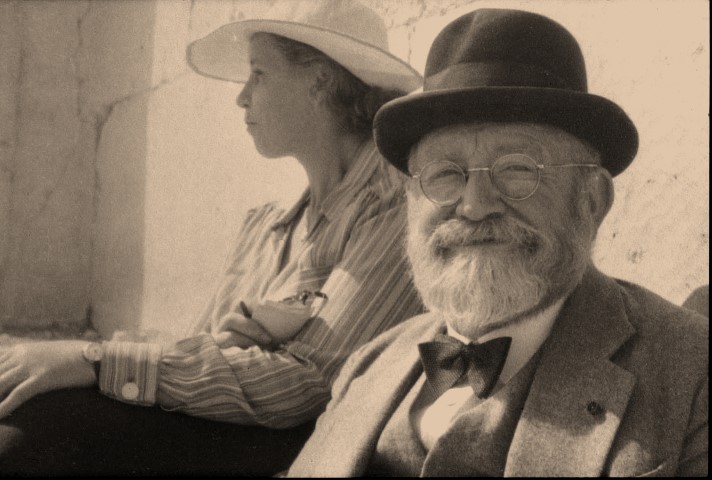
After obtaining his doctorate in law, he studied Egyptology at various European universities, where he befriended leading scholars of his time, from the British William Flinders Petrie to the Frenchman Gaston Maspero.
In 1902, at the age of 25, the University of Liège entrusted him with the first Belgian academic chair in Egyptology, and he began traveling the world with a suitcase full of glass slides. His passion for ancient Egypt, and especially Egyptian art, was evident in the radio interviews he gave on both sides of the Atlantic, as well as in his numerous publications, both scholarly and journalistic, which he authored or co-authored.
In 1907, the first Belgian archaeological excavations in Egypt began. Thirty years later, he set his sights on the city of The cap In Luxor, the ancient religious capital of Upper Egypt, which became the main site for Belgian archaeologists in Egypt under his supervision.
Most of his professional life took place between 1897 and 1947, and he transformed Brussels, his birthplace, into the European capital of Egyptology and papyrology.
The Americans relied on him to reorganize the Egyptian section of the Brooklyn Museum in New York, the British appointed him as honorary vice president of the Egypt Exploration Society in London, and the Danes entrusted him with the presidency of the International Association of Egyptologists.
When he died in 1947, at the age of 70, Jean Cabart left behind a devoted wife, a long line of children, grandchildren, friends, and students, thriving institutions, and a remarkable body of scholarly and literary work that spanned multiple careers. He is therefore unanimously recognized as the founder of Egyptology in Belgium and one of the greatest art historians of the 20th century.
Sources:
For more similar news, you can follow the latest news on Al-Muqtani Al-Arabi. The following link:
https://arabcollector.com/%d8%b7%d9%88%d8%a7%d8%a8%d8%b9-%d8%aa%d8%b0%d9%83%d8%a7%d8%b1%d9%8a%d8%a9-%d8%a8%d9%85%d9%86%d8%a7%d8%b3%d8%a8%d8%a9-%d8%a7%d9%84%d8%a7%d8%ad%d8%aa%d9%81%d8%a7%d9%84-%d8%a8%d9%85%d8%b1%d9%88%d8%b1-20/
The Story of Nefertiti's Head – Chapter Two