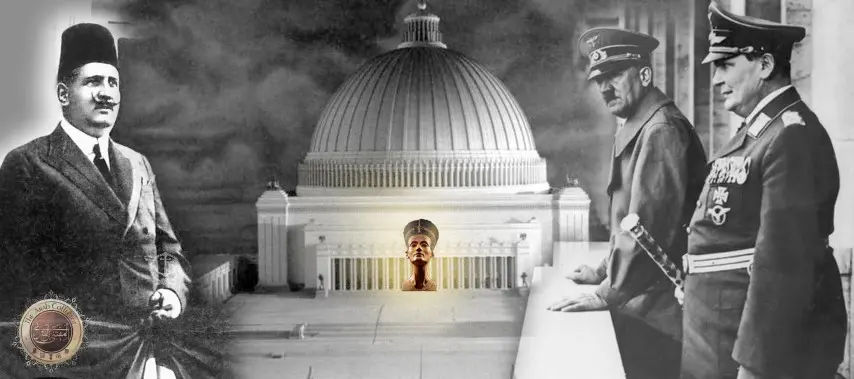
A love triangle between Hitler, Nefertiti, and King Fuad
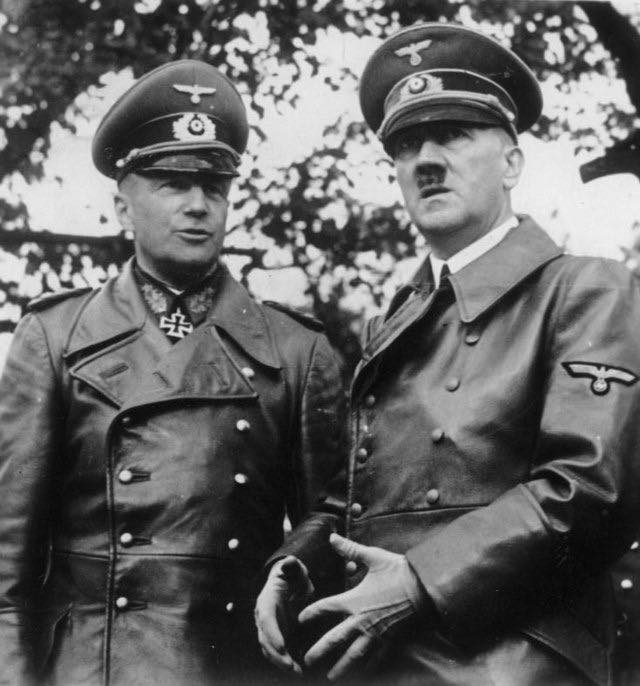
Adolf Hitler gazed at the face of his comrade-in-arms, Hermann Göring, thinking to himself, “He will live like a pig and die like a pig, knowing nothing about art…”
"Adolf, just listen to my point of view… The Egyptians are tentatively willing to sign a friendship treaty with Germany, but only if we return to them an ancient statue they consider important… Surely you know better than I the strategic importance of the Suez Canal. If war were to break out between us and England, and we were to control the canal, we could tear the British Empire to pieces—they wouldn't be able to reach India, Australia, or even the rest of East Asia! After the war, we can compel the Egyptians to return the statue if it's so important to you…".
Most importantly, I have given orders to Von Stohrer, our accredited ambassador to Egypt, with the Reich's approval, to return the statue to Egypt on the anniversary of King Fuad's accession to the throne. The Egyptians have already begun preparations, and the Reich's position would be awkward if we backed down and...”
– “I told you my decision, Nefertiti will not return – the discussion is over.”
The statue will not return
Göring remained silent. He had known Adolf's temperament well for over ten years, and he also knew that if he persisted, Adolf would become even more stubborn and might even explode in anger, as was his habit during any discussion. He knew perfectly well that Hitler had begun his career in Vienna as a painter, but the leading artists of the time considered him a failed artist with no talent, which led him to turn to politics (*truth*). So, he had no choice but to gather his papers in annoyance and salute before leaving. Hitler didn't bother to return the salute, as he seemed engrossed in reading some papers on a desk… After Göring left the office, he looked up, picked up a heavy volume, and began writing the following words:
I know this statue well; I've seen it and stood in awe before it many times, and each time Nefertiti managed to amaze me. The statue is a unique masterpiece, a priceless treasure! I know exactly what I must do; I will build an Egyptian museum here in Germany.“
(Author's note: Hitler planned to rename Berlin to Germania after the war and wrote extensively about it, even having Albert Speer create complete models of the city in his office.) I can almost imagine every aspect and detail of this museum. It will be topped by a huge dome visible to all Berliners, and under this dome will be the main hall. Right in the middle of this hall, I will place—no, I will crown—this statue, and it will be alone in the hall! (Hitler actually wrote these words.)
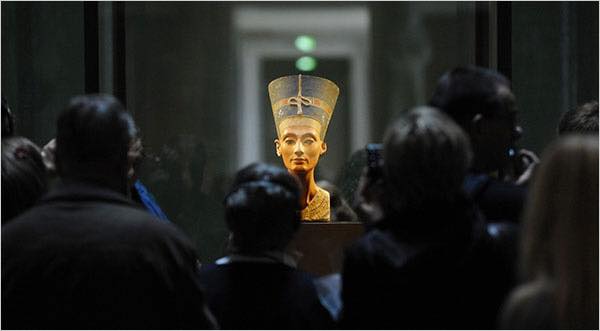
The bust of Nefertiti in the German Museum
Informing the Egyptian government
Indeed, Von Stohrer was tasked with informing the Egyptian government that Germany had withdrawn its offer to return the Nefertiti bust, and he expressed his hope that Egypt would consider signing a friendship treaty with Germany regardless. The Egyptian government's response was truly remarkable: it ordered the expulsion of the German ambassador a few weeks later! (*Fact). But Hitler didn't care...
As for the head, it was displayed in the Neues Museum (modern museum) in the heart of Berlin, and the queen was celebrated by having the entire museum redecorated with motifs, hieroglyphs, and numerous pharaonic figures, as was the custom at the time. When war broke out, most of the Egyptian collection—including the head of Nefertiti—was stored in underground mines until the end of hostilities and the surrender of Germany.
Here, Egyptian hopes of recovering it were renewed, and they began contacting the British government, which studied the matter but stated that it lacked jurisdiction since the piece had been legally removed from Egypt. However, it suggested that Egypt contact the American team known as the Monuments Men.
The division's leadership also studied the matter but clarified that their mandate was to recover artifacts stolen by the Nazis during their rule, and since the head had come to Germany under a previous regime, they could not intervene. Thus, Egypt had to wait several more years – specifically until 1952 with the revolution, but that's another story…
Moheb Rizkalla
You can continue reading the rest of the article from the article here. Links Next: