Do you know the story of the copper pen of Pasha?
Al-Nahhas PashaMustafa Al-Nahhas) (June 15, 1879 – August 23, 1965) One of the most prominent Egyptian politicians of the 20th century. He served as Prime Minister of Egypt and Speaker of the National Assembly (now the Egyptian House of Representatives). He helped found the Wafd Party and led it from 1927 until 1952 when the party was dissolved. He also contributed to the founding of the League of Arab States.
A few days ago, I was struck by a British article published on August 27, 1936, 85 years ago. The article was about the signing of the British-Egyptian Treaty of Friendship and its importance. Like most articles from that distant time, it was characterized by an accurate description of the entire situation, making the reader feel as if he were one of the attendees, or even one of the signatories! It first describes the Locarno Hall where the signing ceremony took place, mentioning that it was decorated in gold and honey colors. Then the journalist began to list the names of those present and how they entered the hall while conversing: Mr. Anthony Eden with Nahhas Pasha, the Prime Minister; Mr. Ramsay MacDonald with Mahmoud Pasha; Lord Halifax and Sir John Simon with Ismail Sidqi Pasha; Makram Ebeid Pasha with Sir Miles Lampson; and others.
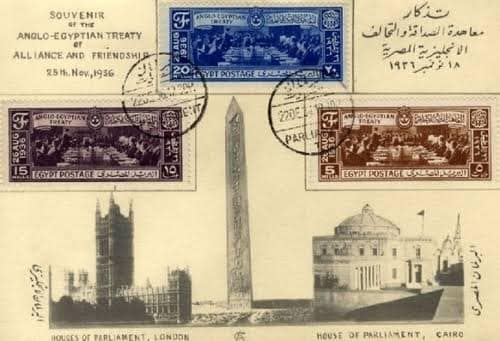
The writer continues, saying that besides the main table—which was almost oval in shape—comfortable sofas and chairs were scattered throughout the spacious hall, occupied by the assistants and secretarial staff of the members of the English and Egyptian delegations, as well as the wives of the members, descendants of Nefertiti and Cleopatra. As for the table itself, it was adorned with five water jugs, glass cups, and modern fountain pens (the journalist notes with undisguised pride, "No more inkwells and quill pens, as was the case in the past!").
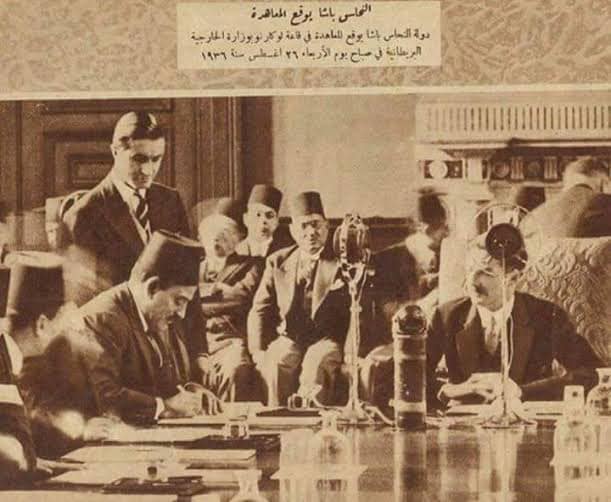
After the attendees were seated, the session began. Everyone fell silent when Mr. Eden stood up and began to speak. He praised Lord Cromer and his past contributions, as well as Sir Lampson and his current contributions. He did not mention Saad Zaghloul, but Nahas Pasha revived the memory of “the Egyptian leader who was the first to conceive the idea of a treaty of friendship and alliance between the two peoples.” He also mentioned in his speech that “Egypt, the cradle of ancient civilization, today places its hands in the hands of great, free England in order to open a new page between East and West.”
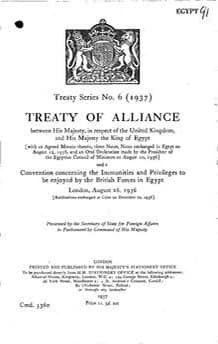
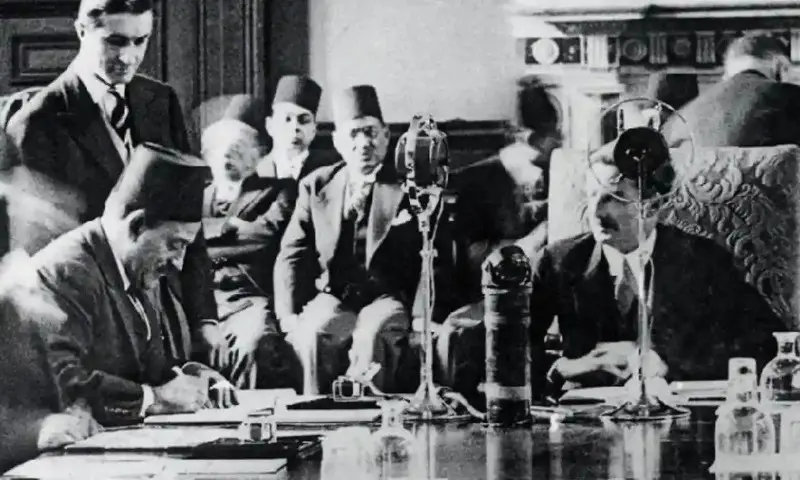
After the speeches concluded, the Egyptian delegation members appeared delighted. Their red fezzes, contrasting with the colors of the hall, seemed to breathe new life into the event. Two copies of the treaty were placed on the table: one to remain in London, the other to be flown to Cairo. The journalist noticed that the Egyptian delegation signed the "English" version with the pens available on the table, but the situation was different for the "Egyptian" version. Everyone used a single gold pen, which Nahhas Pasha had taken from his own pocket. Once the Egyptian side had finished signing, the same pen was rolled out for the English team to use! Interestingly, Mr. Eden was unaware of what was happening and almost signed with an ordinary pen he was holding. However, the Egyptian Prime Minister smiled and subtly gestured towards the gold pen. Eden understood the request and signed with the same pen, then politely returned it to Nahhas Pasha.
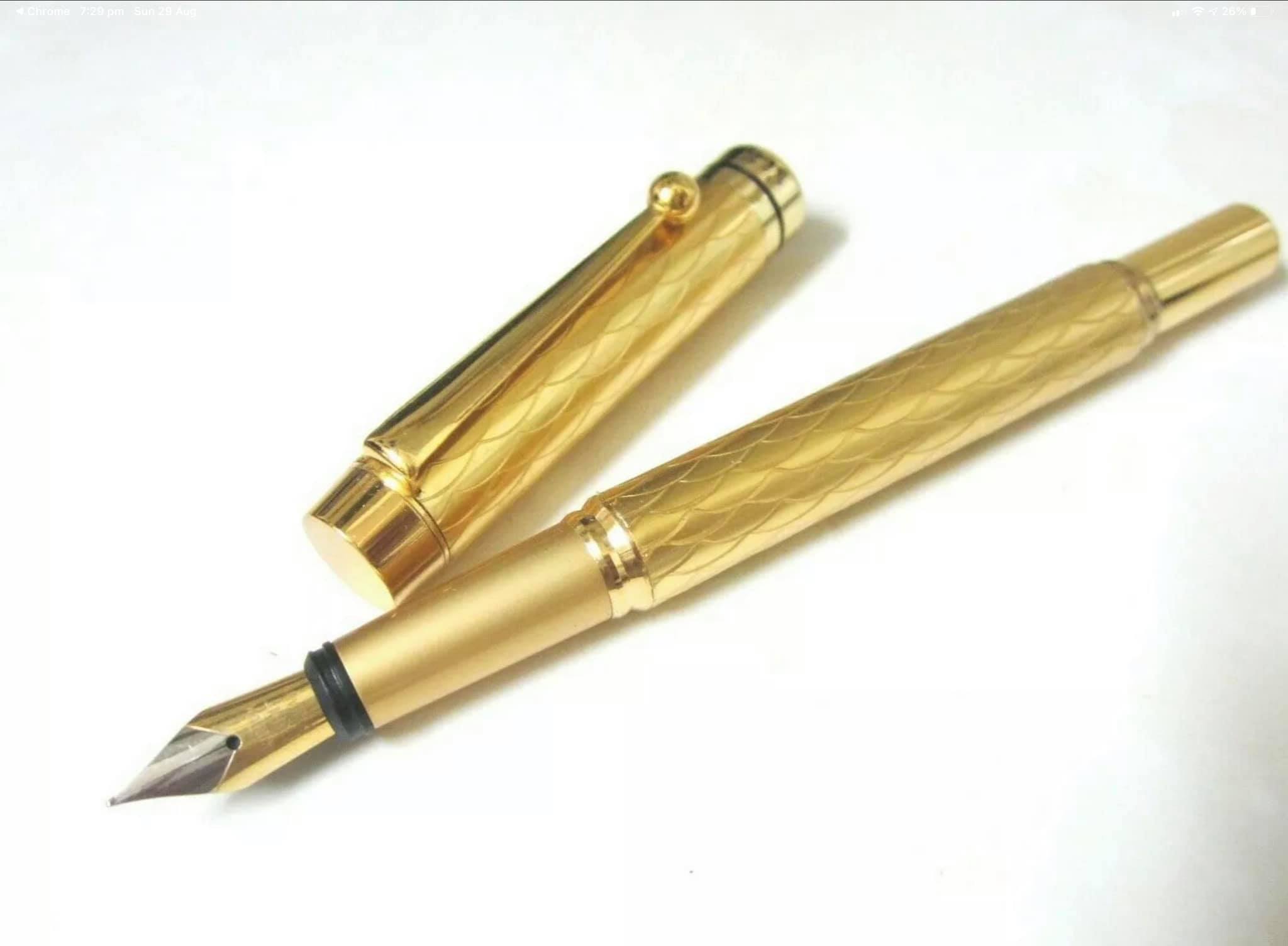
Here ends the English article, and I imagine that the Pasha had issued instructions before the conference to the members of the Egyptian side on the necessity of using only the gold pen for signing. Most likely, he realized the importance of the historical moment and the need to record it with a single pen. Perhaps he wanted it to be placed in a museum someday, or perhaps he gifted it to the young King of Egypt, Farouk – whose reign was only a few months old when the treaty was signed – or perhaps he wanted to keep it for himself as a memento of one of the most important days in his political life.
You can follow the topics Similar On the Arab collector
Notes on the Farouk Royal Commemorative Stamps