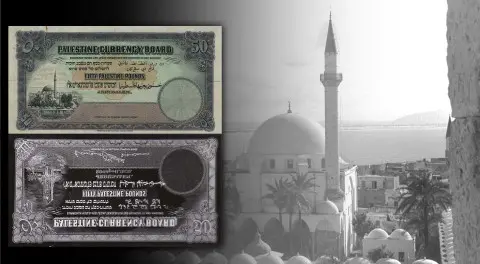
Palestinian banknotes and negative templates
How to print banknotes
Printing banknotes involves complex and precise steps. This process is attributed to skilled engineers and craftsmen who operate large printing presses for long and arduous hours to print paper money in large bundles. These bundles are then cut using a special machine resembling a guillotine and distributed to banks. Special papers made of cotton or other materials are used. polymer 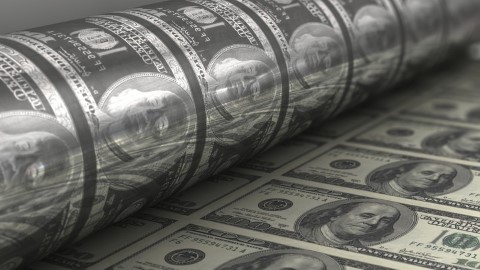 Special inks are used for printing to prevent counterfeiting of those currencies.
The printing process takes place in two stages:
1- Offset Printing: This is a process that takes place by using large printing machines to print the background image of the banknote on both sides, and through this process the security patterns found on the background of the banknote are printed.
2- Intaglio Printing: In this stage, the images and designs are printed on both sides of the paper.
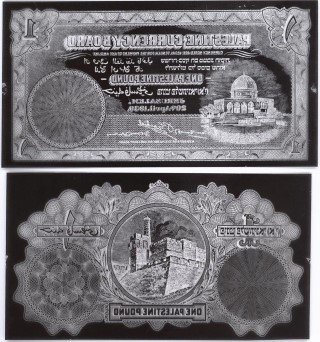
To prepare for the intaglio printing process, a template with the banknote's design must be polished using a reverse or negative method. It appears that the method of printing Palestinian banknotes at that time used the traditional method of printing postcards at that time, as negative templates made of transparent acetate sheets have recently appeared in auction houses.
Spink Auction 2023 No. 381
On January 13, 2023, a number of distinctive pieces of negatives were offered in lot number 315 of the Spink International Banknote Auction held in New York City. 381 Copies of reverse molds of transparent acetate banknotes were displayed, although these pieces were sold in April 2013, but this time those pieces witnessed different prices than they were sold for 10 years ago.
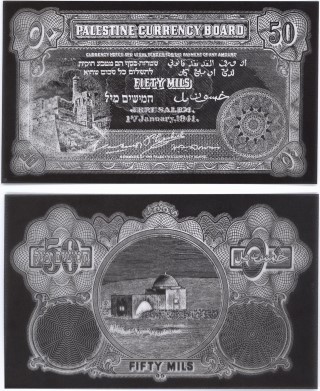
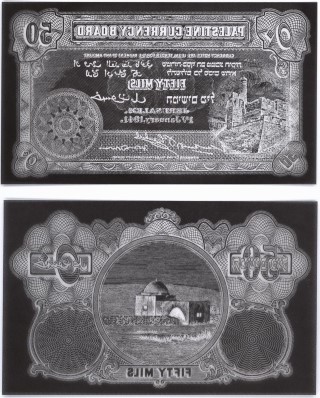
Fifty Palestinian mills 1941
Piece number 219 From lot number 315 of Spink's World Banknote Auction held in New York City, number 381, a unique copy of a 50-mil Palestinian banknote, front and back printed reverse on transparent acetate paper, bearing the date January 1, 1941, and without a serial number, was offered and sold for £575.
One hundred mills Palestinian 1941
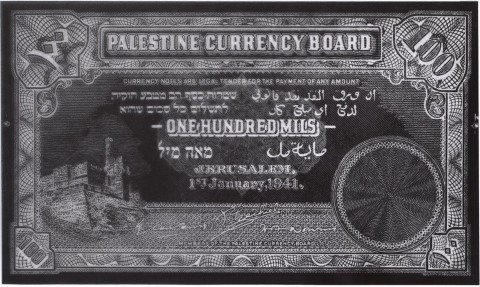
Piece number 220 From lot number 315 of Spink's World Banknote Auction held in New York City, number 381, a unique copy of a 100-mil Palestinian banknote, front and back printed reverse on transparent acetate paper, bearing the date January 1, 1941, was offered and sold for £1,050.
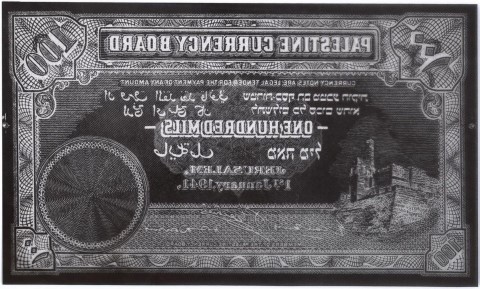
Palestinian pound 1939
Piece number 227 From lot number 315 of Spink's World Banknote Auction held in New York City, number 381, a unique copy of a one-pound Palestinian banknote, front and back printed reverse on transparent acetate paper, dated April 20, 1939, was offered and sold for £725.
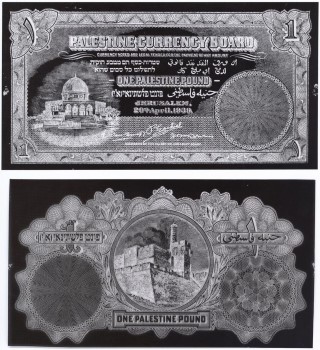
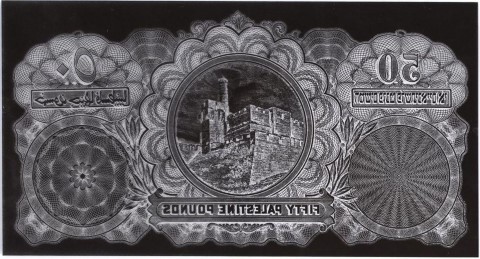
Fifty Palestinian pounds 1939
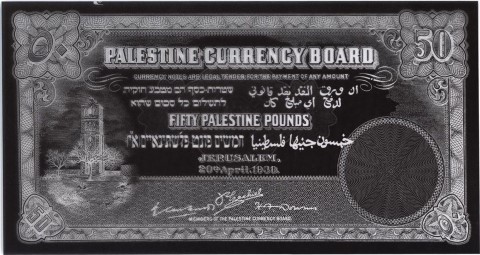
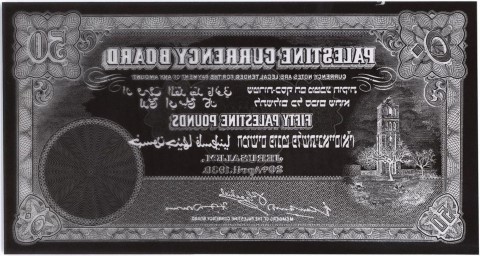
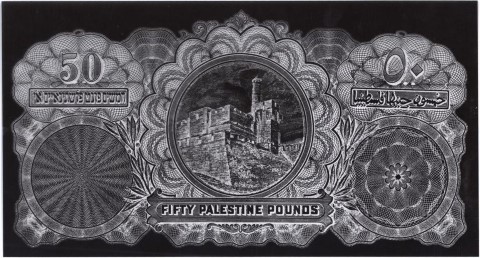
Piece number 233 From lot number 315 of Spink's World Banknote Auction No. 381 in New York City, a unique copy of a fifty Palestinian pound note, front and back printed reverse on transparent acetate paper, bearing the date April 20, 1939 (which differs from the actual circulation date of the note, September 7, 1939), was offered and sold for £1,100.
Spink Auction 2023 No. 23170
On January 30, 2023, another number of distinctive pieces of negative die pieces were offered once in lot number 645 of Spink International Banknote Auction No. 23170, which was held electronically.
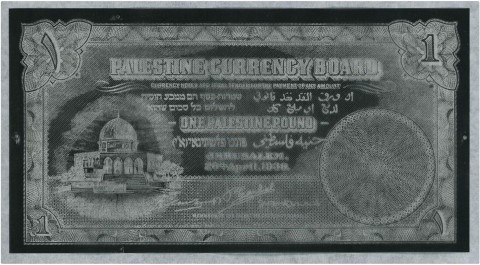
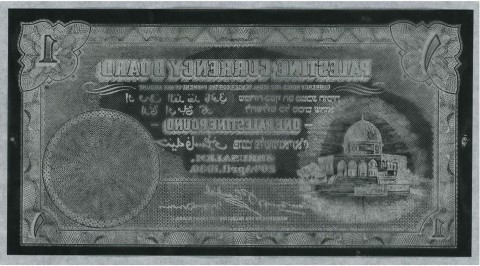
Palestinian pound 1939
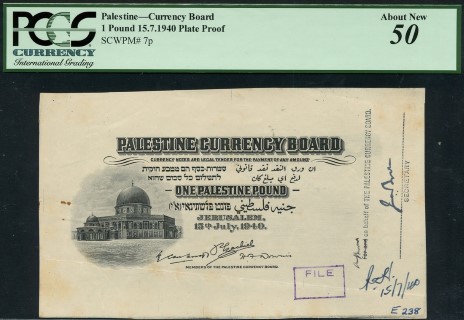
Piece number 1534 From lot number 645 of Spink's World Banknote Auction held in New York City, number 23170, a unique copy of a one-pound Palestinian banknote, front only, printed reverse on transparent acetate paper, bearing the date April 20, 1939, without a serial number, featuring the Dome of the Rock mosque and bearing three printed signatures of members of the Palestine Currency Board, Sir John Calcott, Sir Percy Etchel and H.F. Downey in the lower center, was sold for £230.
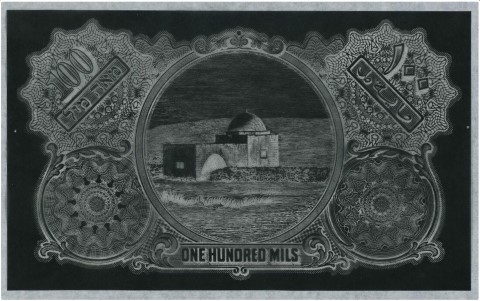
One hundred Palestinian mills
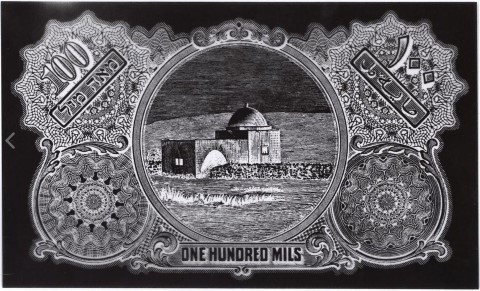
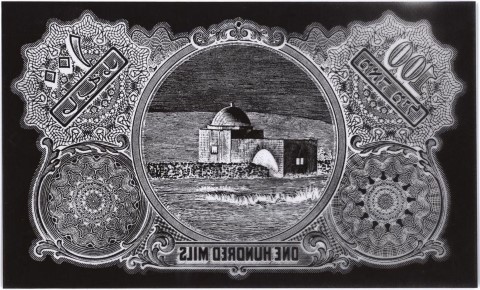
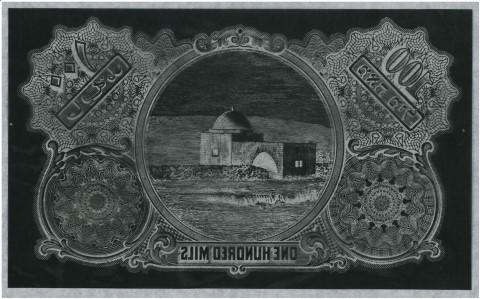
Piece number 1536 From lot number 645 of Spink's World Banknote Auction held in New York City, number 23170, a unique copy of the 100-mil Palestinian banknote, reverse printed on transparent acetate paper and bearing an image of Bilal Mosque in Bethlehem in the center, was offered and sold for £220.
What is the significance of negative templates on Palestinian banknotes?
These are the only negative plates available for personal collection, as the rest of the collection is kept in the archives of the Zionist Bank of Israel. Therefore, it is a unique collection and is considered an important evidence of the printing technology used at that time in Palestinian banknotes. Also, printing has developed and the negative plates are polished on copper or zinc plates, so it is considered a primitive printing of banknotes in itself. Despite this, the collection was sold for a low price, less than the amounts expected by Spink Auction House.
Sources:
Spink Auction House – Miscellaneous Auctions
For more similar topics, you can browse the Arab collector's website via the following link:
Qatari banknotes break records
Jeddah International Currency Exhibition – Fourth Edition