Arabic CoinsArabic Paper MoneyModern CoinsNumismaticsNotaphily (Paper Currency)
Egyptian coins that never saw the light of day
This article explores Egyptian coins that were designed but never officially issued or circulated. Discover the mysterious stories behind these coins that never saw the light of day in Egyptian monetary history.
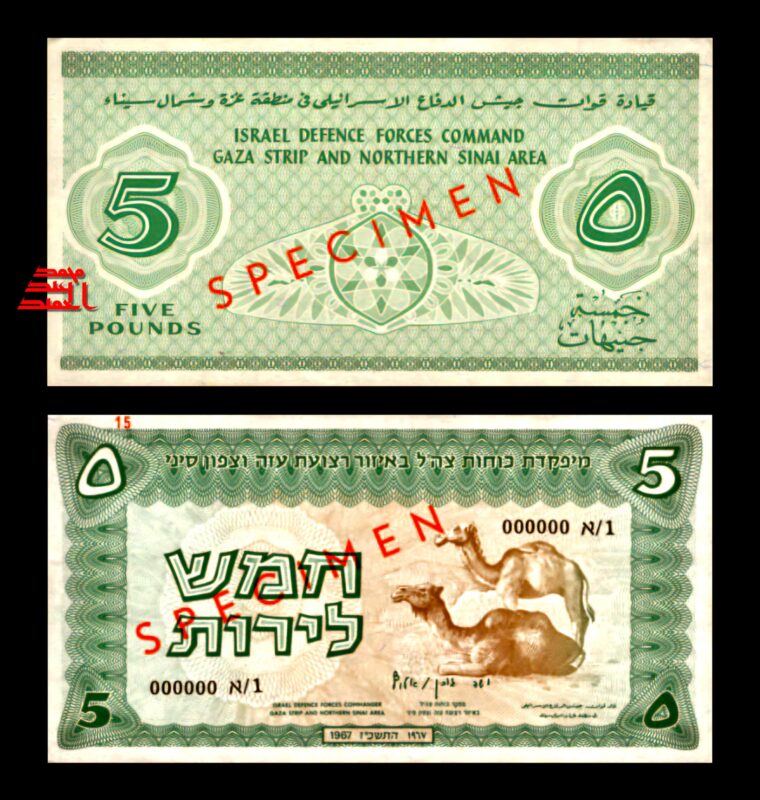
Sinai fairy
After the 1967 defeat, they planned to issue new currencies while retaining the names of the denominations that were known before them, so that they could be used in the territories they had recently annexed, and they worked to gradually change their identity.
The question arises: why did they choose to keep the pound as the main monetary unit?
Answer: Because the value of the Egyptian pound was higher than the value of their currency.
In any case, this project failed and millions of printed pages were destroyed.
For more details about these currencies, I recommend reading the article by my dear friend, Professor Ahmed Abdullah. Israeli occupation funds for economic control over Sinai.
Mediterranean Credit Fund Currencies
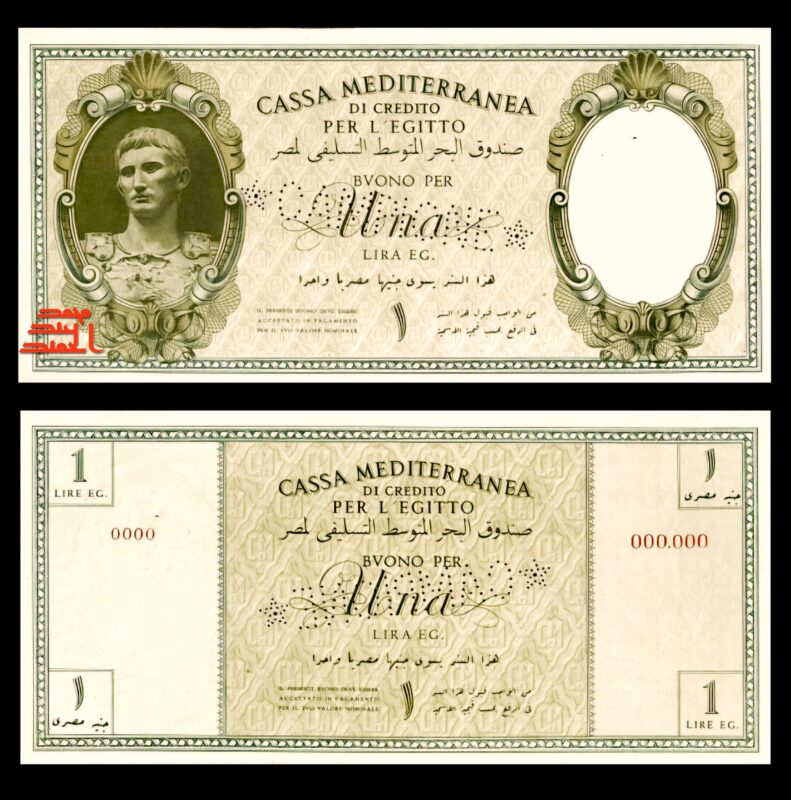
In 1942 it was Axis forces Germany and Italy had reached the outskirts of Alexandria from the west, and were on the verge of entering the city and then advancing on Cairo and from there to the Suez Canal. Most indicators at the time pointed to a British defeat and the Axis takeover of Egypt. Even the British themselves were preparing to evacuate their positions in Alexandria and Cairo and concentrate at the Suez Canal base. Italy sought to annex Egypt to its African colonies, while Germany wanted to control the Suez Canal to sever the most important sea route connecting Britain to its colonies in Asia.
Interestingly, the Italians were so confident of winning Egypt that they printed new banknotes to circulate in Egypt after taking control of it. The Italian imagination at the time chose to put on those banknotes the image of the Roman Emperor Augustus as if they were about to restore the glories of ancient Rome and conquer Egypt for the second time.
But things didn't go as planned; the Axis forces suffered a heavy defeat at El Alamein, and Italy's dreams were shattered, along with those coins that were never put into circulation.
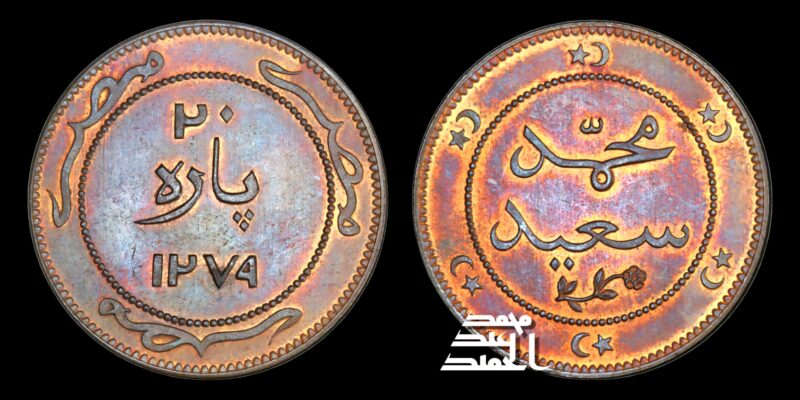
Twenty paras 1862
After the Ottomans entered Egypt, all Egyptian coins bore the name of the Ottoman Sultan. This continued for centuries. It is noteworthy that during Muhammad Ali Pasha's conflict with the Sublime Porte, he did not remove the name of the Ottoman Sultan. However, it seems that the idea occurred to Said Pasha, Muhammad Ali's son, who sought to issue some coins bearing his name instead of the Ottoman Sultan's. He contracted with a mint in Paris to produce these coins in 1862. However, the matter was met with fierce Ottoman rejection, which resulted in great pressure on Cairo and Paris, ultimately leading to the cancellation of this project and the non-introduction of these coins into official circulation. Fortunately, some examples that were actually minted have reached us as samples of this issue that never saw the light of day.
Twenty piasters of Sultan Fuad
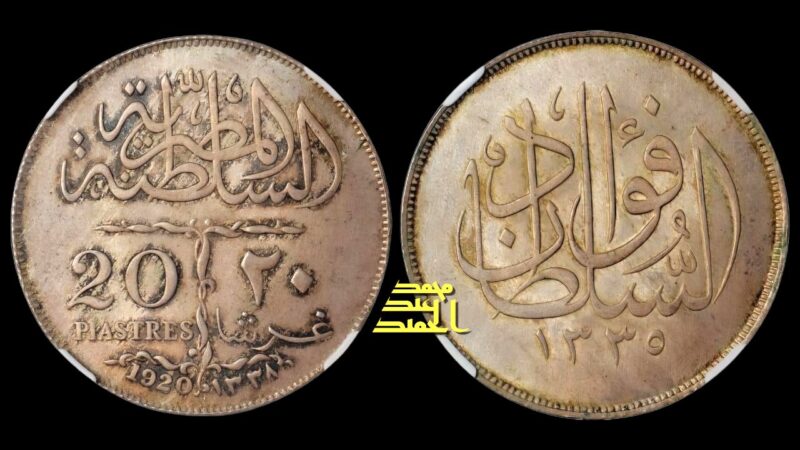
A legend among modern Egyptian coins, deserving of the title "impossible coin"... the Sultan Fuad Riyal
*Side note: If someone tells you they have a Sultan Fuad riyal, tell them it's fake without even seeing it.
In 1914, Khedive Abbas Hilmi II was deposed and his uncle Hussein Kamel took over as Sultan of the Egyptian Sultanate under British protection. This coincided with the outbreak of World War I and the Ottomans joining the Axis powers, thus ending Egypt’s “nominal” subordination to the Ottoman state.
In 1917, Sultan Hussein Kamel died and the rule passed to his brother Fuad, who at the beginning of his reign was called Sultan. In 1920, some silver coins were issued in the name of “Sultan Fuad” and they were of a design very similar to the coins of Sultan Hussein Kamel. However, after the end of the British protectorate over Egypt and the declaration of a new constitution in 1923, the Egyptian state turned into a kingdom and its ruler became a king, so in the same year some new coins were issued in the name of “King Fuad”.”
The coins that bore the name of Fouad as Sultan and were put into circulation were in the denominations of two piasters, five piasters and ten piasters, but the twenty piasters denomination (the riyal) was never put into circulation because only two pieces were minted, which the mint presented to the palace, and the start of production of this denomination was not approved.
Over time, Sultan Fuad's riyal gained great fame and many legends were woven around it. I think that two factors, besides its extreme rarity, combined to create that situation:
The first is its forgery and the spread of those forgeries that have stirred the imaginations of amateurs.
The second is the belief that other coins besides the two known ones were minted, which led some to search for them obsessively.
In 2018, one of the two Sultan Fuad riyal specimens was offered for the first time at a Baldwin's auction and sold for US$120,000, an amount less than what experts had estimated.
In any case, the Sultan Fuad riyal represents a special case, as it has gained unparalleled fame and forgery and fraud operations among Egyptian currencies that have not seen the light of day.
You can learn more about the legendary Real Madrid through this topic. Sultan Fuad's 1920 Riyal: Between Fact and Fiction
For more similar topics, you can browse the Arab collector's website through the Link the next: