Modern CoinsHistoryNumismatics
The hobby of collecting coins and artifacts
Is the hobby of collecting coins considered a crime under the jurisdiction of antiquities laws?
This article does not express the opinion of the Arab collector, but only represents the personal opinion of the writer.
About 20 years ago, when I made the decision to emigrate, the honorable brothers warned me not to try to leave Egypt with any currency that was more than 100 years old, otherwise I would be subject to legal accountability, as it is considered an antiquity. At the time, I was surprised by the severity of the procedures, especially since 100 years of Egypt’s history is considered a very short period, but I respected the law anyway.
Some time later, when I had settled in Australia, I entered a coin and antiques shop, laughing to myself and thinking, what is the age of the "antiques" allowed to be traded in a country that is 200 years old? Maybe 20 or 30 years at most? And I was shocked when I found many pieces from the pre-federal union period and others that were older than the Australian colony itself! I struck up a conversation with the seller and mentioned the situation in Egypt. The man responded diplomatically and didn't blame the Egyptian laws. After all, that's their business, not his. But he explained that the Australian—and Western in general—thinking is to make everything old available to new generations so they can learn about their past, appreciate it, and grow to love it more. My interlocutor even went further, asserting that acquiring antiques leads to patriotism and pride in one's history. I said to him, in a desperate defense, "Perhaps those laws were enacted to protect the heritage of some countries so it doesn't disappear among collectors." He stifled a laugh, saying, "Do you think someone who paid a considerable sum of money to acquire an old coin wouldn't preserve it and take pride in it? The world's leading collectors build a name and reputation for themselves because of their contributions to preserving this heritage. We see brilliant names like Eliasberg and Pittman being remembered with reverence and respect even years after their passing.".
Coin collecting hobby and the Egyptian government
Recently, the Egyptian government has begun pursuing and cracking down on currency traders and enthusiasts, much like it does with drug dealers. Until recently, the situation was both laughable and tragic, a case of "only in Egypt," based on the absurdity of applying the law without considering its spirit. But today, it's simply a tragic situation. The expected outcome here is simply:
1) The reluctance of both traders and enthusiasts to engage in the hobby of collecting Egyptian coins
2) The removal of all the beautiful pieces from Egypt or their melting down to avoid legal repercussions
3) We are losing another opportunity to connect with the glory of ancient Egypt.
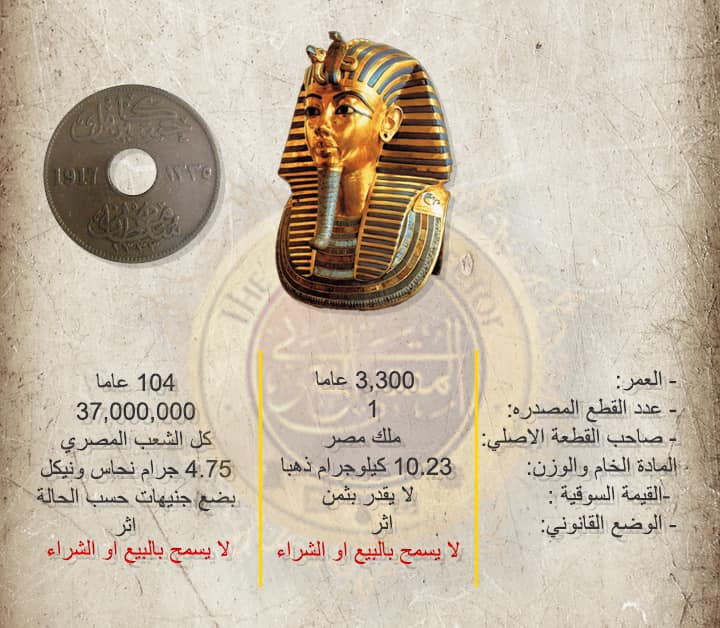
Furthermore, coin collecting can never be considered a rare historical artifact, nor can it be compared, for example, to royal Pharaonic artifacts – such as a mask. Tutankhamun It is a unique mask, unparalleled in the world, and made for a king, not an ordinary person – whereas, for example, the 5 milliemes minted in 1917 by Heaton had 37 million pieces made, all bearing the same inscription, drawing, and details! A staggering number, to the point that it was minted at a rate of 3 pieces for every Egyptian citizen at that time!
If we take the principle that “everything old is an antiquity,” which Egyptian law applies firmly, does this mean that after 20 years from now the local slipper “Zanouba” will be considered an antiquity? (Zanouba is the slipper made in Egypt that was distributed almost symbolically within the framework of the project to combat barefootness under the patronage of King Farouk in 1941).
Many people do not know that until the mid-eighties there were licensed shops in Egypt to sell Pharaonic antiquities to Egyptians and foreigners, and each piece was sold with an original guarantee certificate as well as an export permit! (See the attached photos of the famous Haj Hafnawi shops in the sixties) I am not saying that this was a completely correct action, but also complete criminalization is not healthy either.
I don’t know if this fierce attack on the hobby of coin collecting was intentional and had other dimensions or an agenda that I am unaware of, or if it was just an application by a bureaucratic employee/officer who perhaps took the easy way out, so instead of pursuing the dangerous ones, he wanted to show his superior ability by trapping people whose only sin was that they loved the history of Egypt?
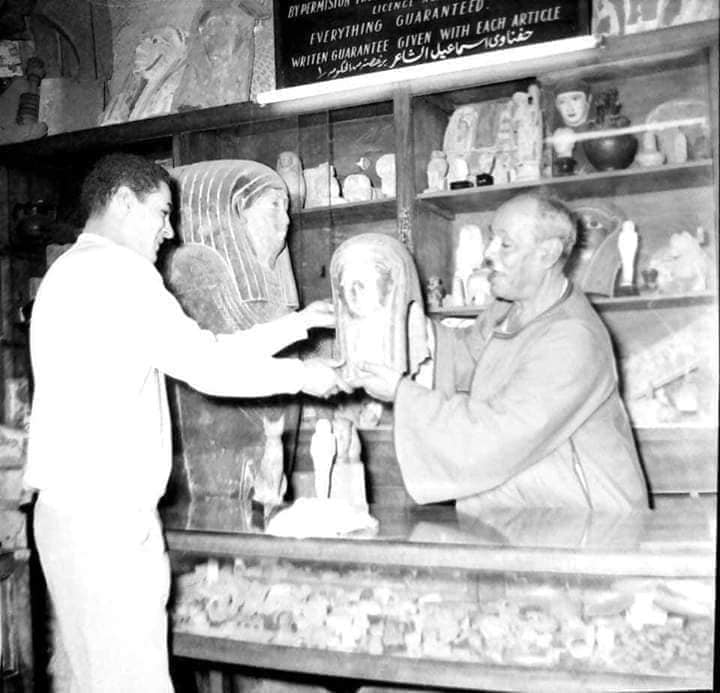
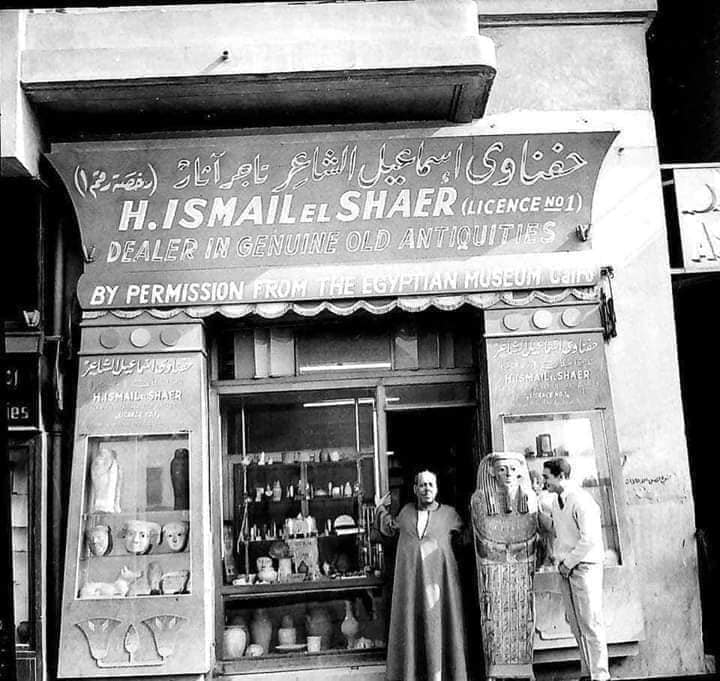
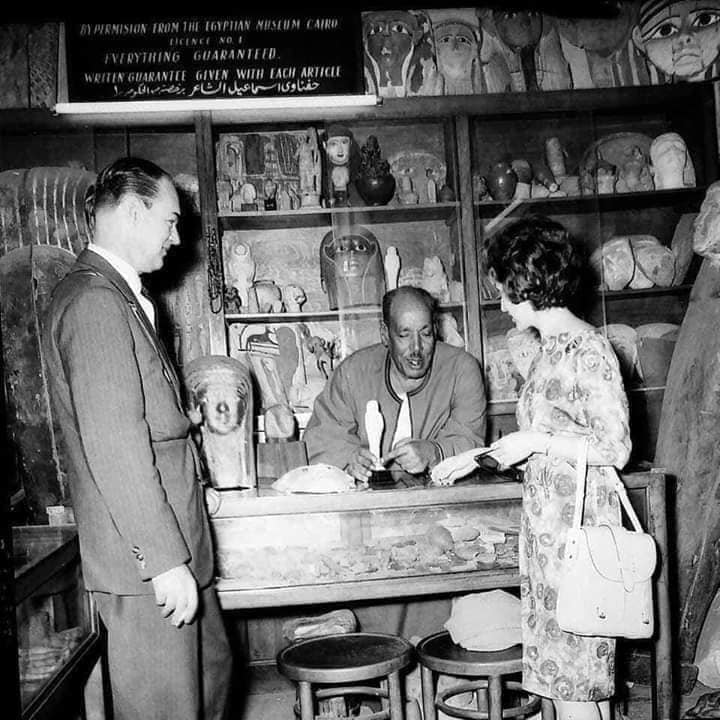
An antiquities shop owned by Haj Hafnawi Ismail Al-Shaer, an antiquities dealer in Nazlet El-Samman, Giza. License No. “1” for the sale and trade of Egyptian antiquities, issued on December 23, 1963.
For more similar topics, you can browse the Arab collector's website through the Link the next: