Modern CoinsNumismatics
The Golden Pound and St. George the Roman
Perhaps one of the most famous currencies in the world is the one known as the English “gold sovereign,” to the point that it has become a proverb, and it is said that so-and-so’s reputation is like that of a gold sovereign! So what is its story and why does it bear the image of a saint who never visited England in his life?
As a practical matter – there are two sides or two stories,
The first story: George, or George, was born in Cappadocia (modern-day Turkey), or according to another account, in Lydda, Palestine. His father was a Christian governor of a Roman province. The child was raised in a sound manner until he grew up and joined the Roman army as an officer during the reign of Emperor Diocletian. He displayed exceptional courage and rose through the ranks until Diocletian ordered the expulsion of Christians from the army unless they renounced their faith. George openly defied the emperor, was arrested, and endured severe torture. He refused to convert to paganism until he was beheaded after seven years. He is considered one of the most important martyrs of Christianity in both the Eastern and Western churches, and is even called the Prince of Martyrs.
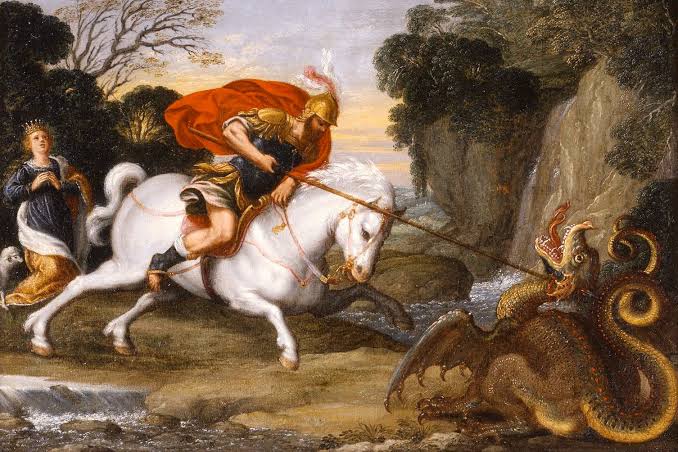
Saint George has a famous symbolic icon of him on horseback stabbing a dragon (symbolizing the devil) with a spear in his hand symbolizing his faith, and in the background we find a bride symbolizing the church looking forward to her children with joy and pride.
The second story: In 1327 AD, Edward III ascended the throne of England and declared Saint George the official patron saint of the kingdom. In 1415 AD, after the English victory at the famous Battle of Achincourt against the French, Saint George's Day was celebrated annually, and his image appeared on the names of the English Order of the Garter. The flag of England was also named the "St. George's Cross" (a red cross on a completely white background, considered part of the flag of the United Kingdom, which also includes the flag of Scotland: the Cross of Saint Andrew, and the flag of Ireland: the Cross of Saint Patrick, in addition to the English flag of Saint George). Although the saint was not born in England, the kingdom chose him as a symbol of its values and principles, a common practice at the time. He was considered a purely English hero, so much so that William Shakespeare concluded his inspiring speech to the soldiers in the play "Henry V" with him, saying: "O Lord! For Harry, England and St. George!“
In 1817, the English treasury suffered from the exorbitant costs of the Napoleonic Wars, necessitating a restructuring of the economy, particularly the currency. The government decided to abandon the shield-like designs used on older coins and adopt a new design unlike any other in the world. The chosen image was that of Saint George on horseback. The Italian artist Benedetto Pesseroci was selected to re-sculpt him as a bare-chested Greek knight, easily controlling his horse with one hand while the other held a lance with which to pierce the dragon (a symbol of England's enemies).
English gold sovereign
The design became famous as it appeared on all English sovereigns, under the reigns of kings and queens, for nearly 200 years. Millions of these coins were minted (it was even said that around 100 million gold sovereigns were in circulation in England alone at the beginning of the 20th century!). The English gold sovereign was minted throughout the empire: Canada, Australia, South Africa, as well as England itself.
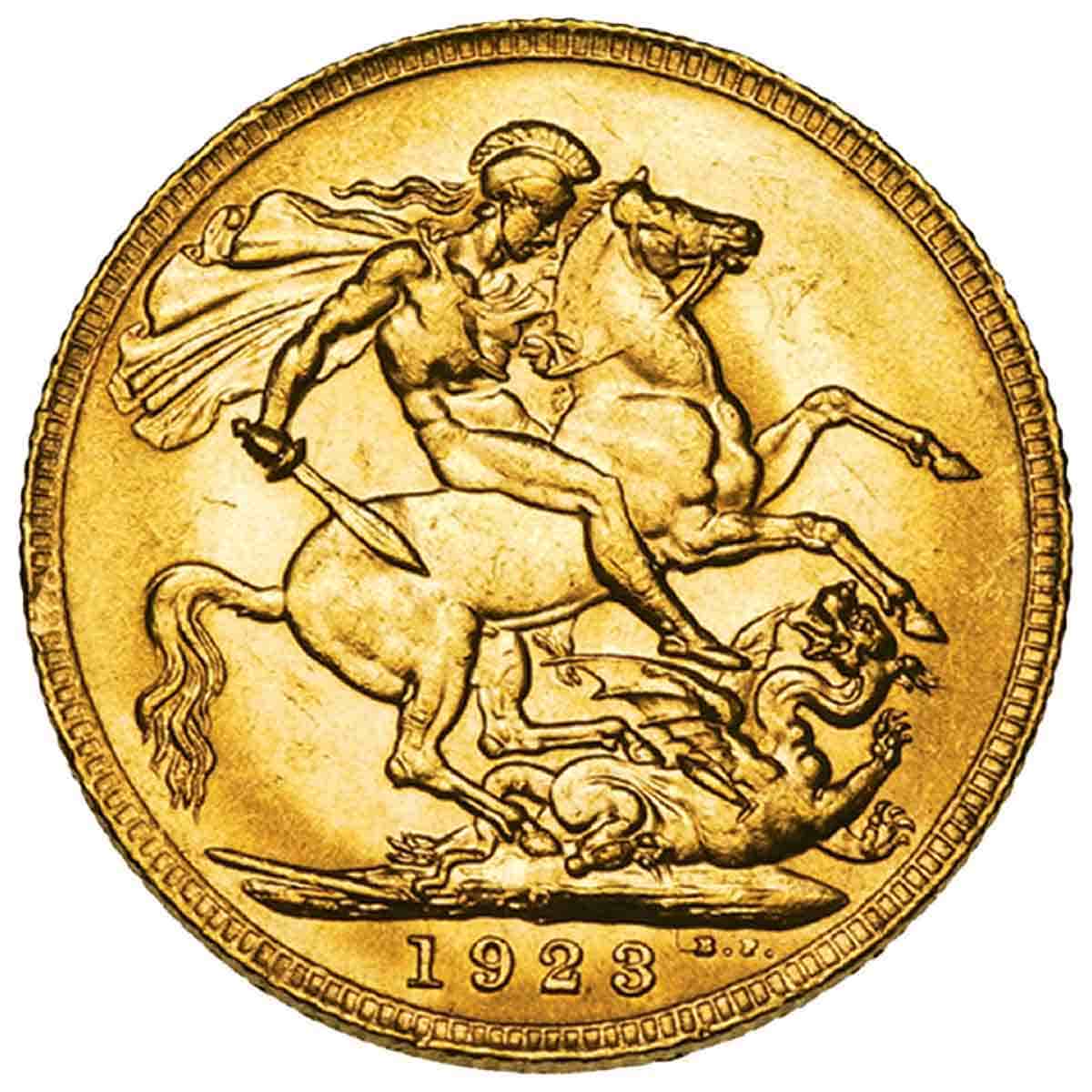
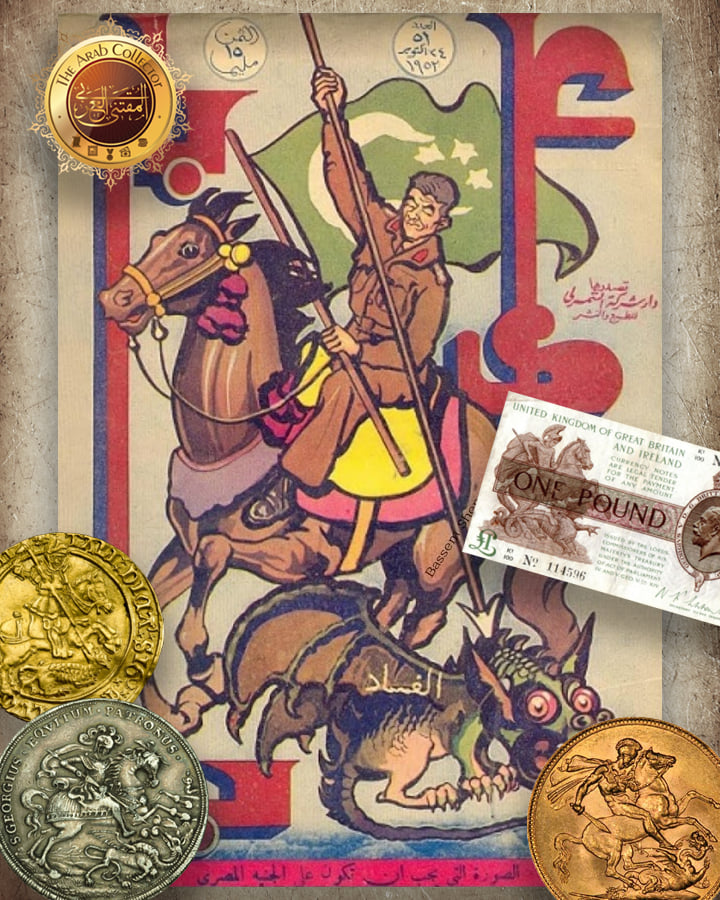
Saint George's appearance was not limited to England's coins, but also appeared on its paper pounds and on the currencies of many other countries. It is worth noting that Saint George is not exclusive to England, but is also the patron saint of Portugal, Ethiopia, Georgia, and the provinces of Catalonia, Venice, and Genoa.
Interestingly, one of the Egyptian magazines (Ali Baba) published a drawing on its cover dated October 24, 1952, depicting Major General Muhammad Naguib in the same form as Saint George, with the phrase “The image that should be on the Egyptian pound” underneath! I don’t think that the authorities at the time seriously considered adopting this form, but if it indicates anything, it indicates that the average Egyptian citizen knew the form of the English gold pound and was also aware of the history of the saint and what he represented in terms of noble knightly morals.
Sources:
- location The Royal British Mint
– Wikipedia website
– Cover image of Ali Baba magazine: Professor Bassem Shenouda – Coptic Archive.
For more similar topics, you can browse the Arab collector's website through the Link the next: