Collection and display of special editions for the first day of release
In December 2024, the Asian Federation of Philatelic Sociologists (FIAP) hosted a highly successful competitive pilot category for First Day of Issue (FDC) envelopes at the Asia Stamp Exhibition in Shanghai. This event highlighted both the potential and the challenges related to the First Day envelope exhibition category.
Exhibits were presented from Australia, Bangladesh, China, India, Malaysia, Nepal, and New Zealand. The enthusiasm for participating in the First Day Covers (FDC) category reflects the growing interest in collecting and studying these covers. While the display of First Day Covers at national fairs in the United States is well-established and well-developed, it remains underdeveloped in many other countries, and there is still no standardized and consistent set of guidelines and rules for preparing and judging First Day Cover exhibits.
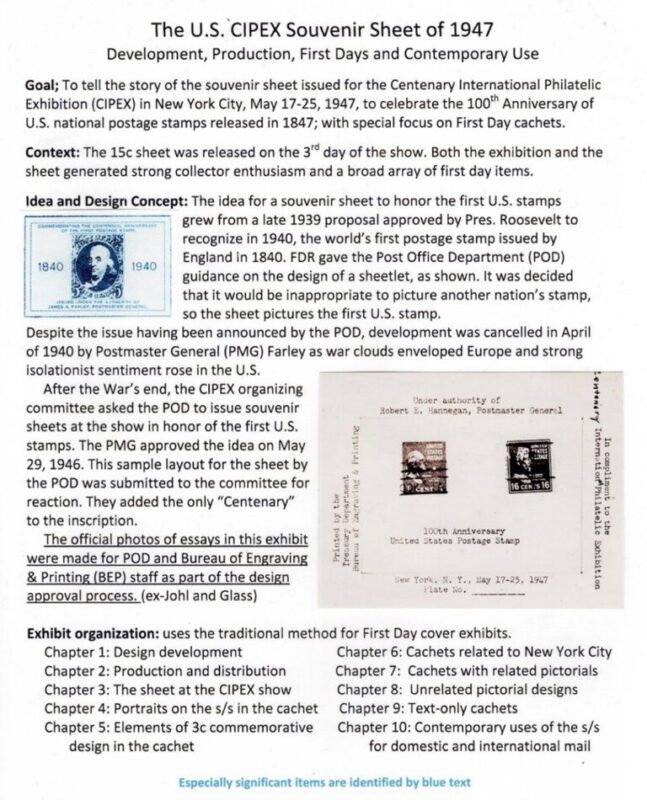
Image No. 1 from the Day One Covers Display, courtesy of John Hotchner RDP, USA.
The importance of first-day covers
As early as May 1840, with the introduction of the Penny Black stamp, the significance of the first official use date was recognized. Robert Cole, a London lawyer with an interest in postal history, prepared a First Day envelope for himself dated May 6, 1840. His personal collection of postal history, including the May 6, 1840 envelope, was first sold at Christie's auction house in London during the 1980s. Although there were earlier known uses of the Penny Black on May 1 and 2, the significance of the May 6 use remains.
Many early stamp issues do not have a specific official issue date. In such cases, the earliest documented use of the stamp is considered a substitute for the first-day cover. Therefore, the first-day cover can be considered a category of earliest documented use (EDU). The date of earliest documented use may change based on new research or further discoveries. In some cases, first-day covers may be commercial envelopes that were used accidentally, while in others, they may be specially prepared by a dealer or collector.
“It is obvious that first-day envelopes may relate to a single stamp, a stamp set, a series of issues, or even postal stationery.”
Key features of First Day of Release (FDC) envelopes
The first day cover of the issue consists of two main elements: Memorial design (Cachet) If it exists – andPostal stamp (Postmark). There are differing understandings regarding the definition of these two key elements in first-day envelopes. Many collectors are unsure of the precise meaning of a commemorative design or how it differs from a postage stamp. Many early first-day envelopes did not feature any special printed or written phrases or illustrations.
Memorial design (Cachet) It is the text or drawings that are added to the envelope before or after it is sent. Souvenir designs may include simple words or more complex drawings, and are executed in various ways such as: hand printing, lithography, photogravure, thermal printing, intaglio, or even handwriting.
Souvenir designs may be General (Compatible with multiple designs or versions) or especially The stamps are affixed to the envelope. In the United States, commemorative designs were first introduced by Fullerton in 1909, while in Britain, the earliest known illustrated cover dates back to June 22, 1911. In the United States, there have been numerous makers of commemorative First Day envelopes since the early 20th century. In most other countries, the range of available commemorative stamps is much more limited. In some cases, the commemorative designs are official postal designs, while in others, they are private designs created by a dealer or collector.
Original design and production materials for commemorative first-day cover makers are sometimes available in the United States, but in other countries they are often unavailable to individuals.
One of the modern aspects that has become important in collecting first-day envelopes is what is known as Late additions (Add-ons). These are commemorative stamps added long after the envelope has been sent and sealed on the first day, and are often laser-printed or hand-drawn. While they are collectible, collectors should be aware that they are Not contemporary For the date of dispatch, and sometimes it may be produced in large quantities.
The second key element of the first day's cover is Postal stamp (Postmark). Early envelopes did not include a special cancellation stamp; they were simply stamped with standard city postage stamps. In the United States, special "first day of issue" stamps did not appear until 1937, while in other countries they appeared later.
Collecting Day One Release (FDCs) Envelopes
As with all stamp categories, individuals are free to collect first-day covers in any way and to whatever extent they choose. Some may selectively collect only untitled covers, while others may include titled covers in their collections. Titles on titled covers may be printed, typewritten, or handwritten. Collectors may also collect first-day covers related to events such as stamp fairs, historical occasions, or places, but souvenir covers that are not directly connected to the first day of issue are not typically considered part of a first-day cover collection.
First Day Edition (FDCs) Envelopes Displayed
As a first-day exhibitor, it is essential that you carefully read and study the rules and guidelines of the exhibition you intend to participate in. Adherence to these rules and regulations is crucial for successful exhibiting. Currently, there is no single, universal set of rules and guidelines for first-day exhibiting. There are three different national sets of guidelines, in addition to the Shanghai International Philatelic Exhibition's Individual Regulations (IREX). To date, the International Federation of Philatelic Sociologists (FIP) has not adopted any official, agreed-upon regulations for this category.
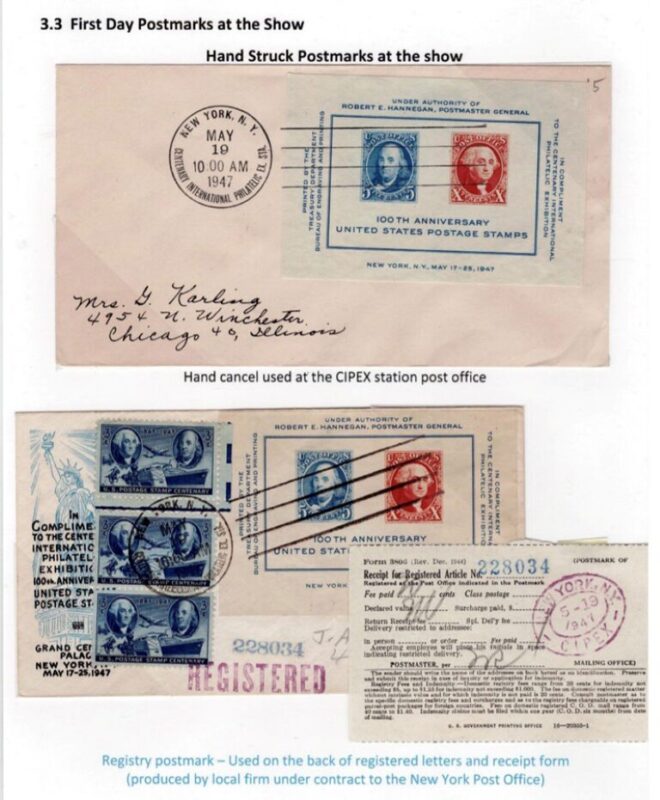
Image No. 2 from the Day One Covers display, courtesy of John Hotchner RDP, USA.
Conflicting Guidelines, Rules, and Individual Regulations (IREX)
There are significant differences between the principles of First Day Container Displays (FDCs) as outlined in American Philatelic Society (APS) Guide to Judging and Display, 7th EditionGuidelines of the Australian Philatelic Federation, the China Comprehensive Philatelic Association, and the Individual Regulations (IREX) adopted for the Shanghai Expo 2024.
The following is a summary of the main points of divergence between these four sets of principles:
USA
The United States has a well-established and sophisticated system for displaying first-day envelopes, but this model is not transferable in its current form to the display systems adopted by the International Federation of Philatelic Associations (FIP), the European Federation of Philatelic Associations (FEPA), the Latin American Philatelic Federation (FIAF), and the Asian Philatelic Federation (FIAP).
 In all guidelines, rules, and regulations, there is a common thread: a focus on a complete and logical narrative of the character's story from concept to contemporary commercial use. This applies to single-frame or multi-frame displays.
According to US guidelines, the FDC presentation should reflect the traditional presentation style, starting from the design and production stage of the stamp (including errors and variations), through official mail announcements and accompanying documents, a study of commemorative stamps and the postmark associated with the first day, and ending with contemporary commercial uses. The same style can be applied to postal stationery.
Given the large number of commemorative envelope makers in the United States, the commemorative envelope section of the display is often quite extensive. Add-ons, maximum cards, and other related issues are not explicitly addressed in these guidelines.
Based on these guidelines, most US FDC offers conform to the traditional offering approach, but there is a fundamental problem with that, since these offers, although they may contain more than 50% FDCs, are not in essence true FDC offers, but rather an extension of the traditional offering category.
In the United States, there are no specific categories at the national level, so these performances don't pose a problem. However, at the international level, where there are clearly defined categories, these performances must be classified and judged within the traditional performance category.
Alternative methods according to US guidelines:
• Studying one commemorative stamp maker and tracing the development of his career.
• Using FDCs to tell a postal history story, provided they are available Temporal and physical completion In this story.
• Use FDCs to present an objective story, provided that the purpose of the presentation is clearly stated on the introductory page and in the summary.
Regarding the judging criteria, the exhibitor is expected to demonstrate detailed knowledge of the makers of commemorative stamps and discuss their work.
A rhetorical question that arises in this context is: How is “importance” defined? Are the production materials related to the stamps, the envelopes themselves, or the commercial uses on offer the most important?
The details of the offer remain largely the same as in other categories, but Overlapping elements This is acceptable provided that the commemorative stamps, seals, or stamps themselves are not obscured. However, this practice is not acceptable under some other guidelines.
Although US FDC offerings largely reflect traditional, postal, or thematic approaches, US guidelines are of limited use as a basis for international guidelines by the FIP. However, if the FIP fails to address this issue, it risks excluding a vital and growing category of offerings, particularly in the United States.
Side note: The last book by Andrew Macdonald Macfarlane This 514-page book explains FDC presentation practices from an American perspective. It presents what the author considers best practices from a purely US standpoint and offers no clear alternative approaches. It does not take into account the specific availability of materials in the United States compared to other countries.. The large size of the book may make the FDC presentation seem complicated, and may limit innovation in presentations.
note: This book reflects the author's personal views on best practices, and not all experts in the field agree with everything stated in it.
Australian Philatelic Association
Australian regulations are generally similar to those in the United States, but they do not explicitly state whether materials relating to the design, production, or development of stamps or postal stationery should be included. The section 3.1.6The term “supporting materials” is mentioned, but it is unclear whether this refers to the commemorative stamp (Cachet) on the cover, the adhesive stamp, or the value mark (Indicia).
 The guidelines compile aFor thematic and topical presentations Together, although there is a fundamental difference between them. The guidelines also allow for the inclusion of Maximum tickets for day one of releaseBut only within these two categories.
Regarding the classification of offers (item 3.1.7It is very broad, and includes special occasion offers (item vi), while the all-encompassing item is “[i.e., a combination of the above categories” (item viii). Useless In terms of accuracy and direction.
Regarding thematic or special-themed presentations, there are Specific requirement to submit a separate presentation planThis causes some confusion, as any presentation, regardless of type, should have a clear plan. This requirement appears to have been simply transferred from the Thematic Presentation category guidelines, and it's not stated whether a plan is also required for presentations with traditional processing.
It also appears that Bids Evaluation Criteria In Australian regulations, it is simply a direct reflection of the standards of other categories of offers, without a clear adaptation to the nature of the Day 1 envelope offers.
The bottom line is that Australian regulations go into excessive detail, but many of these details are either unclear or not precisely defined.
For example, there is a vague phrase that says:
“Stylist knowledge will be assessed based on the attractiveness of the comments.”This is a statement that lacks accuracy or objective standards.
However, some guidelines contain useful points, such as emphasizing that Scarcity should be assessed based on the difficulty of obtaining the material..
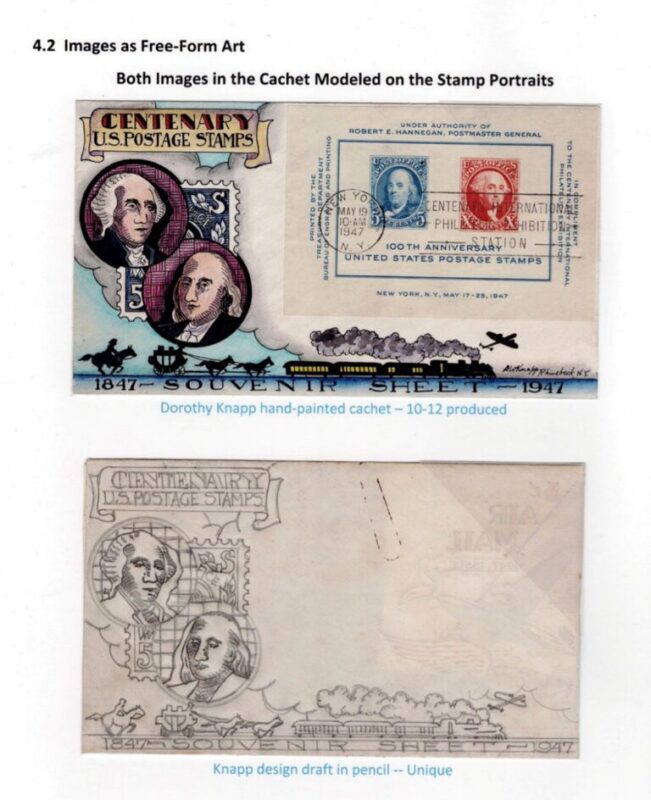
Image No. 3 from the Day One Covers display, courtesy of John Hotchner RDP, USA.
China Comprehensive Philatelic Association (ACPF)
Under Guidelines for judging the first day's envelope bids issued by the China All-China Philatelic Federation (pilot implementation)It was explicitly stated that materials “not actually sent by mail” – i.e., what is known as…Hand-backs. The guidelines also clearly state that FDC's offerings should consist only of Stamp materials for first-day envelopesThis makes the treatment range much narrower compared to US or Australian guidelines.
In the material 2.2Thematic treatment is discussed without reference to traditional or topical treatment. Only the use of Drawings and production materials Related to commemorative stamps or seals, Not with the stamps themselves.
According to the article 3.5، Postal stationery, meter marks, or maximum cards are not considered suitable. For display within the FDC category.
In the article 4, There is Contradiction in the article titleWhere it combines Evaluation criteria and presentation organization methodsThis is confusing. The material... 4.3 The statement “study and research as a method of organizing presentation” lacks clarity.
The degree of ambiguity in the material is increasing. 6.3 Which states that “The presentations should focus on the study of postal seals.”This is a trend unsuitable For FDC presentations in the United States, all envelopes for the first-day seal are issued from one official city, and the seal is one.
As the paragraph states 6.3/d, provided that “for stamps that do not have a clear issue date, a documented first use may be shown.”.
Based on this interpretation, The New Zealand show should have remained in the FDC category. Which he entered into.
The ACPF guidelines directly contradict the other guidelines mentioned here in several points.
Regulations for the China International Exhibition for the Promotion of Virtues (IREX) 2024
The Individual Regulations (IREX) approved for the China Expo 2024 Shorter and perhaps clearer Of those used in the United States or Australia.
Although the details are similar to those adopted in other countries, they More restrictive At certain points.
These regulations explicitly state that FDC's offerings must consist only of Stamp materials for first-day envelopes.
Although it is possible to include Archival materials relating to the production of the commemorative stamp on the coverHowever, Not allowed By including materials relating to the production of the stamp itself.
Some phrases are unclear – such as the article 3.4 But these are linguistic issues that can be easily dealt with.
Looking to the future, it is essential to be FIP regulations for FDC presentations are aligned as much as possible with various national guidelines.Essential contradictions must be avoided.
FDC display structure or processing
The exhibits that were displayed in Shanghai Exhibition Very useful in explaining Different methods for handling presentation FDC.
It was identified Four main methodsWith examples from the exhibition:
Note: No exhibits following the traditional American style were displayed as an extension of the traditional exhibition category, nor were there studies focusing on a single commemorative stamp maker.
Although FDC exhibitions are supposed to focus heavily on collectible designs (cachets), most of the exhibits in Shanghai This focus was not shownThis indicates the presence of A problem with the guidelines, regulations, or their interpretation by the exhibitors or judges..
The four methods:
- Thematic treatment (Topical):
Examples include “The Great Wall of China”, “The Asian Games”, “Infectious Diseases”, and “The Olympic Games”.
- A study of different stamp issues from a single country over a specific period of time:
Examples include the first day envelope displays for the People's Republic of China, Austria, Australia, and India after independence.
- A detailed study of a single stamp or a single set of stamps:
Such as “First Day Covers of the 1942 U.S. China Resistance Stamp” (Scott 906), and ”The 1937 Gorge Colonies Commemorative Coronation of King George VI.”.
- FDC As documents for postal history:
Such as the New Zealand exhibit, which focused on showcasing the oldest documented uses of stamps that do not have a “specific issue date,” and the display of “first-day envelopes for the first set of Chinese stamps dedicated to compulsory military personnel.”.
Arbitration problems at the Shanghai Fair
It seems there Differences of opinion around Interpretation and application of regulations IREX At the Shanghai exhibition, which is a The International Federation must avoid this in the future..
Some members of the judging panel may not Sufficiently familiar with the range and variety of materials Which may be available for FDC shows in specific countries, time periods, or on specific topics, leading to Difficulties in applying standard arbitration criteria.
Two shows appeared in Shanghai that formed Problem for the arbitration committee:
- in case New Zealand showIt appeared that the judges faced Difficulty in evaluating it as a presentation FDCThis led to Move it to the postal history category.
- As for the offer “First day envelopes for the first set of Chinese stamps dedicated to conscripts”It was lost No treatment followed FDC CorrectAlthough it was judged within the FDC category, Perhaps it would have been better assessed within the postal history category..

Judging criteria and suggested scoring for First Day of Release (FDC) envelope submissions
Treatment (Treatment) For offers FDC
- The appropriate treatment for an FDC presentation varies depending on the material available for specific countries, time periods, or topics.
- The American presentation style follows the traditional presentation class model.
- Presentations with thematic or special treatment should be judged on this basis.
- Commemorative stamps (cachets) should be organized in a logical and attractive way.
- The extent must be assessed Suitability of listed materials In the show.
- Offers should include A carefully designed title pageIt includes a statement of purpose and a presentation plan, outlining elements such as:
- Non-contemporary additions (Add-ons)
- Commercial uses that are not FDCs
- Production materials for stamps
- Para-philatelic material
- Effective use of headings and subheadings.
Knowledge, personal study and research (Knowledge, Personal Study and Research)
- Selecting and accurately describing the materials presented.
- drawers Research sources Used.
- to set New discoveries If it exists.
- Correct identification of Methods of producing commemorative designs (Cachets).
- Analyze postmarks where appropriate.
- Accurate identification of Non-contemporary additionsNon-contemporaneous Add-ons).
- It offers unusual uses such as: airmail, sending to foreign destinations.
- Displaying rare postal markings such as: Help signs, informal cancellations.
the condition (Condition) For offers FDC
- The envelopes displayed must be in Best possible conditionIn many cases, the situation will be excellent.
- Envelopes that have already gone through the mail may show Some minor corrosion. Cancellations must be clear and their dates legible.
- The stamps must be Attached to the cover (Tied) Correctly. The stamps should not contain visible defects or damage.
- It is preferable that the envelopes Free from stains or yellowing Whenever possible.
Presentation for FDC Exhibits (First Day Cover Presentations)
- Many of the recommended aspects depend on personal preference.
- Most of them are derived from other display categories.
- Short and clear writing of texts.
- Highlighting the key elements of the presentation.
- Use High-quality fastening materials.
- A suitable choice of page color and ink color.
- Overlapping envelopes (Overlapping) Or not, as necessary.
- Avoid visual repetition, and achieve balance within each frame and between different frames.
How is “importance” defined in the FDC presentation?
- It is difficult to assess and it is A highly subjective matter.
- “Difficulty in acquiring” is difficult to define as a clear measure of importance.
- The Chinese guidelines define overall importance as “stamp value of display”.
- In US guidelines, importance is usually linked to Comprehensive treatment.
- Given the redundant nature of the concept of significance, it is recommended that this criterion be removed from the arbitration criteria..
- It is proposed إThe points for “importance” are usually distributed equally between treatment and scarcity.
Proposed criteria for judging FDC bids and awarding points
- Treatment (Treatment): 30 points
- Knowledge, personal study and researchKnowledge, Personal Study & Research): 35 points
- the condition (Condition): 5 points
- Scarcity (Rarity): 25 points
- Presentation (Presentation): 5 points
- Total: 100 points
The International Federation (FIP) and moving forward with FDC offers
- Although including FDC offers within a broad promotional category may seem appealing at first, However, that would be an inappropriate approach..
- Due to the widespread popularity of the hobby of collecting first-day envelopes, A separate category with its own identity must be created..
Future recommendations for FIP
- formation Specialized committee To formulate Guidelines andRegulations IREX Clear and concise For the FDC category.
These regulations should be based on national best practices, while allowing for variations in the materials available according to countries, periods, and topics.
- Launching a virtual online training program To qualify FIP-certified referees for the FDC category.
- At the earliest opportunity, the International Federation must support category FDC experimental At an upcoming international exhibition.
- FIFA website update To include information about this initiative, with a presentation Examples of typical presentations.
- Because FDC offers are very convenient For virtual displayFIP should study Organizing the first virtual exhibition dedicated to presentations FDC.
Distinguishing between the FDC category and the postal date and traditional display categories
- The central question is: How do we distinguish a category? FDC Regarding postal history or traditional presentation?
- The obvious answer: Offers should focus FDC On commemorative stamps (Cachets) Related to the envelopes.
- The importance of focusing on commemorative stamps should be explained. Clearly in the project Regulations IREXAlong with other organizational details.
conclusion
The FDC category will make the International Federation more Inclusiveness and diversityand provides competitive platform For a growing group of enthusiasts interested in this type of collecting.
Disclaimer: This article reflects the author's viewpoint and does not represent the official position of the board of directors. FIP.
For more similar topics, you can browse the Arab collector's website through the Link the next:





 EN
EN  AR
AR