Sultan Fuad's 1920 Riyal: Between Fact and Fiction
What is the truth about the Sultan Fuad riyal? Why is it considered one of the rarest Egyptian currencies, if not the rarest of all? And what are the possibilities of obtaining this riyal?
Despite the scarcity of historical sources about this issue and the ambiguity surrounding that period, to answer these questions we must travel back more than a hundred years in an attempt to recount the sequence of events that influenced this issue of Sultan Fuad. Further details will be provided in the following section. Sultan Fuad's coins By number nineteenth From the Arab Collector magazine.
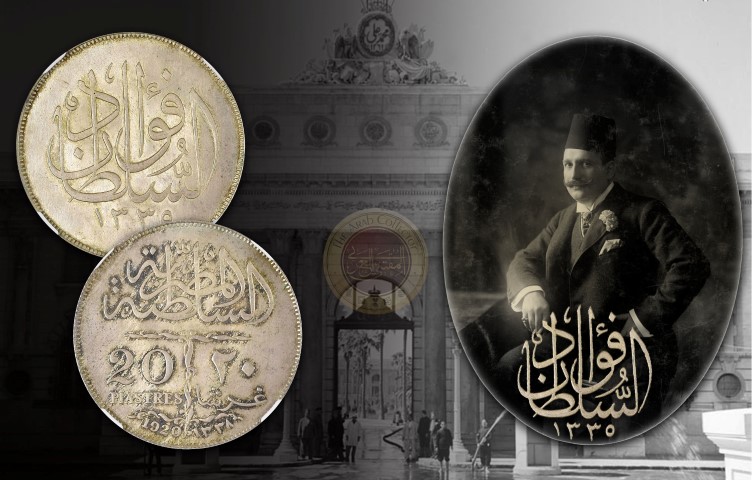
Sultan Fuad I

After Sultan Hussein died on October 9, 1917, Sultan Fuad assumed power amidst the battles of the First World War. In June and July of 1918, Laws No. 13 and 14 were issued authorizing the issuance of banknotes in the denominations of ten piasters and five piasters, with the same value as equivalent silver coins, a fixed price, and acceptance for settling any amount and for monetary transactions in general. Therefore, there was no urgent need to mint new coins in the name of Sultan Fuad, and an abundance of coins and paper money remained in circulation in Egypt.
Instead, Egypt began demanding that the Royal Mint in Britain re-mint the silver coins of Sultan Hussein Kamel to meet the needs of farmers during the cotton seasons by dealing with those coins, especially the small coins and denominations. On April 7, 1920, Sultan Fuad issued a decision to cancel the 1916 decree regarding giving the Indian rupee a legal price, due to the disappearance of the reasons for the decision. While this decision includes an explicit text after the use of the Indian rupee, it carries an implicit meaning of allowing the minting of new coins.
The truth about the issuance of the Sultan Fuad Riyal
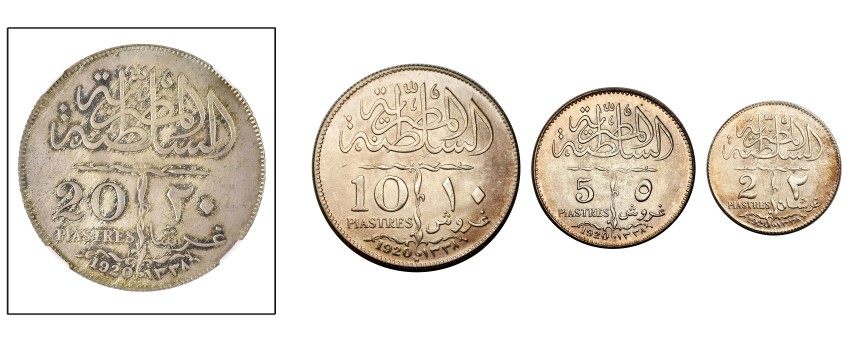
The two-piaster, five-piaster, and ten-piaster denominations of Sultan Fuad’s coins were minted at the British Royal Mint and put into circulation during the years 1920 and 1921. (Refer to the coin label to find out the mint quantities for each denomination) As for the twenty-piaster coin, it was not minted for circulation. Although the conclusions drawn about the circumstances that prevented the issuance of the Sultan's riyal may appear political, stemming from the political instability resulting from the events of the 1919 revolution and its aftermath, the main reasons were economic, resulting from the wartime conditions. One of these reasons was the abundance of Sultan Hussein's coins in the markets, and other reasons will be presented in detail in the separate research. With the coins of Sultan Fuad By number nineteenth From the Arab Collector magazine.
Therefore, there was little need to mint coins of Sultan Fuad's riyal. Although a sample of the coin was sent to Sultan Fuad at the time, he did not approve the production of copies for circulation, and the minted twenty-piaster coins remained merely a souvenir kept in the treasury.
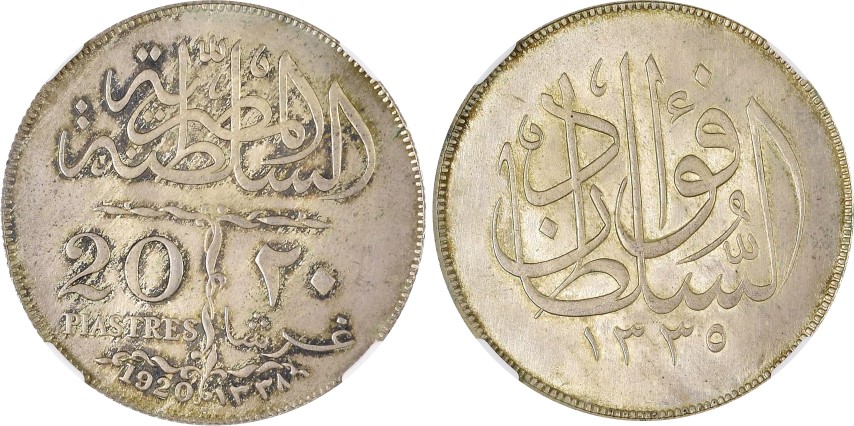
What is the quantity of Sultan Fuad's riyals?
No official source, whether the British government, the Royal Mint, or the Egyptian government, has specified the number of coins minted from this experimental riyal issue. However, according to the information available to the author of this article, only two coins are officially confirmed and documented in numismatic reference works. One of these coins is preserved in the Egyptian Mint Museum, which is affiliated with the Egyptian Ministry of Finance, and it is the version featured in the book. Encyclopedia and Catalog of Egyptian Money.
The second coin was kept in the archives of the Royal Mint (in Birmingham) until it was sold in the 1990s to an anonymous buyer who had sent the coin. NGC The piece was appraised internationally in 2017 to preserve its condition and prepare it for an international auction. The exceptional piece, appraised at a score of 64, was displayed at Baldwin of St. James Auction House in London on January 14, 2018. Lot No. 270 In an auction known among collectors of Arab coins as one of the most important Egyptian pieces, if not the most important of all.
The dream that once seemed impossible was now closer to reality. One of only two such coins in the world was offered for sale to the public for the first time. Many individuals rushed to demand that the Egyptian government intervene in the sale, but the coin was indeed put up for auction and its price estimated at $150,000, with hopes that the price would skyrocket. Despite this, there was only one bid for the Sultan Fuad coin, which was... US$120,000 (Without commission) The auction ended unexpectedly quickly, and the piece is currently in the possession of an Egyptian collector who preferred not to disclose his name.
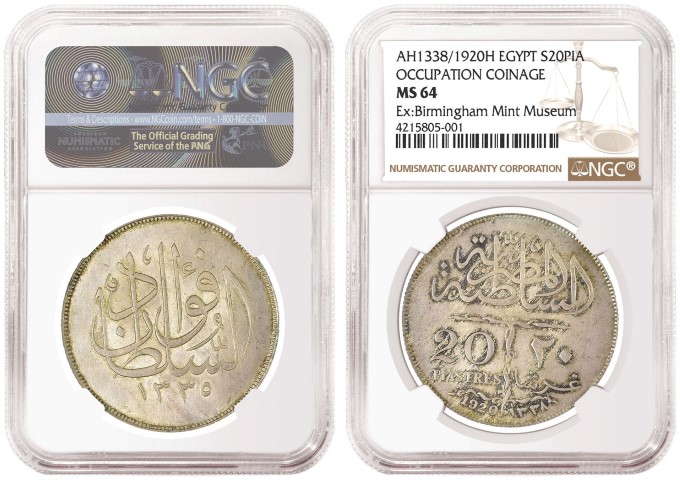
What is the current price of Sultan Fuad Riyal?
The selling price of any commodity is determined by the amount of supply and demand. Since there is only one piece of Sultan Fuad’s riyal that has been authorized for sale, and the other piece is still kept, the supply of Sultan Fuad’s riyal has not changed in the market, but the price is determined in this case by the amount of demand and whether the owner of the current piece has authorized its sale.
According to the latest edition of the Egyptian Currency Guide Egyptian Coins Guide Issue Twelve As of June 2021, the latest price reached by the item is US$200,000, an increase of 40 percent.
Are there any counterfeit or non-genuine pieces of Sultan Fuad's riyal?
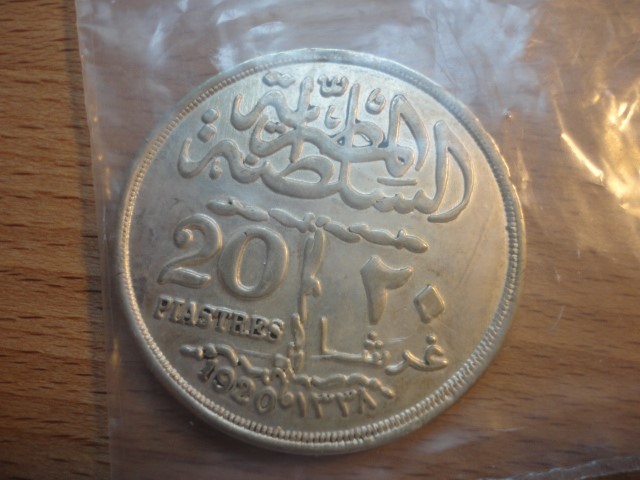
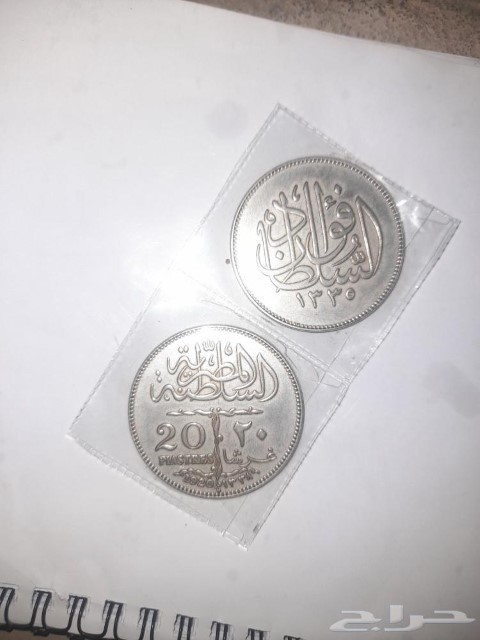
In reality, all the coins currently offered for sale are counterfeit. There are no genuine Sultan Fuad riyals except for the two advertised pieces. Do not believe any Sultan Fuad riyal offered for sale; rest assured it is 100% fake. Also, do not believe some media outlets and television channels that promote the increased price of the Sultan Fuad riyal simply because it is a commodity widely available in the market. They are merely seeking to increase their followers, ignorant of the true nature of this issue. Simply put, considering the current global population of 8 billion and the fact that only one coin is legal tender, your chances of obtaining a genuine one are 0.000,000,0008%.
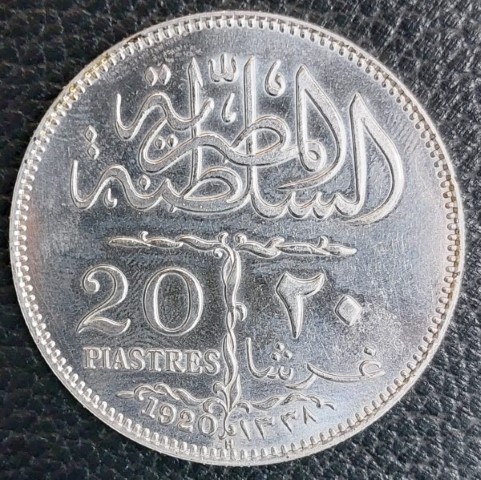
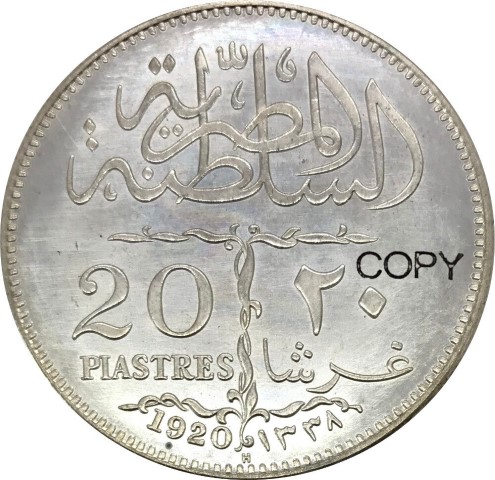
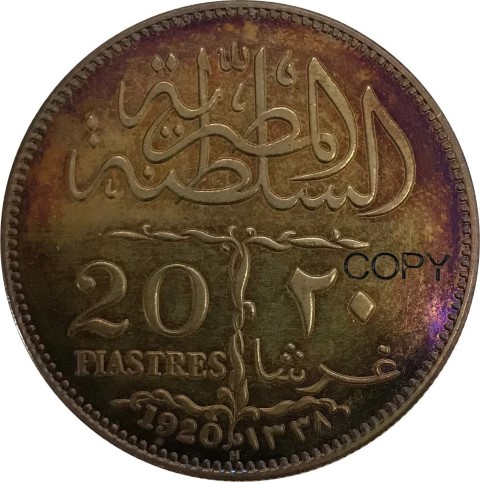
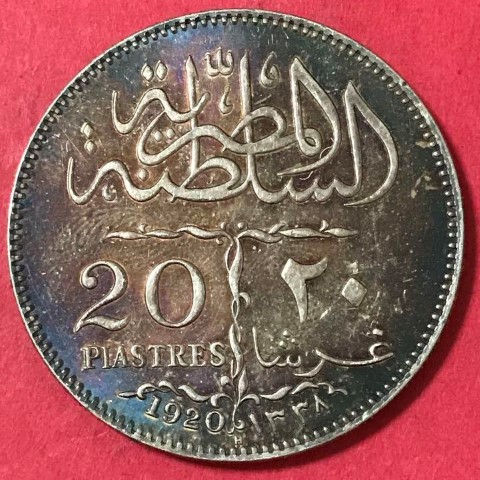
Due to the extreme rarity of the Sultan Fuad riyal, which is virtually impossible to acquire, some unscrupulous individuals have resorted to counterfeiting and imitating this distinctive coin over the years, attempting to deceive those who dream of owning this rarest piece of modern Egyptian currency. The most recent attempt occurred in 1998 when an Italian man presented a counterfeit riyal to an English coinage, claiming it to be genuine. However, tests revealed it to be a forgery. Numerous counterfeit versions of the Sultan Fuad riyal exist, both old and new, and all are fake. This can be easily detected through examination tests and by specialists (see photos).
Dr. Mazen Ibrahim
Resources
Encyclopedia and Catalog of Egyptian Money Magdi Hanafi
A rare riyal in the name of Sultan Fuad in the Mint Museum in Cairo (1338 AH/ 1920 AD). – Dr. Moataz Ahmed Marai
Very Rare NGC-graded 1920 Egypt 20 Piastres in Baldwin's of St. James's Auction
Al-Ahram Newspaper – Various issues between the years 1919, 1920, 1921
For more similar topics, you can browse the Arab collector's website. the Link the next: