Information is the amateur's weapon
As we have mentioned many times before, information is the most important weapon that an amateur can arm themselves with… and that is why I sometimes find myself surprised when I see amateurs who can work with these weapons and yet do not use them, preferring to rely on others.
Take, for example, these two coins that were issued to commemorate the January 25 Revolution. The two pieces were issued using the technology of circulating currency and were never issued in the form of proof, and everyone knows that. However, one of the unscrupulous people decided to change the condition of the surface using simple tools and solutions (not our field now), and the pieces were sent for evaluation to one of the two major companies, and they were rejected. So the attempt was repeated and they were sent a few times until they finally got away and were mistakenly evaluated as proof.

The coins were offered on the market for a hefty sum. The company was contacted and kindly reviewed the coins, discovering they had indeed made a mistake. To protect collectors, they revoked the certificates. However, some time later, similar coins were sent to another appraisal company, which initially rejected them. They were resent until they slipped through again and were appraised. The second company was also contacted and kindly revoked the certificates after realizing their error. In both cases, the companies tried to contact the appraiser and inform them of the cancellation, but the coins continued to reappear on eBay every few months for sale at inflated prices. Therefore, eBay's numismatics department was contacted to cancel the listing, which was then permanently removed. The site also notified the listing owner that the auction was canceled because the coins were counterfeit and advised them to exercise caution before listing any suspicious coins.


Of course, a collector isn't expected to know all of the above; that's not the job of a collector. However, they should be aware that Egyptian proof coins are well-known and listed in reputable catalogs, such as the catalog of Engineer Magdi Hanafi and the international catalog. Therefore, the idea of new proof coins appearing for older issues is highly unlikely. (I was personally offered a complete—fake—collection of 1 and 5 pound proof coins, starting with the 1956 El-Galaa half-pound note and continuing to the latest issue. The first thing that caught my attention about the list was the absence of rare items like the FIFA U-17 World Cup trophy, etc. The story I was told at the time was that the collection belonged to an old man who had spent his life working for the Egyptian Mint. The Mint produced a small number of these special coins for high-ranking government officials, and our friend minted one for himself… After reaching a very old age, he decided to sell the entire collection and entrusted a kind-hearted man to act as an intermediary and select a reputable collector to buy it from him. And, thankfully, that man chose me!)
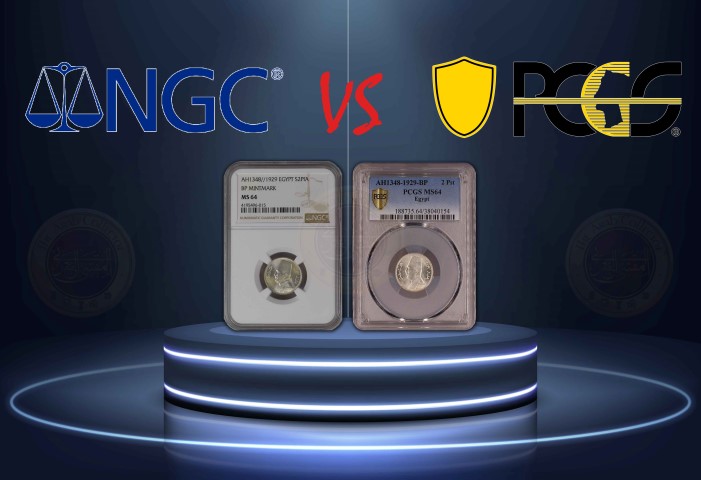
The important point of the story is that the hobbyist should always check the numbers of each appraised piece through the appraisal company's website (whether NGC or PCGS) before buying, which is a free service aimed at protecting hobbyists from forgery.

Therefore, we always return to the golden rule in the world of currencies: valuation companies and catalogs are helpful factors and they really work hard to protect the hobbyist, but first and foremost, my dear, it is your responsibility to buy the currency, not the holder, always and forever.