Important terms about coins
We occasionally encounter terms related to coins, and some of these concepts may not be readily understood. Therefore, we decided to create this page as a permanent reference for most of these terms, and we will update it regularly to make it an important resource for researchers and coin enthusiasts. We will present these concepts and terms in bullet points to facilitate searching, and we will also address some of the most frequently asked questions in this field.
Coin terminology and frequently asked questions
What is numismatics?
Numismatics is the study or collection of coins, including coins, tokens, banknotes, and related objects.
The importance of coinage studies
Its importance lies in informing us about the economic power and international trade relations of ancient societies, as well as determining the dates of the rulers during whose reigns these were struck. CurrencyIn particular, identifying images of certain engraved figures and important buildings, or models that were important to societies, such as images of livestock or certain plants.
What is the hobby of collecting coins?
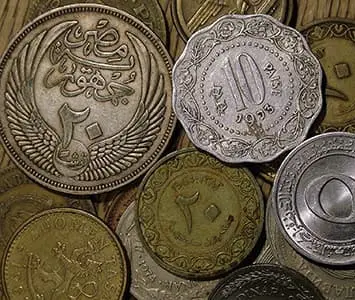
Coin collecting is one of the most popular hobbies in the world. Most collectors enjoy simply trying to build a complete collection of coins from a particular country or one or more specific currencies. Some people collect coins as works of art, while others collect them as an investment, meaning they intend to sell them later for profit. Coin collectors can also learn about famous figures or specific events in a country's history through coins.
Motives for the hobby of coin collecting
The motives for coin collecting vary. Perhaps the most common motive is hobby, collecting coins purely for enjoyment with no intention of profit. This is especially true for hobbyists who collect based on opportunity and personal interest.
Another motivation for buying currencies is investment. As with stamps, precious metals, or other commodities, currency prices depend on supply and demand. Currencies with little long-term demand will depreciate, while their price will rise as the currency's intrinsic or perceived value increases.
What are the different approaches to coin collecting?
Collecting coins from other countries offers diverse opportunities. For example, some collectors try to acquire one coin from every country in the world. Others build collections of one-cent coins from every country that issues such coins. Many countries sell their out-of-circulation or non-standard coins to collectors. Some countries have even profited from coin collecting by issuing coins with designs depicting themes largely unrelated to the country itself. Although these coins could be used as money, they are not circulated because they cost more than their face value. Many collectors specialize in coins from ancient Greece, Rome, or Palestine. Some collectors specialize in coins issued in Europe during the Middle Ages.
What are the main sources for obtaining coins for the purpose of acquisition?
The best source of coins for a beginner collector is the change they receive when making various purchases. Friends can also help by allowing them to examine their coins and exchange them for cash if they are not already in their collection. Many beginner coin collectors go to banks and exchange their paper money for coins, then examine these coins to find pieces to add to their collections.
How do you determine the value of coins?
The value of a currency depends on two factors: its condition and its accessibility. The most valuable currencies are those that Non-traded And they are rare at the same time. Beginners should initially look for coins that are easily obtainable. As collectors learn more about the hobby, they can begin to acquire coins of greater value from multiple sources.
Ansar coins
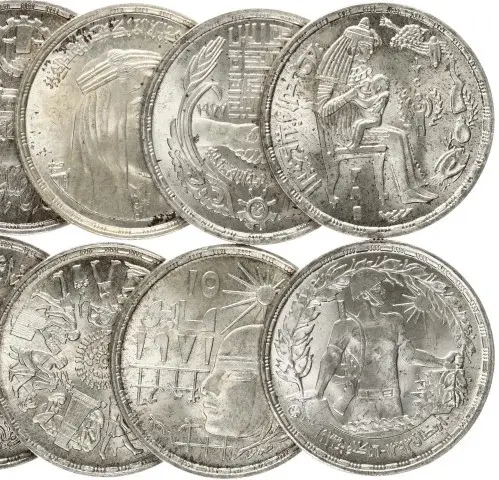
term The eagle It is an Arabicized word derived from the English word uncirculated (Unseen) refers to the condition of a coin, meaning a coin that has never circulated. It is the highest degree of coin condition and also means a coin that has not been handled or touched extensively or for a long period of time. It shows no signs of alteration, erasure, cleaning, or poor storage, and the coin does not show any signs of wear on any of its surfaces. In short, it is the condition of a coin when it leaves the mint for circulation, when it is bright and shiny. Therefore, it is also called in English the term Mint State (Mint State) or as it is called in Arabic, “the state of the mint,” and the word “Answer” is abbreviated in English to UNC .
What is the original shine of coins?
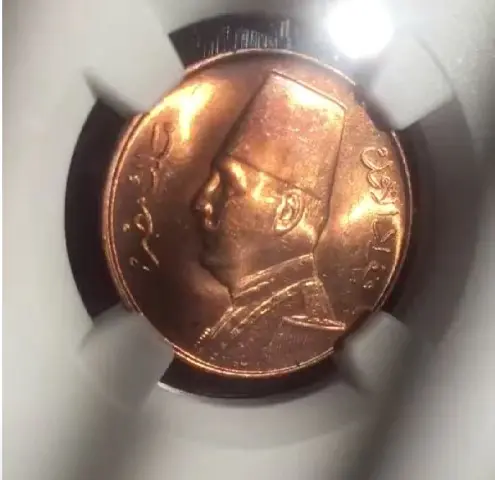
When a coin first comes out of the mint, it displays a brilliance that can only be produced through the minting process. If you hold a coin under a light source and tilt it from side to side and from top to bottom, you will notice that the light will flicker around the coin's surface. This movement of light across the coin's surface is known as the cartwheel effect. All uncirculated coins exhibit this phenomenon. However, it is most easily seen on larger coins and sometimes more difficult to observe on smaller ones.
For further clarification, you can watch the video. The effect of the cartwheel on coins.
Does the condition of the coins affect the price?
Just like any physical object one can acquire, whether it's a classic car or an antique toy, the better the condition, the higher its value. Determining the grade or condition of a coin is one of the most important factors in determining its price, and therefore, it's one of the most debated aspects of coin collecting. Even a slight discrepancy in grade or condition can mean a very significant difference in price. Because condition assessment is subject to several factors, most notably lighting, experts may assign different grades to the same coin depending on the surrounding conditions. This impact on value takes into account the basic economic laws of supply and demand.
In coin collecting, the condition of a coin is of paramount importance to its value; a high-quality coin is often worth several times more than one in poor condition. .
What is the standard for determining the condition of coins?
In the mid-20th century, the American Numismatic Association adopted the Sheldon system, which uses a numerical scale of 1-70, where 70 represents a perfect specimen and 1 represents a barely known coin. The Sheldon scale uses numerical descriptions and grades for coins (from highest to lowest) as follows:
New (MS) 60–70: (UNC)
Excellent (AU) 50, 53, 55, 58
Excellent (XF or EF) 40, 45
Very good (VF) 20, 25, 30, 35
Good (F) 12, 15
Very acceptable (VG) 8, 10
Acceptable (G) 4, 6
Semi-acceptable (AG) 3
Bad (FA, FR) 2
Poor (PR, PO) 1
For further clarification, you can watch the video. Coin valuation and the difference between an Ancer and an Abbott Ancer
The varying condition of coins and their impact on price
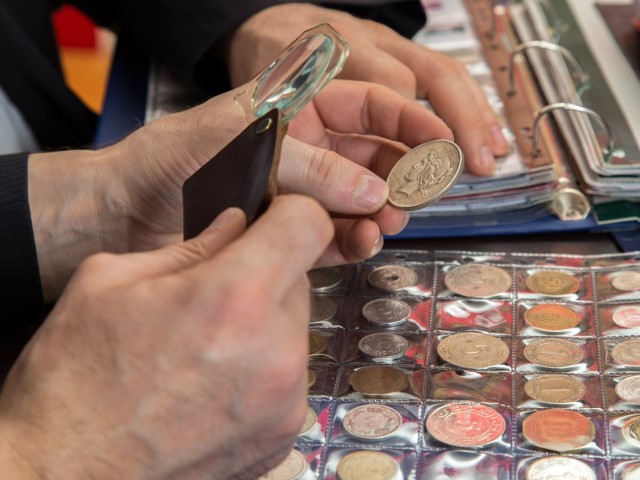
The grades of coins vary, and the higher the grade, the more important and valuable it is. With practice, long experience, and expertise, a coin collector becomes able to determine the grade of a coin, its authenticity, and whether it is valuable and important at first glance. Technology has even made it easier to examine coins and scrutinize all their details. The highest grade is occupied by coins that retain their luster, shine, and details as they were on the day they were minted. Next is the grade of coins that have lost their shine and show the effects of time, but all their details are clear and prominent. Then comes the grade of coins that have lost some details due to handling or harsh conditions, but have not lost their basic and main lines and details. The lowest grade is where the coin has lost many of its details and has undergone changes in its shape and regularity and has become closer to scrap. It does not deserve to be stored or added to collections unless it is rare and of strong archaeological and historical importance. Only then are all its flaws forgiven, and it joins the collection as one of its rarest coins.
For further clarification, you can watch the video. Answer Grades – The difference between 65-64-63 Egyptian royal coins of King Farouk I
Scratches and their effect on the condition of coins
It is natural that when coins were produced, they were made to withstand all the environmental and natural handling conditions that they would be exposed to, including pollution and sweat, and in all the places where they would be found, taking into account their exposure to scratches while coming out of cash machines or even when coins collide with each other. The lifespan of a coin is estimated in years for several decades unless the entire country’s currency is changed, for example, so the old one is withdrawn and the new one is issued in its place. However, coins that live and last for hundreds and thousands of years will become more important and more in need of care, cleanliness and attention.
In the coin-making process, coins often rub against each other, resulting in small cracks and abrasion marks. These marks appear when the coins are transported in large cloth bags. These marks are sometimes called "bag marks."“
Types of metals used in coins and their various environmental impacts
The type of metal a coin is made from makes a significant difference in how it is treated, cared for, and its condition. Gold and silver coins, for example, are the least prone to problems as they resist oxidation, and humidity, air, and other elements do not cause them to rust. Copper and bronze, on the other hand, are more susceptible to oxidation, developing dark greenish spots, as seen on ancient Roman coins. Other coins were made from metals like iron, steel, and zinc, especially during times of war or national crisis, and these coins were more susceptible to rust, scratches, and other damage.
For further clarification, you can watch the video. Evaluating bronze coins and the difference in color shades and their impact on price due to the rarity factor
How is the coin collection preserved?
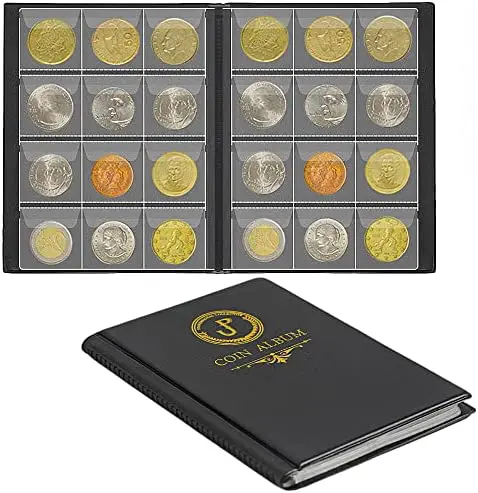
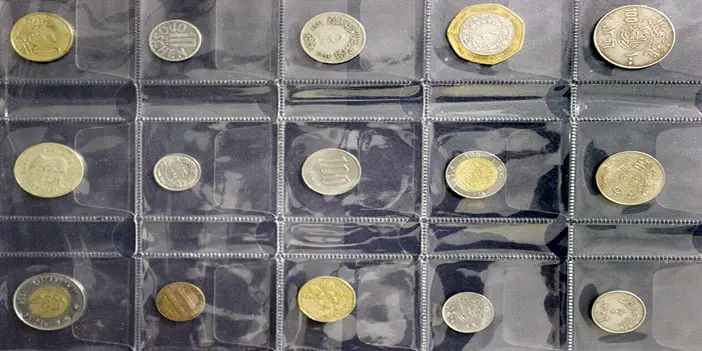
Like any collected item, coins need to be organized and kept in a place that preserves them, despite their small size as collectible rarities or their weight and metallic nature. Some may use boxes or wallets of different shapes and sizes or even albums, but some major companies have worked to find a suitable product for coin collectors and what they collect. They have developed ordinary wallets and increased their size and capacity, and have made some of them from steel or plastic, where the wallet contains small compartments and compartments suitable for all sizes of coins.
Coins should be protected from dust, fingerprints, moisture, and anything that could scratch them. They should not be touched whenever possible. If a coin must be handled, it should be held carefully by the edges and never placed on the palm of the hand, as the moisture from a person's skin can cause stains.
How to clean coins?
Coin collectors should avoid cleaning their coins, as scrubbing to remove dirt or stains can increase wear on the metal and thus reduce the coin's value. Coins can also be accidentally scratched while cleaning. It's always best to wear gloves when handling coins to avoid fingerprints, which can be surprisingly difficult to remove and sometimes even impossible to do.
Who are the most famous coin collectors in the world?
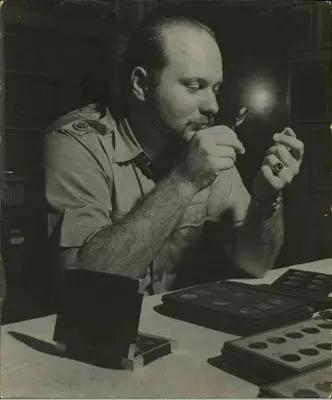
The history of coin collecting has been crowded with these enthusiasts and hobbyists, but some of them have remained named and mentioned in its history. One of the most famous coin collectors was King George III, who shared that passion with his personal surgeon, William Hunter. Hunter’s precious collections were the nucleus and foundation of one of the most important museums in Britain, and the first credit for collecting those rare collections of coins and medals goes to his brother, John Hunter, and Sir Hans Swan. King George III was not the only king with that passion. Many kings were known for their passion for coins and collecting them, to the point that some of them had large rooms filled with shelves from floor to ceiling on which coins and medals were arranged. Among the most famous of them were King Carol, one of the kings of Romania, Prince Rainier of Monaco, and King Victor Emmanuel III, whose studies in that field are still remembered and respected to this day. Among them was also King Farouk of Egypt, whose collections extended from coins, medals, and stamps to other things that you may not think of. Women also had a share in that when the unique and priceless collections of Mary Noor Webb went to public auctions.
What are the companies that value coins?
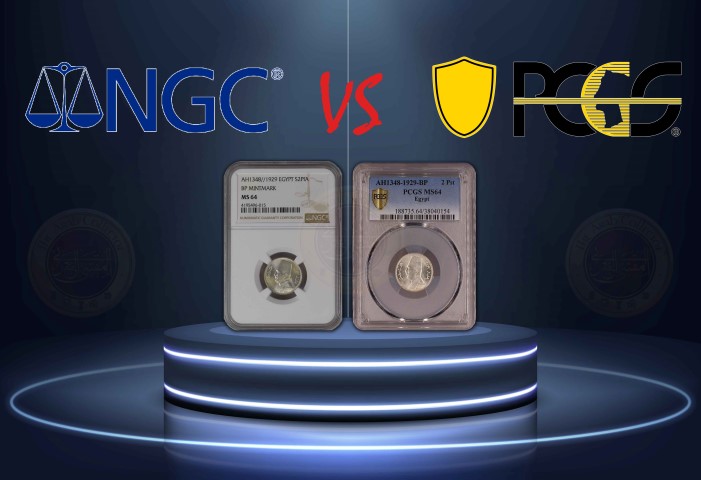
Third-party rating (TPG), also known as coin authentication services or (Currency certification) In the 1980s, with the aim of standardizing the classification, detecting alterations, and eliminating counterfeiting of coins, the Authentication Services classify, authenticate, mark, and enclose coins in transparent plastic holders.
What are the advantages of evaluating coins at specialized valuation companies?
Coin certification has significantly reduced counterfeiting and significantly increased the number of graded coins, boosting buyer confidence. However, grading services can sometimes be controversial because grading is subjective; coins may be graded differently by different services or even when resubmitted to the same service. A numerical grade alone does not represent all of a coin's characteristics, such as brightness, color, luster, and attractiveness. Because of the potentially large differences in value compared to minor variations in a coin's condition, some applicants will repeatedly resubmit a coin to a grading service hoping for a higher grade. Since there is a fee for certification, applicants should avoid purchasing additional coins.
What are the factors that determine the value of coins?
When evaluating a currency, the following factors can be considered:
1- “Eye appeal” or the aesthetic value of the currency
2- Scratches on the edge
3- Unsightly scratches or other defects on the surface of the coin
4- Sparkle. .
5- Intonation. .
6. The level of detail was maintained, as a coin with complete detail is clearly more valuable than one with worn details. If a coin is judged favorably on all these criteria, it will generally be given a higher grade.
Does damage to the surface of the currency affect the price?
Damage of any kind (e.g., holes, edge scratches, repairs, cleaning, re-engraving, or etching) can significantly reduce a coin's value. Specimens are sometimes cleaned or polished in an attempt to pass them off as higher grades or uncirculated strikes. Because cleaned or damaged coins command lower prices, some enthusiasts specialize in collecting them.
What are the parts of a coin?
You can find more important information by reading the following article. Tips for every beginner in the hobby of coin collecting.
Tips for every beginner in the hobby of coin collecting