Ibrahim Salem Banknote Collection
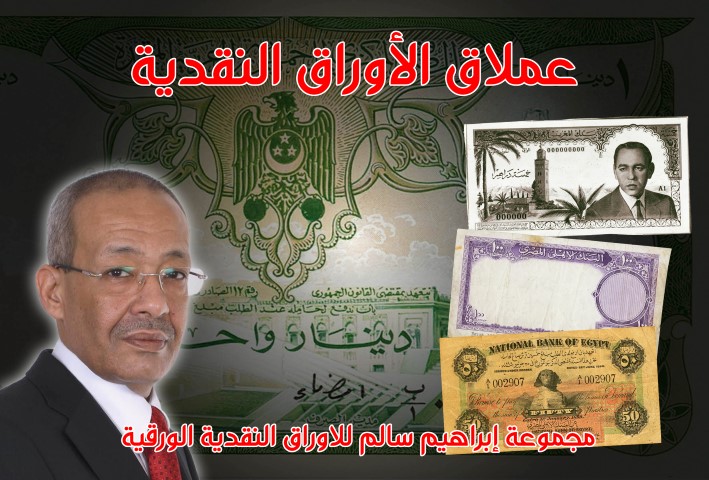
Engineer Ibrahim Salem's collection of banknotes continues to amaze collectors worldwide. Ibrahim Salem specializes in acquiring and hunting down the rarest and most important banknotes globally, and particularly in the Arab world. Heritage Auction House is preparing to...Heritage Auctions) in Dallas to present a new batch of Ibrahim Salem’s famous collection of world banknotes in an event that is considered one of the largest paper banknote auctions.
The live sale will take place over two sessions on October 24 and 25, 2024, following an online bidding period that began a month prior. The auction will primarily feature banknotes from North Africa, with a particular focus on Egypt and Sudan.
Engineer Ibrahim Salem
Engineer Ibrahim Salem is a Dubai-based architectural and design engineer. He received the Order of Merit, First Class, from His Majesty King Abdullah II of Jordan and is considered one of the most important collectors of banknotes in the Arab world. He is also known in the banknote collectors' community as the "Banknote Giant" due to his possession of one of the finest collections in the world.
Over the past decade, Engineer Ibrahim has sold several collections of his belongings, but in this auction he decided to bid farewell to his Egyptian collection, which was dear to his heart, as he realized that it was time to find another home for it among the collectors' community.
Therefore, Engineer Ibrahim decided to publish a special book about it to serve as a reference for that collection, which he had worked hard to build over the years. In his book, he cited Engineer Magdi Hanafi’s encyclopedias of banknotes, indicating that they were archival books based on his collection.
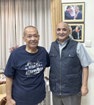
Collectors are advised to refer to the two books below: (Encyclopedia and Catalog of Egyptian Money - Egyptian Banknotes) and (Egyptian Banknotes) by Engineer Magdi Hanafi, who met with Engineer Ibrahim at his home in Dubai in 2024.
The first session of Ibrahim Salem's works
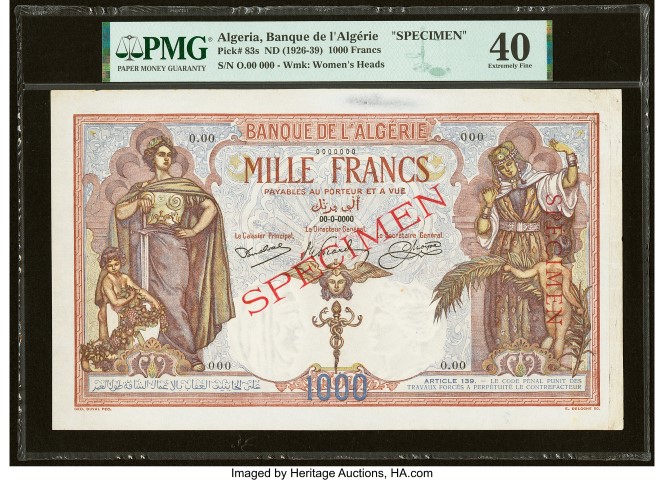
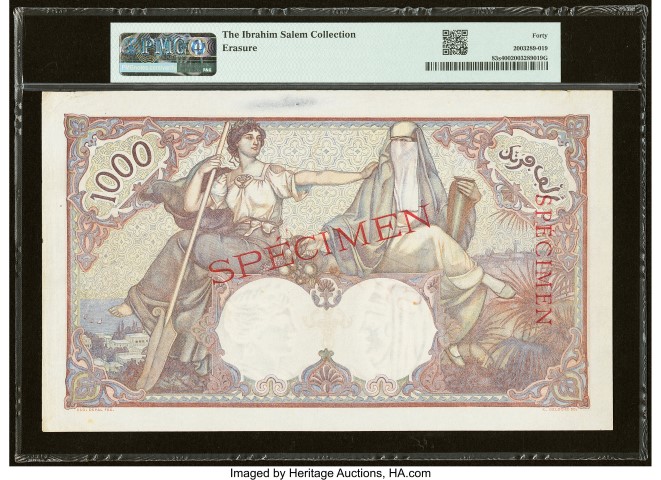
The first session of the auction features a large and diverse collection of exquisite banknotes, specimens, and printer's designs from Algeria, Tunisia, Libya, and Sudan, as well as a representative collection of banknotes from The Gambia. It is worth noting that after the breakup of British West Africa and the independence of each colony, The Gambia chose to retain the British monarch as its head of state. They also maintained their tradition of using the pound sterling and the shilling as currency. A remarkable selection of banknotes from the 1965 series is included, all bearing the first serial number, 000001, for each denomination.
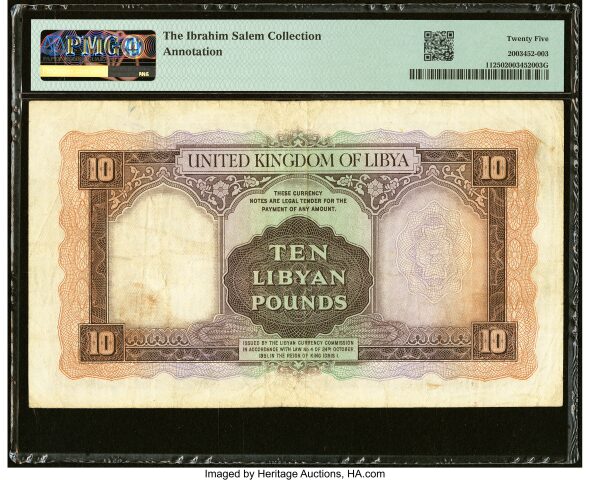
You might want to take a look at some of the high-quality Libyan banknotes from the Kingdom period, especially since the higher denominations are very rare and in better condition for collectors. For example, there is a 1951 Libyan 5-pound PMG note, serial number 55 EPQ, a smaller denomination but surprisingly difficult to find in such excellent condition. The first session concludes with a fascinating mix of Sudanese banknotes and printer's samples, ending with a very rare World War II-era 5-pound note.
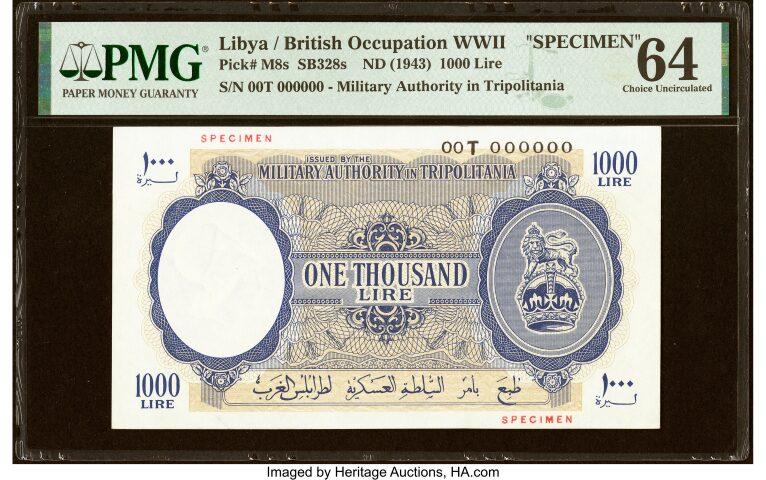
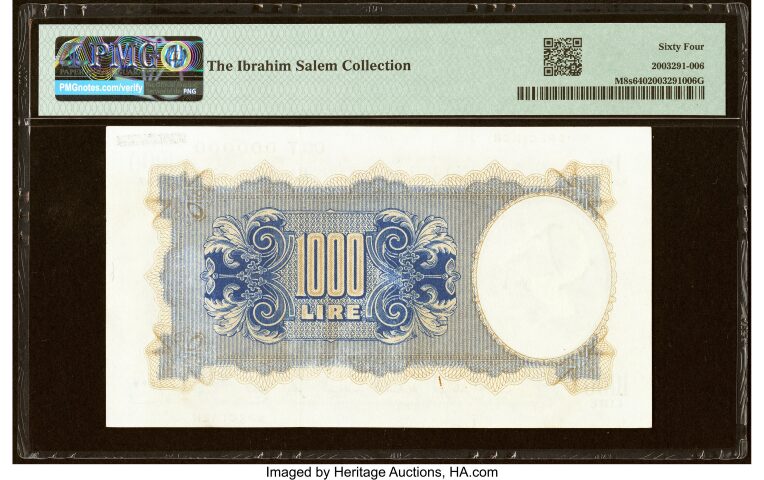
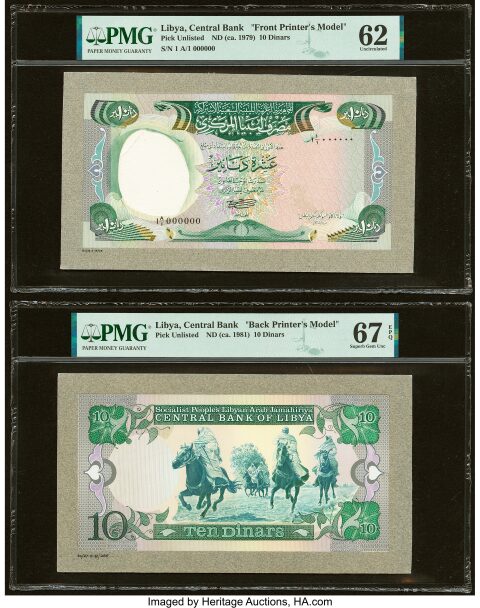
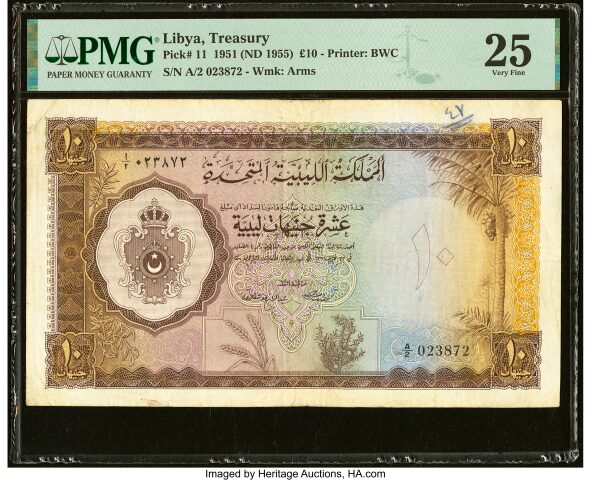
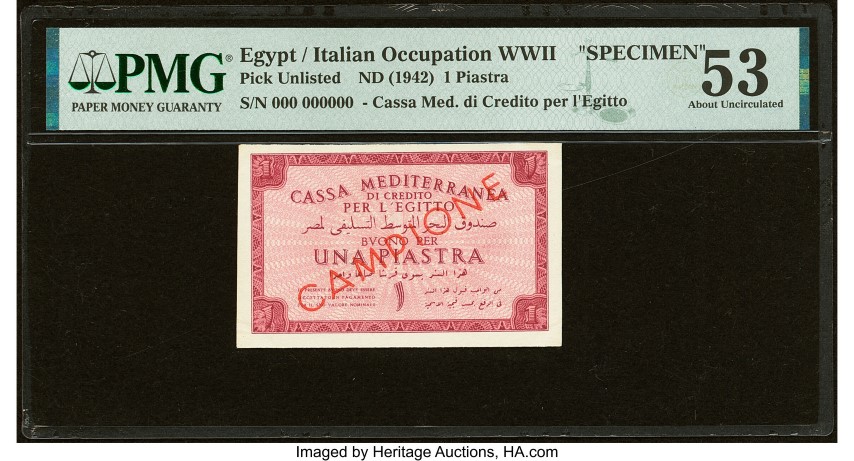
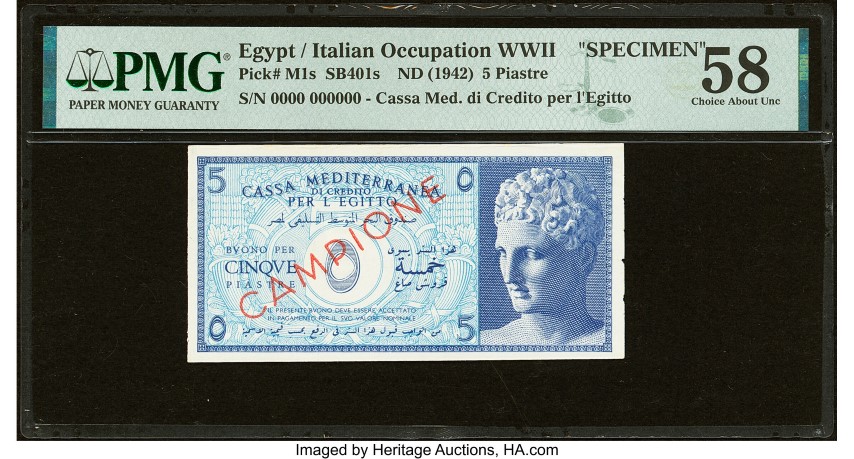
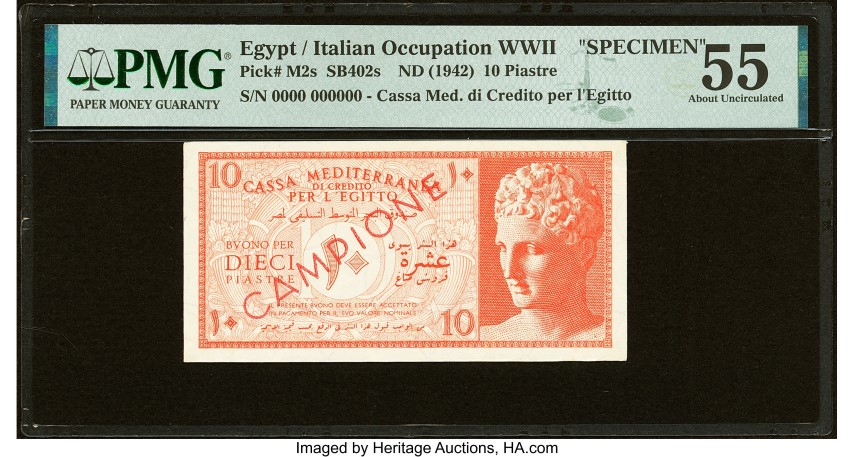
Mediterranean Credit Fund for Egypt
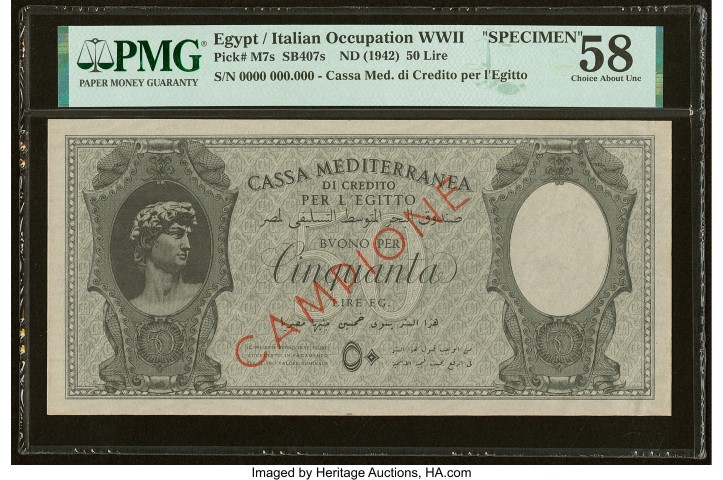
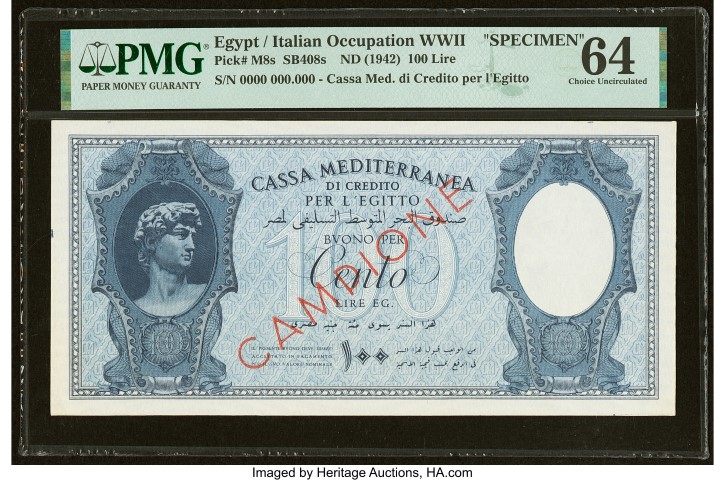
Italy aimed to wrest Egypt and Sudan from British control, and while the Axis forces advanced eastward, they were even printing new banknotes in Rome for use in Egypt and Sudan should they manage to defeat the British. Ultimately, however, the British withstood the Italian offensive, so those luxurious new banknotes, still in the design phase, never saw the light of day. This particular 5-lire note is exceptionally special and extremely rare. It is part of a collection of Italian colonial banknotes from 1942 that would rightfully belong in a museum. This collection is so rare, and perhaps unique, that Italy never invaded Egypt and never issued any banknotes there.

Second session of the banknote auction
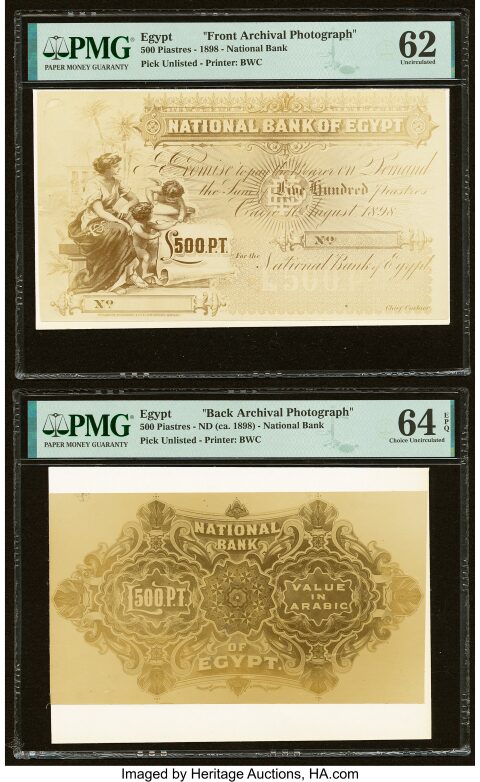
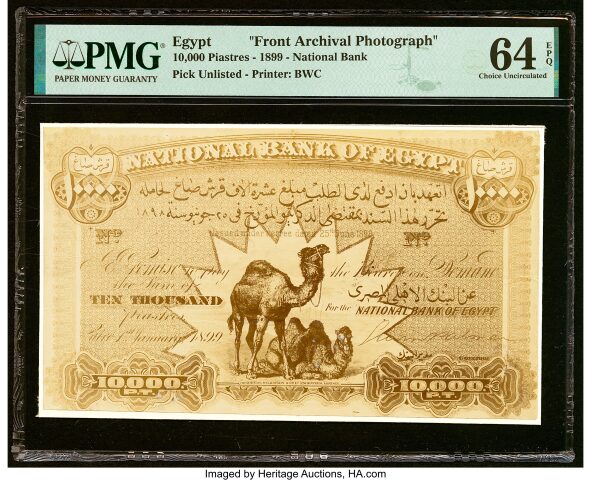
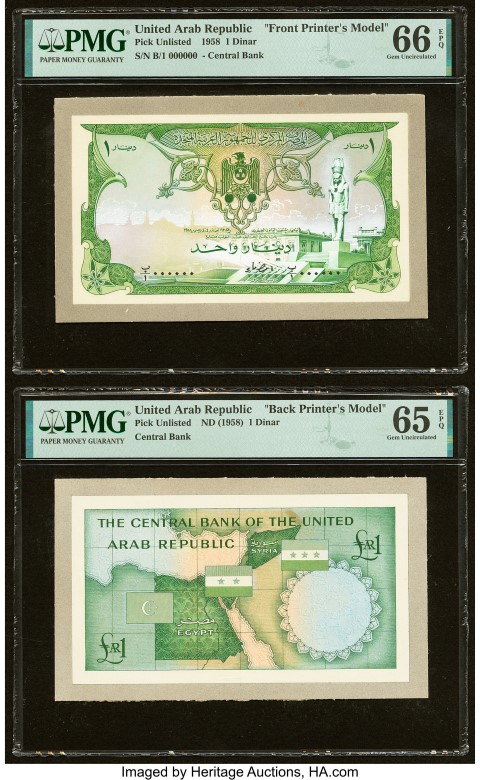
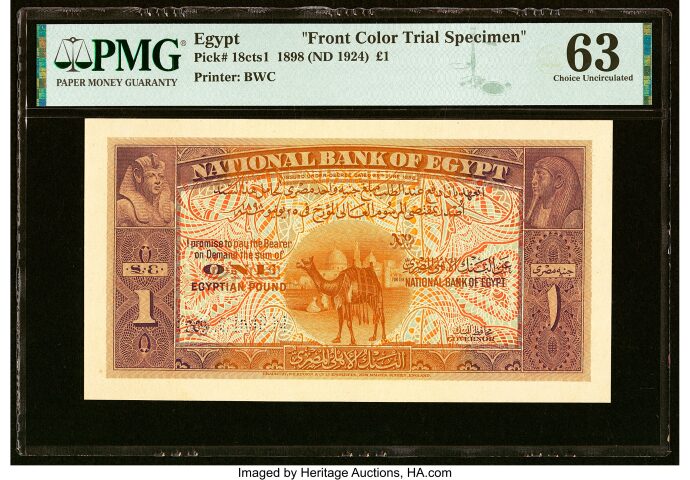
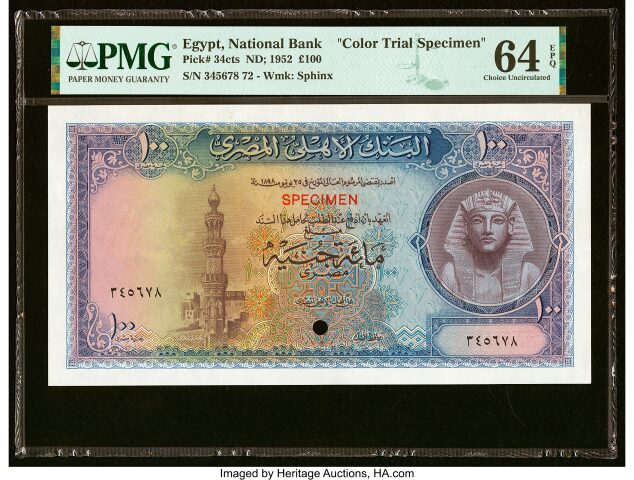
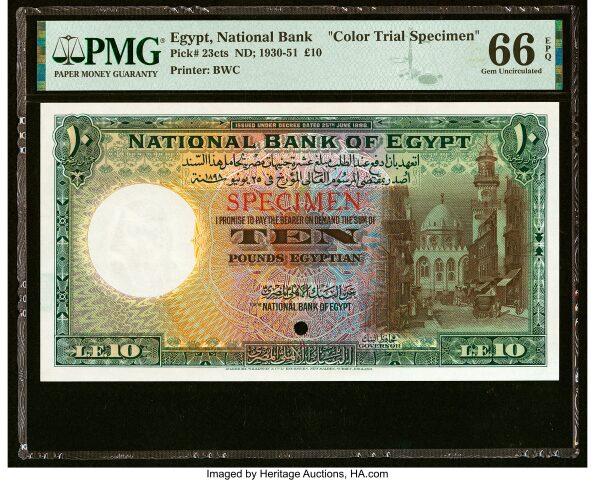
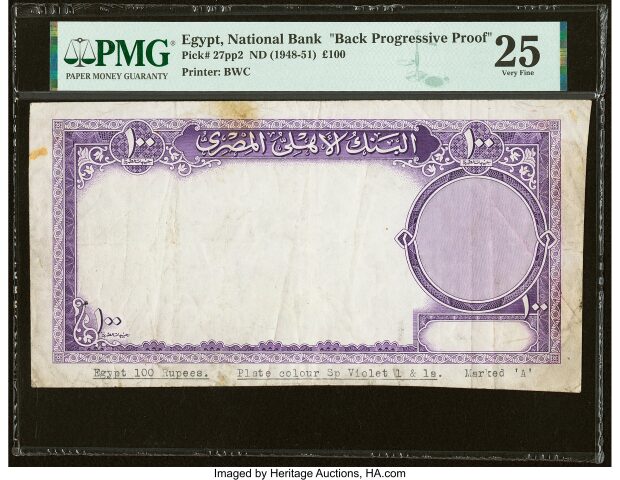
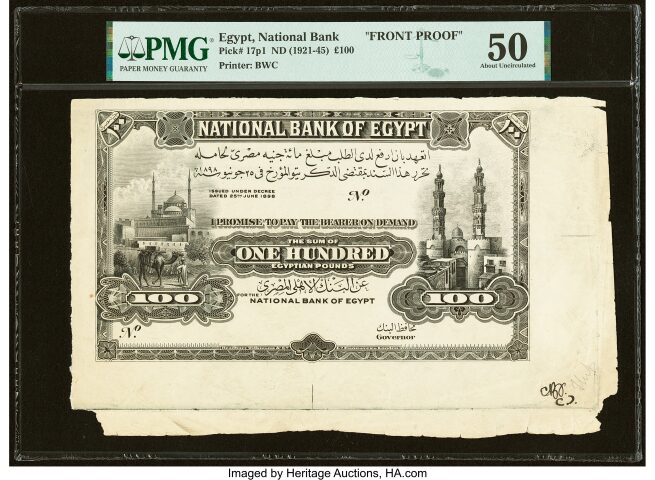
The second part of this remarkable auction focuses on Egypt and the United Arab Republic, with the Egyptian section containing a collection of models, copies, and printer designs spanning over seventy years. Among them are some rare designs from the late nineteenth century, along with some unissued denominations from the reign of King Farouk.
The second session concludes with a fascinating collection of printer designs from the short-lived United Arab Republic, which surrendered to political unions before issuing banknotes. Therefore, only prototypes and a few early examples are presented. Serious collectors will undoubtedly be eager to acquire one of these remarkable and rare historical pieces from the United Arab Republic.
Currency of the prisoner of war camp
Alien Internment Camp, Alexandria, Egypt
The foreigners’ detention camp in Alexandria was built in Sidi Bishr, a suburb/neighborhood in the Montazah district of Alexandria, located 15 kilometers (9.5 miles) northeast of Alexandria.
According to popular information, Sidi Bishr was established as a summer residence by the Egyptian middle class before the 1952 revolution. Some information indicates that the detention camp was established in 1916 when the British were able to defeat the Turkish and German forces in the Middle East and the Mediterranean basin.
It was common practice to issue local vouchers and tokens (including paper tokens) to prisoners of war staying in camps.
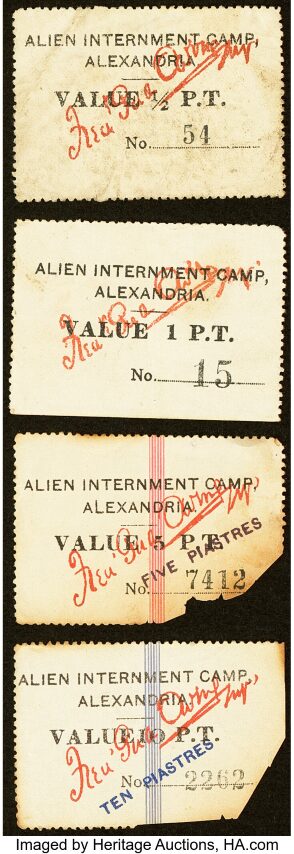
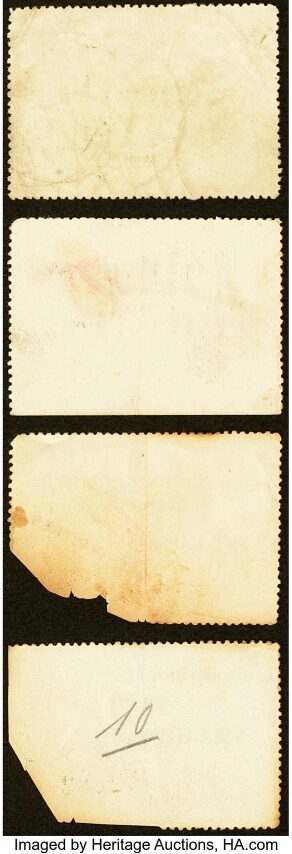
In this case, the paper coupons/tokens to be auctioned are for ½, 1, 5, and 10 piastres, are undated, and may have been in circulation between 1916 and 1918. They bear the serial numbers 54, 15, 7412, and 2262 respectively, and contain black text on white paper with perforated borders. There is also a diagonal red print on the obverse. All banknotes are printed on the obverse. Note: These vouchers are not registered with any monetary authority.
This special auction features a wide array of historical, beautiful, and rare banknotes, designs, and printing house creations, further demonstrating Ibrahim Salem's passion for international banknotes. You can participate in and follow the auction directly on the Heritage Auctions website via the following link.
Engineer Ibrahim Salem's banknote auction
For more similar topics, you can browse the Arab collector's website through the Link the next: