Gresham's Law of Currency
What is Gresham's Law, and how does bad currency drive out good currency from the market?
In fact, there is an economic law called “Gresham’s Law”, which can be summarized in the following phrase:
“Bad money drives out good money from the market.”
In order to better understand this law and its current applications, it is very important to go back to its origins and the circumstances of its creation.
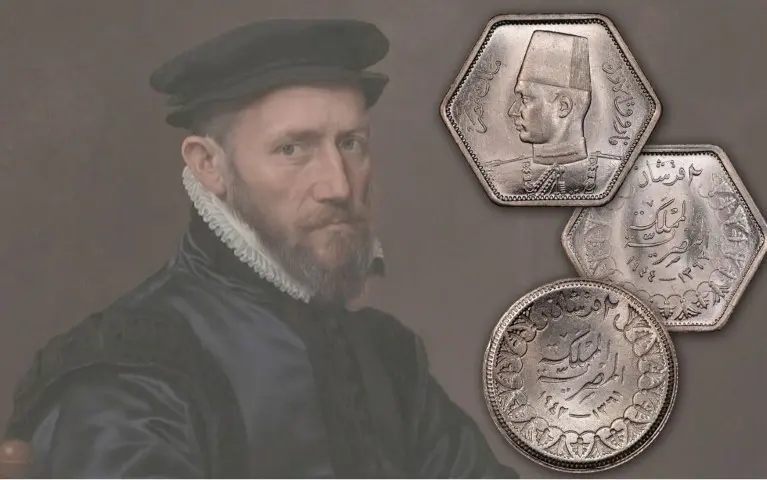
Thomas Grisham

Sir Thomas was born in London to a distinguished Norfolk family and lived from 1519 to 1579. He served as an economic advisor to King Edward VI of Great Britain, as well as to his sister, Queen Elizabeth I. A scholar, merchant, and economist, he held the position of Chancellor of the Exchequer for England in the 16th century. He was responsible for establishing the English currency on sound principles and later founded the Royal Exchange in London.
The concept of law
Gresham's Law is a monetary principle that essentially states that bad money drives out good money from circulation. This law is primarily used in currency markets. It is based on the metallic composition of coins and the value of the precious metals they are made from, stating that bad money drives out good money from circulation.
Bad money is money whose real value is equal to or less than its nominal value. In contrast, good money is money whose real value is greater than its nominal value, or there is a high probability of this. Because the value of the metal in old money (good money) is higher than in new money (bad money), people have a clear incentive to prefer old money made up of a greater quantity of real precious metals. Logically, people will choose bad money to do business and will save good money because its real value is often greater than its nominal value.
Origin of Law
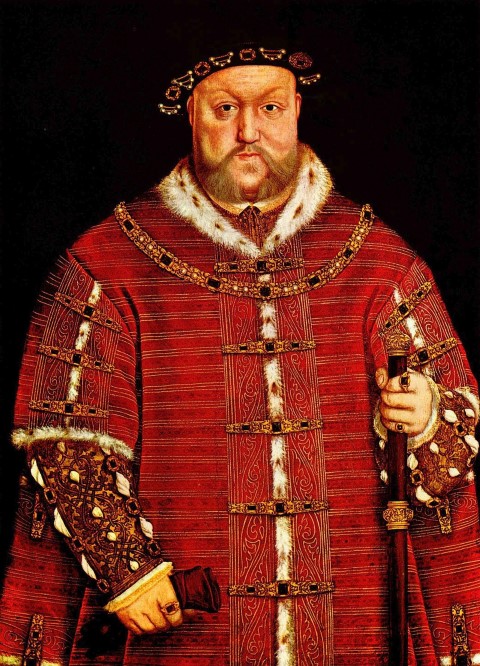
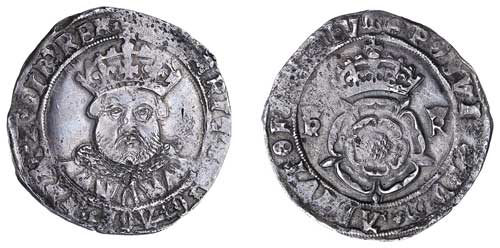
King Henry VIII pursued a policy of currency devaluation, which was introduced in England in 1544. This saw a decrease in the amount of precious metals in gold and silver coins, and in some cases, their complete replacement with cheaper base metals such as copper.
Henry VIII's extravagant spending to support his lavish lifestyle and finance foreign wars with France and Scotland were cited as reasons for introducing the policy. The primary aim of this policy was to increase England's revenue at the expense of taxpayers by reducing the production of coins, thus decreasing the need for more bullion to mint new coins. As the value of gold declined, the gold standard fell from the previous 22 carats to 20 carats, while silver decreased from 92.5% sterling silver to just 25%. The English shilling coin had the greatest impact on market movements as it was more widely used by the general public.
Gresham’s consultations with Queen Elizabeth I revealed that people were aware of the change and began sorting the English shilling coin based on its issue date in order to collect coins made from a greater quantity of silver, then melted them down and sold them for a higher value, since the value of raw silver was higher than its value when minted. Thus, Gresham observed that bad money drives good money out of circulation.
This phenomenon was previously observed and written about in ancient Greece and medieval Europe. The historian al-Maqrizi preceded him in discovering this law by about a century and a half and discussed it in his treatise "Relief of the Nation in Unveiling the Distress." However, it wasn't until the mid-19th century that it was given the official name "Gresham's Law," when the Scottish economist Henry Dunning MacLeod attributed it to Gresham.
Gresham's Code and Arab Currencies
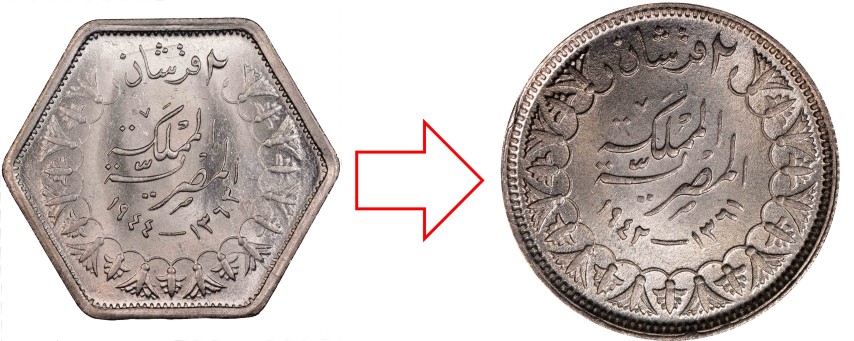
Perhaps one of the most important contemporary examples in the history of Arab countries is the Egyptian silver piastre, which was minted during the reign of King Farouk. The shortage of silver began during World War II, and with the increased circulation among soldiers stationed in Egypt, the demand for small coins increased, resulting in... The small change crisis The famous one in 1941, and between 1942 and 1944, due to the continuation of World War II, the rates of cash circulation increased, which resulted in the need to increase the different types of small currency, including nickel and bronze, and the Egyptian Ministry of Finance sought to mint quantities of these types during the war period.
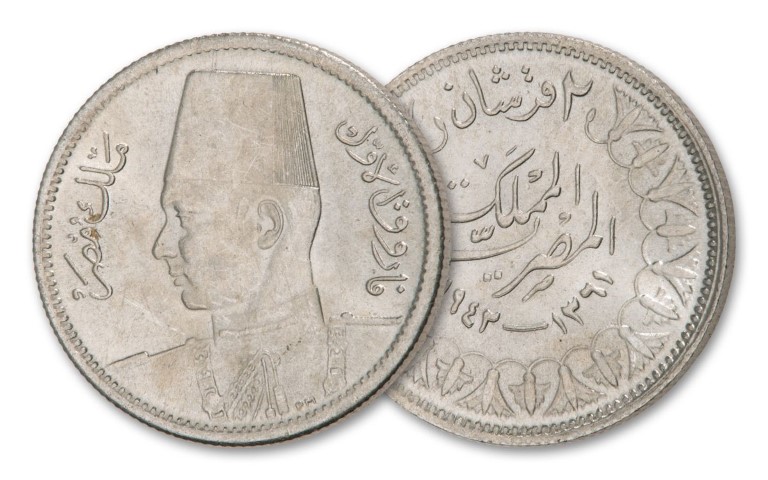
Then Egypt resorted to minting coins from Two piasters category In 1942, to meet the needs of cash and to provide small currency to help in the process of currency exchange in the markets, but due to the high price of silver in the currency issued in 1942, the value of the silver in it, with its purity, exceeded the nominal value of the currency. This prompted a large segment of Egyptians to hoard silver coins or melt them down to benefit from the difference in the price of silver. Despite the existence of a military order that criminalizes the sale of silver legally circulating in Egypt at a price different from its nominal value and prohibits its melting down, a number of citizens continued to do so, which made the Ministry of Finance decide that it was more appropriate to reduce the purity of silver in the two-piaster silver coins.
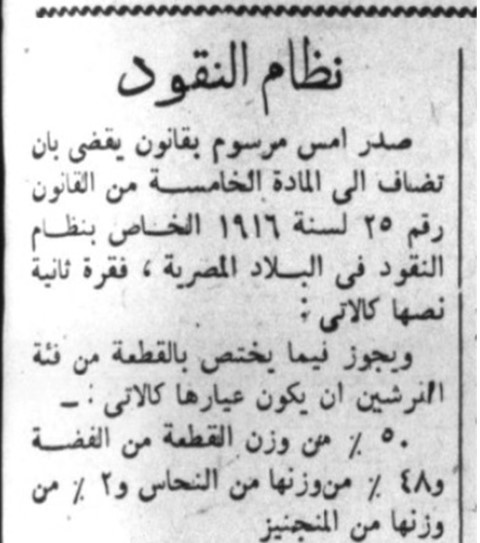
Indeed, the Ministry of Finance took the necessary measures and negotiated with the Mint in Pretoria, South Africa, to begin minting silver coins of a different purity. The provisions of Law 25 of 1916 were amended based on the approval of the Council of Ministers in November 1944 to mint coins of the two-piaster denomination with a purity of 50% (500 parts per thousand of silver) instead of 833 parts of silver.
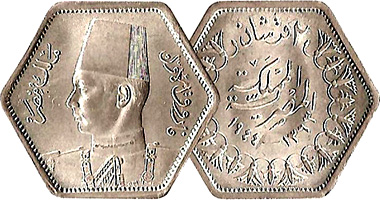
Citizens quickly rushed to use the new currency for daily transactions, hoarding and accumulating the old currency due to its high value. This led to the application of Gresham's Law, and some citizens began smuggling the coins and ingots that were extracted from those coins out of the country. Some Italians and Greeks smuggled some of them to Sudan, even after the end of World War II in 1945. This did not prevent the smuggling of old silver coins.
The Egyptian government addressed this issue by issuing Law No. 80 of 1947 regulating control over currency operations. Accordingly, it was prohibited for people to travel outside Egyptian territory and take with them money and precious metal bullion without prior authorization from the Ministry of Finance. In 1948, Order No. 25 was issued prohibiting the sending of money to Sudan.
Examples from other countries
Silver coins were widely traded in Canada (until 1968) and in the United States (until 1964 for dimes and quarters and 1970 for half dollars) when the Coinage Act of 1965 was passed. These countries devalued their currencies by switching to cheaper metals, and thus silver coins disappeared from circulation as citizens kept them to increase their metal content over the newer coins, which were therefore devalued, using the newer coins in daily transactions.
The United States government changed the composition of the penny to have a zinc content of 97.5% in 1982 in exchange for reducing the copper content. This change led to a rise in the real value of pennies minted before 1982, compared to pennies minted after that year.
The same thing happened with the copper content of coins such as the Canadian penny before 1997, the bronze pennies in the UK before 1992, and the twopence. This also occurred even with coins made from less expensive metals like steel in India.
Al-Maqrizi's Foundations of the Theory
Many experts indicate that the true founder of the theory known as ”Gresham’s Law” is the scholar and historian Ahmad ibn Ali al-Maqrizi, born in 1364 AD and died in 1441. He was born in the city of Baalbek, which is located today in Lebanon, and lived his life in Cairo, Egypt, authoring many well-known books on various topics, perhaps the most prominent of which is the book “Shudhur al-Uqud fi Dhikr al-Nuqud” which he dedicated to researching the economic problems of that time.
Among the observations that Al-Maqrizi drew attention to was his study of the relationship between prices and liquidity levels in the market. He also arrived at the foundations of an economic law indicating that “bad money,” that is, money made of inexpensive metals, such as copper and iron, drives out money minted from precious metals, such as gold and silver.
Al-Maqrizi attributes this to the fact that introducing coins raises the actual prices of gold and silver beyond the set exchange rates, prompting people to hoard them and settle for trading in cheaper metals.
Note: Gresham's Law is of lesser importance within the framework of paper money systems, because unlike metal money, it cannot be melted down and exported or sold by weight, and therefore the applications of Gresham's Law are somewhat limited under modern monetary systems.
Dr. Mazen Ibrahim
Sources:
Encyclopedia and Catalog of Egyptian Currencies – Coins – Engineer: Magdy Hanafy
Al-Ahram Egyptian Newspaper Electronic Archive
Arab monetary legislation (Egypt) – The Arab Collector
To follow more similar topics on the Arab Collector website, you can follow the Link the next:
Two piasters, 1942... They deceived you when they said