The Beach of Sorrows (Gaza): Laughter and Tears Amidst the Rubble of History
Episode 1 (Beginnings)
And I long for the land of Gaza… even if my secrecy betrays me after the separation.
May God water the land, if I could obtain its soil... I would use it to adorn my eyelids with it, out of intense longing.Imam Muhammad ibn Idris al-Shafi'i
I thought of a title for a series of articles in which I would review the ancient history of Gaza, and I found myself writing Beach of SorrowsThis is unfortunately a title that applies to both the past and the present. In this series, we will stand on the shores of Gaza, not to see the recent rubble, but to look at the ancient rubble beneath it, until we reach the oldest layers of destruction.
Along this shore we will proceed, following in the footsteps of the traders and conquerors who passed thousands of years ago through the point of connection between three continents, to gather together some laughs and tears from the rubble of history; for that ancient road created prosperity and destruction, and combined them in a duality that was the difficult embodiment of the gift and curse of geography at the same time.
Geography and topography of Gaza
Exploring the history of this region could take us back to the fourth millennium BC, but before delving into history, it is essential to briefly examine its geography; the history of ancient Gaza cannot be understood without studying its location and geography. Throughout history, Gaza was not merely an ordinary geographical area, but rather a strategic crossroads connecting the continents of Asia and Africa by land.
This unique location forced it to be a rest stop for trade caravans, a mandatory crossing point for armies and military campaigns, as well as a cultural center that blended the cultures of the ancient world.
Gaza was an important point on the route of the ancient coastal road, which the Egyptians called Horus RoadGaza was their first stronghold and main gateway to the land of Canaan, and securing it meant securing Egypt's borders. On the other hand, Gaza was the terminus of the incense route coming from the Arabian Peninsula through the Negev Desert, making it an international port for exporting spices and incense to Europe.
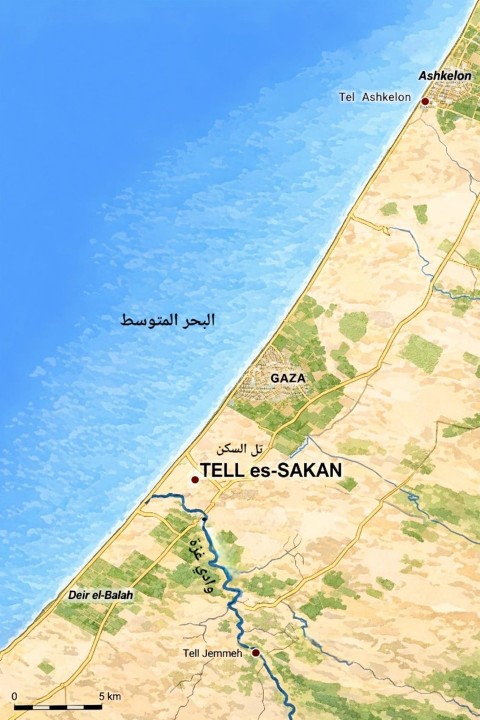
Ancient Gaza was built on a relatively high hill, a location that provided natural protection and shielded it from the direct humidity of the sea. This hill was approximately four kilometers from the open shore, thus protecting the city from surprise attacks by pirates from the sea. Furthermore, undulating sand dunes, particularly to the west and south, surrounded the city, forming a natural barrier and hindering the movement of large armies coming from the desert. It is noteworthy that the practice of having a port separate from the city was not unique to Gaza historically; several other cities along the same coastal route adopted this layout.
Near the east and north of the city, fertile plains stretched out, allowing for the cultivation of grains, vineyards, and olive trees for which Gaza was once famous. To the south of the city, the Wadi Gaza ran its course, providing a source of fresh water and forming another barrier protecting the ancient center of Gaza.
In summary, we see that the geography of ancient Gaza was both a blessing and a curse; its location made it fortified, extremely wealthy, and a center of global trade, but it also made it a constant battleground between the empires of the ancient world.
The Origins of Gaza City
We have received some archaeological evidence suggesting that Gaza was founded as a fortified city during the second half of the fourth millennium BC, meaning its origins are linked to the civilizations of the ancient Near East. Perhaps Gaza's beginnings were contemporaneous with the First Egyptian Dynasty, and remarkably, these beginnings were also connected to Egypt like the heart to the arteries; this has been confirmed by the results of archaeological excavations at the site. Hill of residenceThe excavation revealed mud-brick walls and fortifications, foundations of administrative centers and residential quarters, as well as pottery and clay seals, all of which point to Egyptian influences in terms of architecture and manufacturing techniques. The city was built according to construction methods used in the Nile Valley during the Predynastic Period and the beginning of the First Dynasty.
Here we are talking about a connection that goes far beyond trade transactions and border security; geography has imposed this connection, which will turn into a historical foundation and an extended culture.
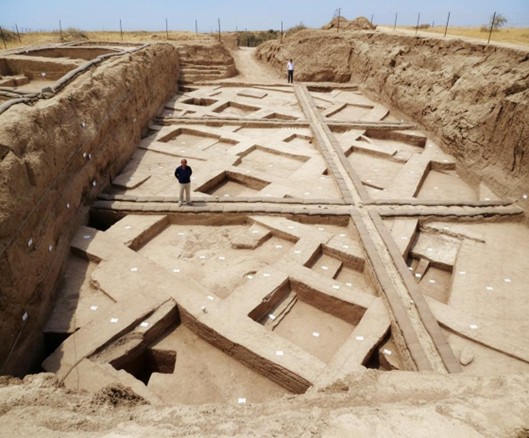
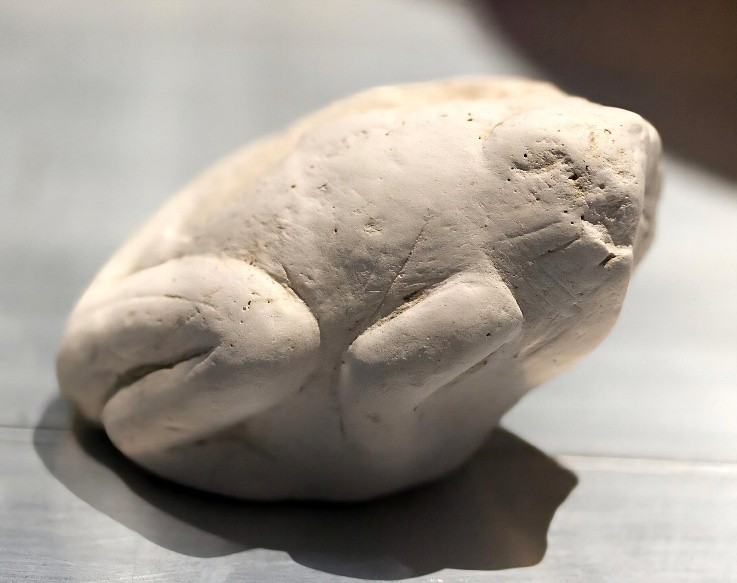
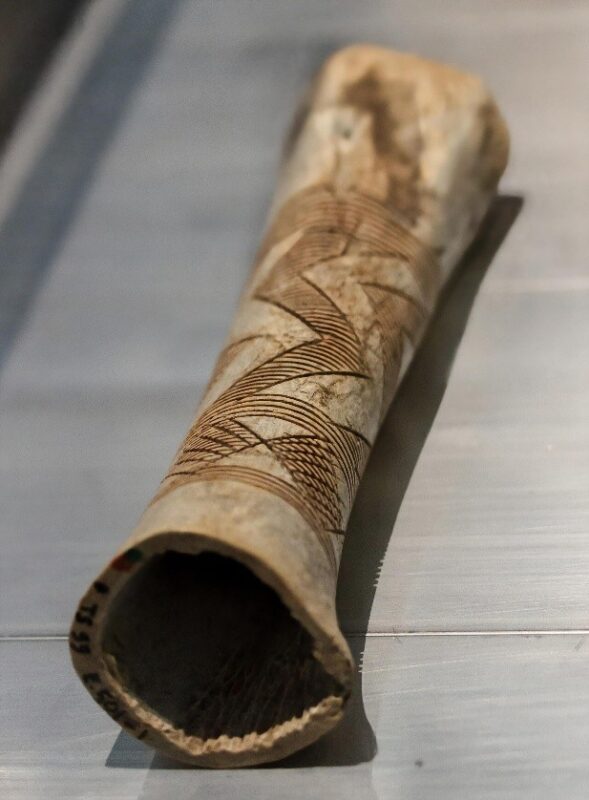
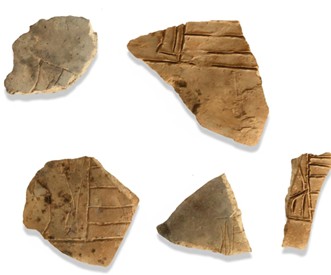
The Canaanite component is the original root of the inhabitants of Gaza City since the dawn of urban history in this region. This component served as a cultural partner with Egypt in Gaza, and over time, ties deepened, with the Canaanite component blending with Egyptian culture. Indeed, the discovered artifacts clearly demonstrate this. For example, at Tell es-Sakan, we see the use of mud bricks of dimensions identical to those found in Abydos and Naqada, in addition to kilns for locally made Egyptian pottery. We also see how Canaanite cooking vessels were discovered inside houses built in the Egyptian style, and this extends to burial customs. This gradual progression is intentional; a blending that begins with construction and daily life and extends to the afterlife.
Two burial patterns were found in Gaza during that era: a Canaanite pattern (mass graves), and a pattern very influenced by Egyptian culture, represented by the use of clay coffins and canopic jars. This indicates that the inhabitants of Gaza believed in Egyptian concepts of the «other world,» or at least borrowed funerary social prestige rituals from their Egyptian neighbors.
The Gazan society was an urban society, unlike the surrounding areas which remained rural. This society had a well-established administrative and class organization, in the style of the city-state that the Canaanites inherited from the Sumerians.
The Canaanite language was the language of the majority of the inhabitants of Gaza during that era, and it is the mother tongue of all Western Semitic languages, but the ancient Egyptian language had a presence in recording commercial transactions and administrative correspondence, and this led to the creation of a hybrid language that combines Canaanite and Egyptian vocabulary to facilitate communication between the two languages.
It is known that the Canaanites had their own deities, but it seems that a kind of identification with the Egyptian deities occurred, and this overlap would continue, and other external influences would be added to it in the later stages of the Early Bronze Age.
Gaza’s culture has been characterized by the diversity of its sources from the very beginning; it is primarily a commercial city, and diverse cultures come to it along with goods, but the local Canaanite source has always been present alongside Egyptian and other regional influences, and this is what made it a cultural meeting point between the peoples and civilizations of the region.
The End
In summary, we can say that at its founding, Gaza was Canaanite in language and origin, cosmopolitan in culture and activity, and Egyptian in administration and spirit. This fusion is what made it the only city in the Levant that continued as an Egyptian administrative center for more than a thousand years without any substantial interruption.
In the next episode, we will discuss the origin and meaning of the name Gaza. We will also move historically to the Middle and Late Bronze Ages to see how the decline of Egypt and the emergence of the Hyksos affected Gaza, and then how the situation changed with the return of Egypt and the establishment of the Eighteenth Dynasty after the expulsion of the invaders, and how Gaza became the capital of Egyptian rule in the land of Canaan.
Stay tuned for the next episode.
For more similar topics, you can browse the Arab collector's website through the Link the next
Ashkelon coins through the ages