HistoryNumismatics
Commemorative foundation coins: treasures buried beneath parliaments
While most coins are made for the purpose of trading and exchange between people, there are some coins that are minted so that people never use them, or even see them. They are buried as soon as they are made and disappear from sight. In our article today, we will learn about a special category of commemorative coins called foundation coins (building foundations).
Beneath the floors of parliaments, cathedrals, and palaces around the world lie hidden treasures—coins not minted for circulation, but for remembrance.
These are commemorative foundation coins: specially minted coins placed beneath the foundation stone of important buildings, symbolizing prosperity, continuity, and the nation's values. Often forgotten for centuries, they serve as metallic time capsules, silently preserving the moment of national founding.
Here are three notable examples of this fascinating tradition:
1. Norway – The 1861 Spesiedaler coin marked with the letter “B”
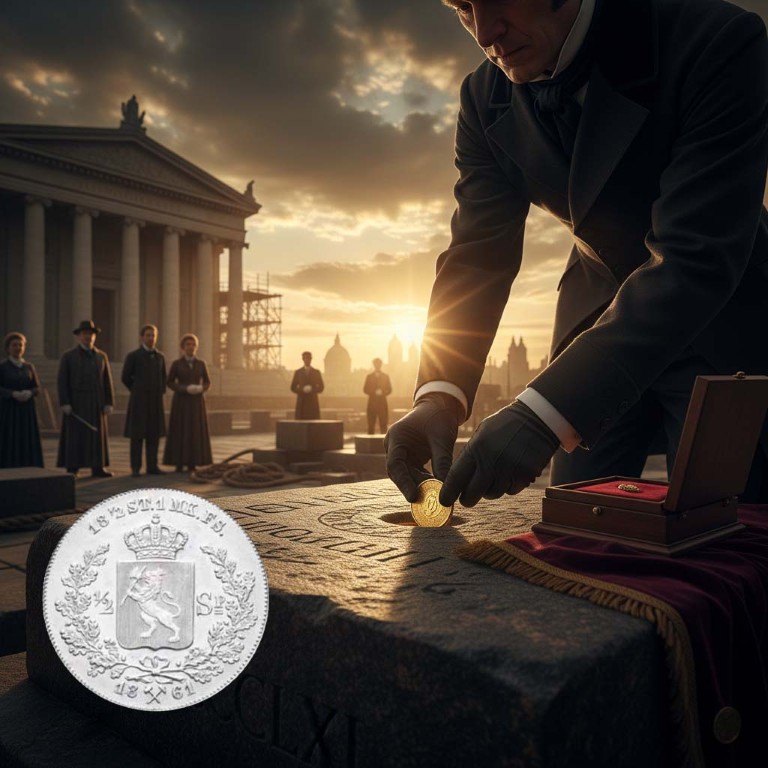
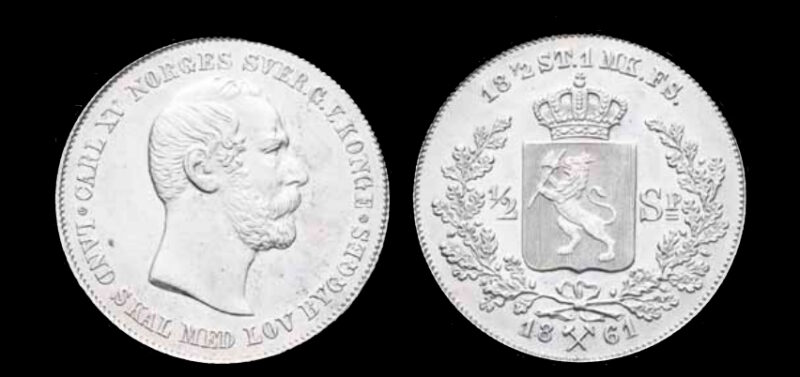
In 1861, as Norway was preparing to lay the foundation stone for the new parliament building (SturtingA special set of coins was minted at the Königsberg Mint. These coins bore the letter “B” below the king’s image—a reference to the sculptor and engraver Brynjulf Bergslien, who engraved the molds.
These coins were not intended for circulation, but were minted specifically to commemorate the laying of the foundation stone for the Parliament building. A ceremonial box containing one coin of each of the four denominations was buried beneath the foundation stone, symbolizing the financial and sovereign foundations of the Norwegian state.
2. United States – Foundation Stone Coins for the Capitol Building, 1793
On September 18, 1793, George Washington led a Masonic ceremony to lay the cornerstone of the U.S. Capitol in Washington, D.C. As part of this ritual, a collection of contemporary coins—including copper coins from 1793 and early silver coins—were placed beneath the cornerstone.
This event was not merely a symbolic ritual; it carried profound political significance. The fledgling republic sought to embody the principles of democracy, unity, and permanence in its very foundations. These coins, among the first minted by the American government, became a buried declaration of national identity.
3. Denmark – Reconstruction of Christiansborg Palace (after 1884)
After a massive fire destroyed Christiansborg Palace in 1884, Denmark began the process of rebuilding. During this effort, special commemorative coins were minted by the Royal Mint and buried beneath the foundation stone of the new building, which today houses the Danish Parliament, the Supreme Court, and the royal offices.
Commemorative foundation coins are a rare example of using currency as silent symbols embedded in the heart of national monuments, embodying values, identity, and continuity at pivotal moments in a nation's history. Often accompanied by official documents and decrees, they signified a rebirth of the place and the continuity of governance and sovereignty. Designed to be discovered centuries later, these coins carry messages from the past to the future, symbolizing the hope that what has been built will endure for generations to come. Through them, the metal becomes a memory sealed in stone, waiting to be read.
The attached image shows one of the coins minted for burial within the foundations of the Norwegian Parliament building. However, it was never used for that purpose and passed through the hands of prominent collectors until it was sold in 2023 for approximately $50,000 USD. This version differs from the circulating version by a small "B" under the king's image, and only 13 of these coins were made.
Why are coins buried under buildings? (Question and Answer)
A: They are used as “time capsules” that symbolize prosperity and continuity, and document the moment of national founding and the values of the state for future generations.
A: No, very limited copies with special specifications (such as adding letters to distinguish them) are usually minted for the purpose of ceremonial burial only.
A: Its extreme rarity, as only 13 copies were made, and the presence of distinctive features such as the letter “B” that distinguish it from ordinary circulating currencies.
For more similar topics, you can browse the Arab collector's website through the Link the next:
Rare Zenobia coins up for Heritage Auction