HistoryNumismatics
British East India Company
Company establishment and its military influence
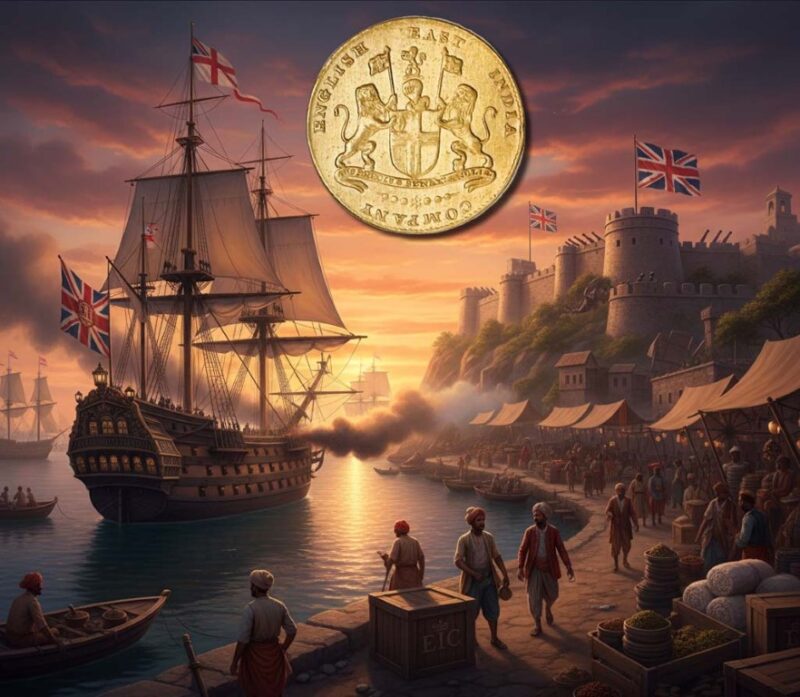
Today we will learn about the company that minted coins in its name and possessed an army larger than the army of the country it came from. It is the East India Company.
The East India Company, often referred to as the EIC, was a British trading company founded in 1600. The East India Company played a crucial role in the history of trade, colonialism, and the global economy.
The East India Company was initially founded to trade in the Indian Ocean region, primarily dealing in spices, silk, cotton, tea, and opium. Over time, the company expanded its influence to become a powerful political and military force in India. It established trading posts and eventually controlled vast territories, acting as an agent of British imperialism.
Cash system and company currencies
At its peak, the East India Company was one of the largest and most powerful companies in the world. It had its own administrative structure, with a governor and a group of managers overseeing its operations. The company's influence extended from India to Southeast Asia, China, and even parts of the Middle East.
The East India Company maintained a powerful private army, which at times was larger than the British army. This army was essential to the company's ability to control and govern its vast territories.
The East India Company also had a significant influence on the monetary systems of the territories it controlled. It issued its own currency, which was used in trade and daily transactions. These coins often bore the company emblem and were minted in various denominations.
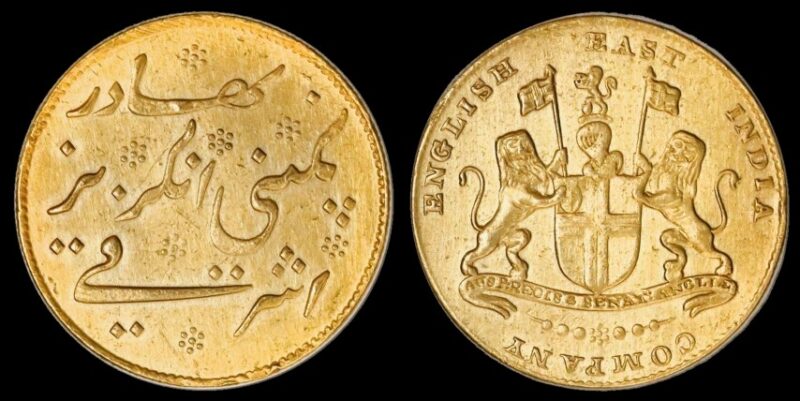
Transition to the British Raj
Following the Indian Rebellion of 1857, the British government decided to take direct control of India, ending the rule of the British. East India Company. In 1858, the Government of India Act was passed, dissolving the company and establishing the British Raj. This direct British rule continued until India's independence in 1947. This transition had a profound impact on India's political, social, and economic landscape.
The British Raj, or direct British rule in India, began in 1858 and lasted until 1947. During this period, India was administered by the British Crown through the Viceroy and a complex bureaucracy. The British Raj brought significant changes to India's infrastructure, including the development of railways, telegraph, and a modern legal system. However, it also led to economic exploitation, social unrest, and widespread resistance movements.
The British Raj also restructured India's economy to serve British interests. Traditional industries were disrupted, and India became a major supplier of raw materials for British factories. This economic exploitation led to widespread poverty and famine, as local economies were unable to sustain themselves.
History of India's Independence
The British Raj faced persistent resistance from various sectors of Indian society. The Indian National Congress, founded in 1885, became the main force in the struggle for independence. Leaders such as Mahatma Gandhi, Jawaharlal Nehru, and Subhas Chandra Bose played pivotal roles in mobilizing the masses and advocating for self-government. The nonviolent resistance movement, led by Gandhi, gained international attention and ultimately led to India's independence in 1947.
The East India Company left a complex legacy, combining economic development and exploitation. It also laid the foundation for the British Raj, which ruled India until 1947. Even today, the company's influence on global trade, military strategy, and monetary systems continues to be studied and remembered.
Quick facts: The East India Company and the British state
| Comparison point | East India Company (EIC) | The British government (at the time) |
| Army | She possessed an army that numbered 260,000 soldiers. | Her army was smaller at certain times. |
| Currency | Special coins were minted (Mohor, Rupee) | sterling |
| Main objective | Shareholders' commercial profit | Political expansion and sovereignty |
| the end | It was dissolved in 1874 | It continued through the "British Raj"“ |
For more similar topics, you can browse the Arab collector's website through the Link the next:
Commemorative foundation coins: treasures buried beneath parliaments