Coin of Sayf al-Dawla al-Hamdani
Rare Islamic coins minted by Sayf al-Dawla al-Hamdani
Sayf al-Dawla al-Hamdani (Sayf al-Dawla al-Abbasiyya) (303–356 AH / 915–967 CE) was Ali ibn Abi al-Hayja ibn Hamdan ibn al-Harith Sayf al-Dawla al-Taghlibi, founder of the Emirate of Aleppo, which encompassed most of northern Syria and parts of western Mesopotamia, and brother of Hassan ibn Abdullah (known as Nasir al-Dawla al-Hamdani). He was one of the most prominent members of the Hamdanid state. Sayf al-Dawla served under his elder brother in the latter's attempts to seize control of the weakening Abbasid Caliphate in Baghdad in the early 940s CE. After these attempts failed, Sayf al-Dawla's ambitions turned towards Syria, where he confronted the Ikhshidid ambitions of Egypt to control the province, leading to two wars with them.
His authority over northern Syria was centered in Aleppo, and over the western Jazira region, centered in Mayyafariqin. It was recognized by the Ikhshid and the Caliph. His kingdom suffered from a series of tribal rebellions until 955 AD, but he was successful in overcoming them and maintaining the loyalty of the most important Arab tribes. Sayf al-Dawla’s state in Aleppo became a center of culture and vitality, and he gathered around him writers, including Abu al-Tayyib al-Mutanabbi, who helped ensure his fame for future generations.
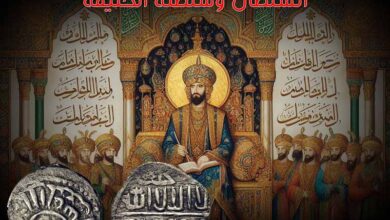
He was a patron of the arts and scholars, and poets, scholars, writers, and thinkers flocked to his court in Aleppo. He opened his palace and treasuries to them, even minting a special coin for the poets who praised him, including al-Mutanabbi, the renowned grammarian Ibn Khalawayh, and the famous philosopher Abu Nasr al-Farabi. He also cared for his cousin and brother-in-law, Abu Firas al-Hamdani, the poet of Aleppo. He himself composed poetry, and his verses are considered fine. During this period of Sayf al-Dawla's reign, Aleppo, the capital of his state, became a destination for Arab scholars and poets. The coin on display is a museum piece weighing 16 grams. It bears the inscription in Kufic script: "The Abbasid Caliph al-Muti' li-Allah, Nasir al-Dawla, Sayf al-Dawla al-Hamdani," along with a collection of titles. It also depicts an Arab knight on horseback.