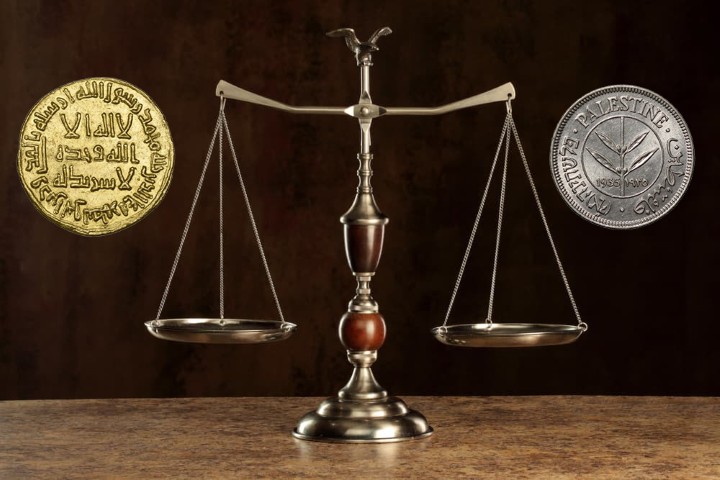
History of Arab currency
The history of Arab currency studies the evolution of monetary systems in the Arab world from ancient times to the modern era, including both metal and paper money. This field aims to understand how money was organized, its relationship to political power, economic development, and the construction of national sovereignty.
The history of Arab currency represents an essential part of the financial and administrative history of the Arab world, and reflects the economic, social and political transformations that Arab countries have undergone throughout the ages.
Money in ancient times
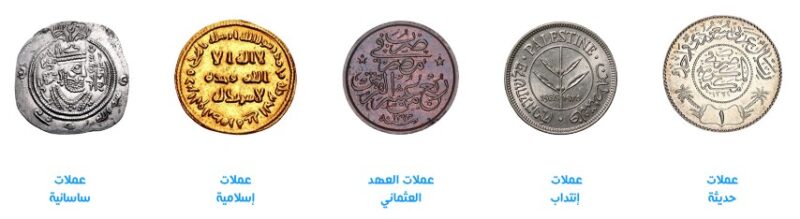
The circulation of money in the Arab world began with the use of coins in the pre-Islamic Arab kingdoms and in some regions belonging to major empires such as the Romans and Persians. These coins were usually made of gold, silver, and copper, and bore symbols representing authority or local identity.
Money in the Islamic era
With the rise of the Islamic state, coinage was systematically minted, with a clear division between gold (dinar), silver (dirham), and copper (fulus). This system was distinguished by inscriptions reflecting religious and political authority, the date of issue, and the regions where these coins were used.
This development contributed to:
- Unification of the monetary system
- Facilitating domestic and foreign trade
- Supporting the state's financial sovereignty
Arab currency in later eras
During the Ottoman era, the Arab regions were integrated into the Ottoman monetary system, with the introduction of some local currencies in certain areas. Following European colonization, some [regions/regions/regions] were affected Arab countries By European monetary standards, especially during the time of the mandate and the protectorate.
The evolution of money after independence
With independence, Arab states established central banks and issued national currencies, reflecting national symbols and financial sovereignty. This phase included:
- Minting the national coins
- Issuing paper money
- The issuance is regulated in accordance with official financial laws.
- Developing banking systems to support the national economy
The historical importance of Arab currency
The importance of studying Arab currency lies in the fact that:
- Official documents reflect authority and sovereignty
- Economic sources for studying the development of trade and markets
- Tools for understanding political and social transformations
- Evidence of the evolution of coinage, issuance, and cash flow systems
Relationship with other reference sciences
The study of Arab currency is linked to several fields of knowledge, including:
- NumismaticsStudy of coins
- Notaphily (the study of banknotes): Study of paper money Modern
- Monetary HistoryA study of the evolution of monetary systems throughout the ages
- Securities: To understand the relationship between money and modern financial instruments
This interconnectedness helps to provide a comprehensive picture of the history of economics and sovereignty in the Arab world.
conclusion
The history of Arab currency is a vital resource for studying the evolution of the economy and sovereignty in the region, from traditional coins to modern paper money. By examining these coins as documented historical sources, we can understand the relationships between power, the economy, and financial organization, particularly within the Arab context.