Banu Mirdas
Rare Islamic coins
The Mirdasids were an Arab family from the Banu Kilab clan of the Hawazin tribe of the Qays confederation. Their pre-Islamic homeland was the protected area of al-Rabadha, near Medina, al-Awali, and the highlands of Najd. Some of them migrated and settled on the Syrian banks of the Euphrates. The Mirdasid state was established, encompassing Aleppo, Manbij, Balis, Raqqa, al-Rahba, Homs, Sidon, Baalbek, and Tripoli. Its first ruler was Salih ibn Mirdas, nicknamed "Asad al-Dawla" (Lion of the State), who founded it in 414 AH (1020 CE) on the ruins of the Hamdanid state. In 416 AH (1026 CE), Salih also conquered Homs, Baalbek, and the fortress of Ibn Akkar in the Tripoli region. He was fought by the Fatimids and killed at al-Aqhuwana, near the Sea of Galilee.
Then the troops from Egypt were prepared for Shibl al-Dawla, led by Anushtakin, who was nicknamed al-Dazbari. They fought Shibl al-Dawla near Hama in Sha'ban of 429 AH, and Shibl al-Dawla was killed. Al-Dazbari took control of Aleppo in Ramadan of the same year and ruled all of Syria. His power grew until he died in Aleppo in 433 AH. Salih ibn Mirdas had a son in al-Rahba named Thumal, whom he nicknamed Mu'izz al-Dawla. When news of al-Dazbari's death reached him, Thumal ibn Salih marched to Aleppo and took control of it. He then seized its citadel in Safar 434 AH. Mu'izz al-Dawla Thumal ibn Salih remained ruler of Aleppo until 440 AH. The Fatimids sent an army against him, but Thumal defeated them. They sent another army, which Thumal also defeated. Then Thumal made peace with the Fatimids and surrendered Aleppo to them. The Fatimids then sent al-Hasan ibn Ali ibn Mulham, whom they nicknamed Makin al-Dawla, and he took control of Aleppo from Thumal ibn Salih ibn Mirdas in 449 AH. Thumal to Egypt
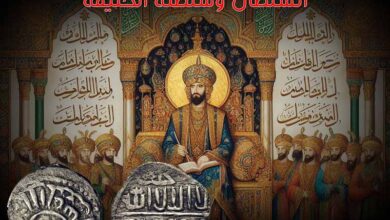
The rule of the Mirdasids remained perpetually unstable until it ended in 472 AH when Sharaf al-Dawla Muslim ibn Quraysh al-Uqayli, the ruler of Mosul, captured Aleppo, thus ending Mirdasid rule. Mirdasid coinage is considered rare due to the limited mintage, the small size of the state, and the short duration of its rule. It shares similarities with Fatimid coinage in style and design.