What are the hobbies of kings and presidents? And why that name?
Most of us know that King Farouk was one of the world's greatest stamp collectors, but perhaps not all of us know that the American president Franklin Delano Roosevelt He was also a great enthusiast of the hobby, and perhaps this was one of the reasons for the friendship that grew between the two men, unlike the relationship that existed between the King and Sir Miles Lampson, the English ambassador, whom the King secretly called “Abu Jamoos Pasha”!
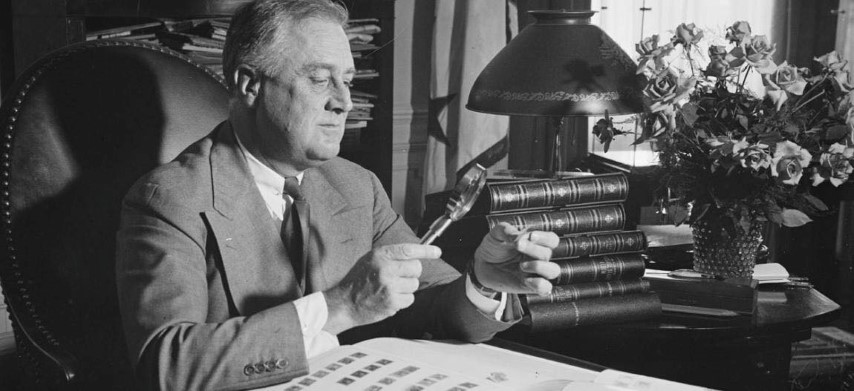
Roosevelt had been madly in love with stamps since he was an eight-year-old boy, and it is amazing that he was able to continue collecting even after he became President of the United States and throughout the World War. He always told those around him that his albums were the only thing that kept him sane in this crazy world.
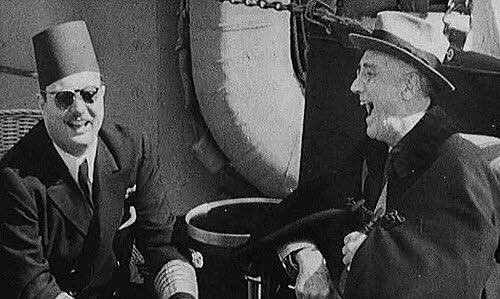
However, despite the fact that the king and the president shared a single hobby, their methods of combining it were different, and it can even be said to be contradictory. Farouk was interested in everything that was precious and valuable, and he followed his father’s approach in “creating” rarities such as the royal mise-serve. He was a strong speculator in most international auctions and paid generously. In the last decade of his life as king, he had appointed a young lady to supervise the organization of his collection (and I had the honor of getting to know her in her later days, but that is another story). In contrast, Roosevelt was interested in the themes, stories, and events behind each stamp. He would write the story of each stamp in pencil and fine print next to the stamp in the album. His collection was never far from him, whether at the White House, during his election campaigns, or on his travels. When his aide informed him of the Japanese attack on Pearl Harbor, the president was arranging his stamps. He even had them with him at the Yalta Conference, which shaped the postwar world. He also had them with him aboard the cruiser Quincy when he met King Ibn Saud and King Farouk. Perhaps the latter "gave" his collection a break, as all collectors do!
But one of the most important things Roosevelt did was succeed in spreading the hobby among his countrymen. Stamps were a topic of conversation with most of those he met. He had ordered that all envelopes arriving at the US State Department be sent to the White House so that he could select the stamps that were missing, and the rest he would send to elementary schools and children who wrote to him. He encouraged the establishment of many stamp collectors' societies and requested the creation of a "display" system in post offices so that visitors could see the artistic forms of the new issues. During his rule, no new American stamp was issued before it was presented to him personally, and it is said that he introduced modifications to the design of more than 200 stamps!
The hobby of kings
Farouk did work that would spread the hobby in Egypt. Who can deny the merit of holding the Alexandria Exhibition in 1945, Cairo in 1946, and Cairo in 1951? And the international exhibitions in which Egypt participated, such as America in 1947, Citex, Bepitec, and Imaba. However, he may not have done enough to spread the hobby among school students in Roosevelt.
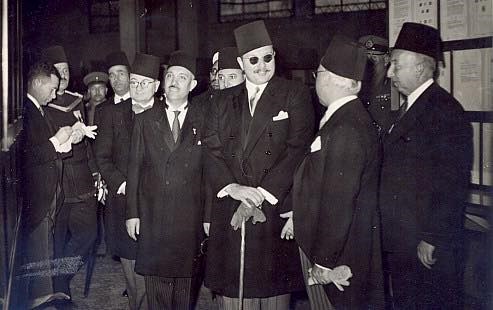
Ironically, when Roosevelt died, Farouk bought most of his old friend’s collection (about 1.2 million stamps), and after the events of July 1952, Farouk’s stamps were bought by traders, mostly from America and Canada, so Roosevelt’s stamps returned to his country!
For more similar topics, you can browse the Arab collector's website. the Link the next:
King Farouk's World Coin Collection