Security features of the first Egyptian polymer banknote
Learn about the security features used by the Central Bank on the first Egyptian polymer banknote, the new ten-pound note, and the latest security measures used on the note.
This article is sponsored by both Prefix report for Egyptian banknotes و Encyclopedia of Egyptian Banknotes
First Egyptian polymer banknote
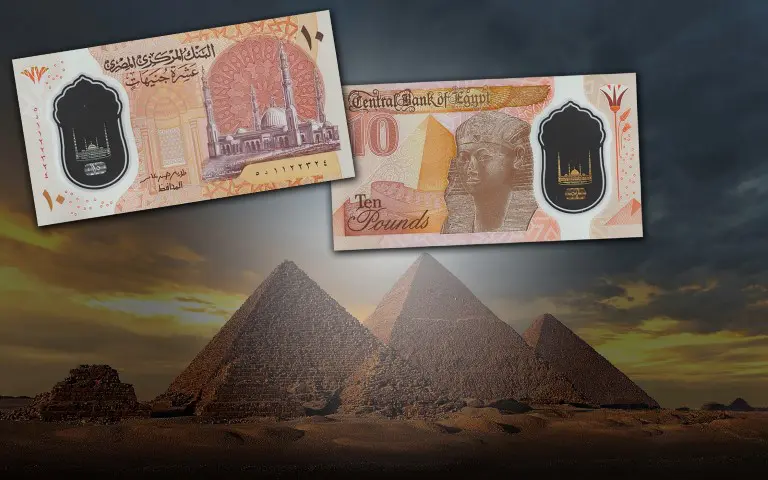
He decided Central Bank of Egypt The introduction of the ten pound plastic (polymer) note was announced by the bank on Tuesday, July 5, 2022. It is worth noting that it was issued in the same form as previously announced during the press conference in November 2021.
The Central Bank emphasized that the new plastic banknote will circulate alongside its paper counterpart, the currently circulating ten-pound note. The bank confirmed that none of the previous ten-pound notes have been withdrawn and that they will remain legal tender. Citizens can obtain the new plastic ten-pound note through the network of Egyptian bank branches. The bank also announced that it will issue the twenty-pound note in the next phase of its market rollout.
Environmentally friendly and recyclable
Plastic banknotes are flexible, strong, and thinner, with a lifespan up to five times longer than cotton paper banknotes, reducing the need for reprinting. Polymer banknotes also offer other advantages, such as being water-resistant, less susceptible to dust, environmentally friendly, and more difficult to counterfeit.
The introduction of the 10-pound polymer banknote is in line with the goals set out in Egypt’s Vision 2030 to raise the quality of banknotes circulating in the Egyptian market, reduce printing costs over time, and contribute to sustainable development.
A closer look at banknote design
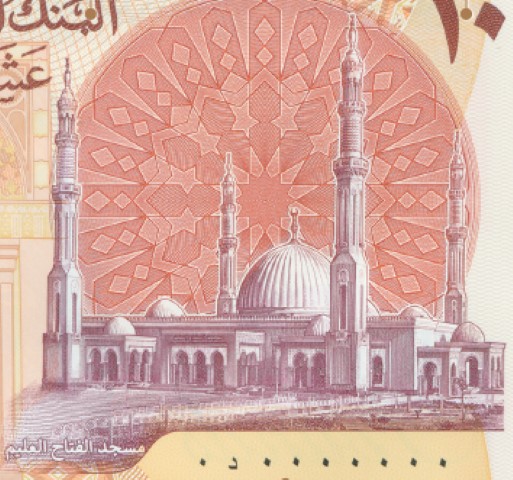
The design of the new ten represents Egypt’s will to embrace positive change and progress towards the new republic while preserving the traditions of Pharaonic culture and Islamic heritage. The banknote’s shape is completely different from the traditional design that the Egyptian citizen is accustomed to for the ten-pound note. The front of the new currency is adorned with the Al-Fattah Al-Aleem Mosque, as it is one of the landmarks of Islamic architectural styles in the new administrative capital, after the image of the Al-Rifai Mosque, which is located in Salah El-Din Square in the Al-Khalifa neighborhood, which we were accustomed to on previous issues, was replaced.
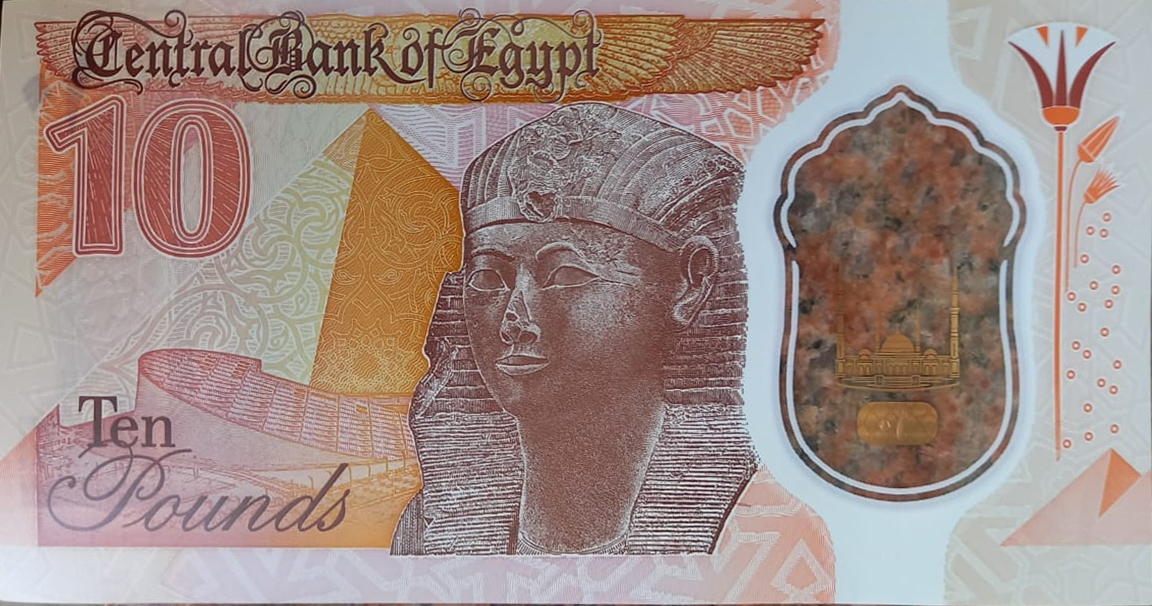
As for the back of the new banknote, it features a design of the Pharaonic civilization, represented by the statue of the Egyptian Queen Hatshepsut, which reflects the identity of the ancient Egyptian state after the image of the statue of King Khafre was replaced. The Central Bank explained that in doing so, the new currency linked the richness of ancient Egyptian history with the modern era, and combined the civilization of the ancestors with what the descendants have accomplished.
The design of the new banknote was prepared by De La Rue International (De La Rue plc), is a British company based in Basingstoke, England that manufactures paper including banknotes, passports and tax stamps.
The new banknote was printed at the Central Bank of Egypt's new printing facilities in the New Administrative Capital, using premium printing paper with SAFEGUARD® security technology supplied by De La Rue and CCL Secure. The paper is made from GUARDIAN™ polymer. The Central Bank of Egypt announced the banknote's dimensions, which are set at 6.9 x 13.2 cm.
Destination details and security signs
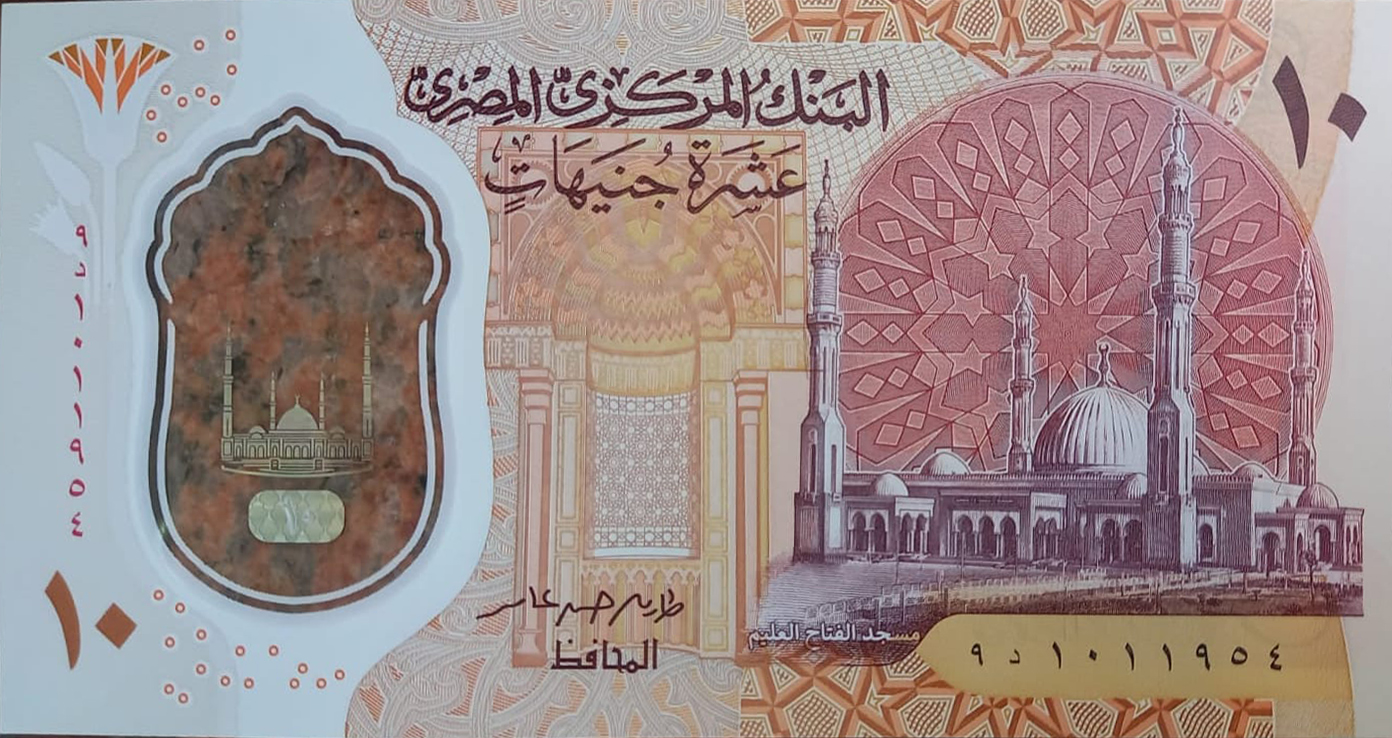
The front of the banknote features an image of the Al-Fattah Al-Aleem Mosque, a prominent example of Islamic architecture in the New Administrative Capital. The text on this side of the note is written in Arabic.
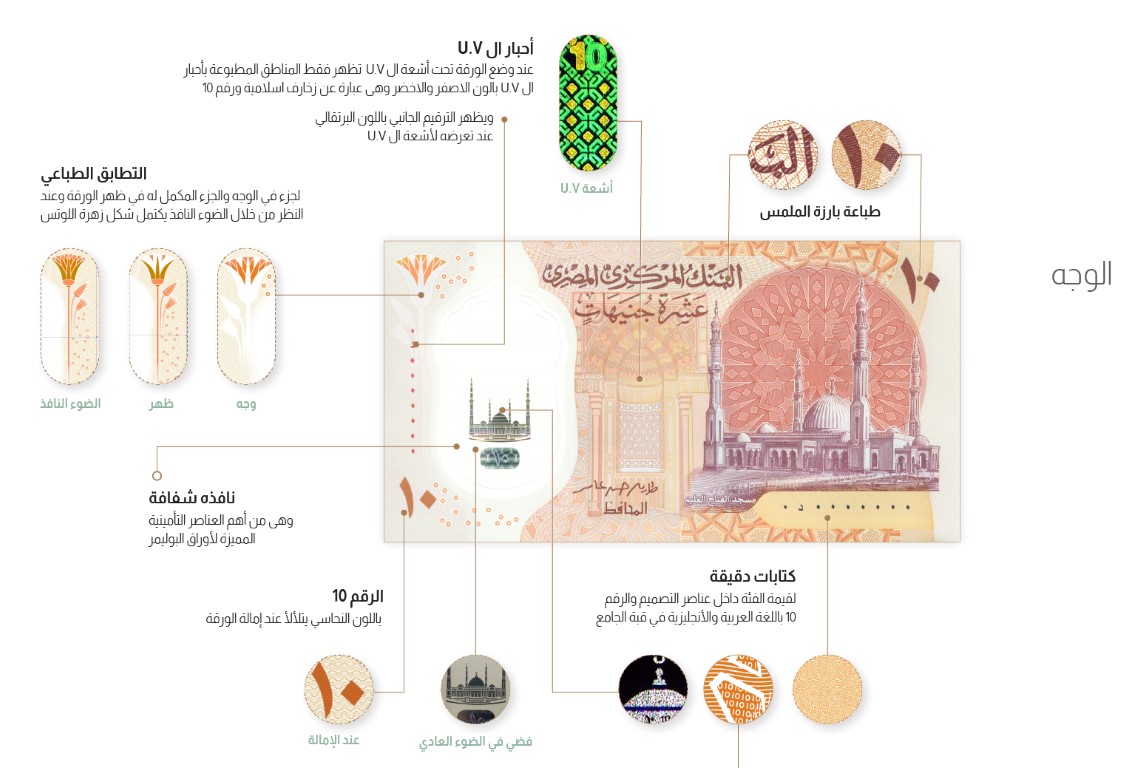
The highest quality standards were used in printing the banknote to ensure that it is not counterfeited. Printing ink was used that allows the printing details to appear prominently. Special ultraviolet inks were also used, which show Islamic decorations in yellow and green on the mosque’s mihrab in the middle of the banknote. The number 10 appears above the mihrab, and on the other hand, the side numbering appears in orange when exposed to an ultraviolet lamp.
On the left of the paper, the printing conformity feature appears on the lotus leaf. When viewed through the light, the lotus flower shape is completed. A transparent plastic window was also placed, showing a holographic image of the Al-Fattah Al-Aleem Mosque, which appears in silver when exposed to normal light. This is one of the most important security features of polymer papers.
If we look at the bottom left of the paper, the number 10 appears in copper color, sparkling when the paper is tilted. Also, the number 10 below the holographic image of the Al-Fattah Al-Aleem Mosque appears in silver when exposed to normal light.
The value of the banknote was also added within the design elements and the number 10 in Arabic and English on the mosque's dome, and the banknote will bear the signature of the current Central Bank Governor, Tarek Amer.
Back details and safety markings
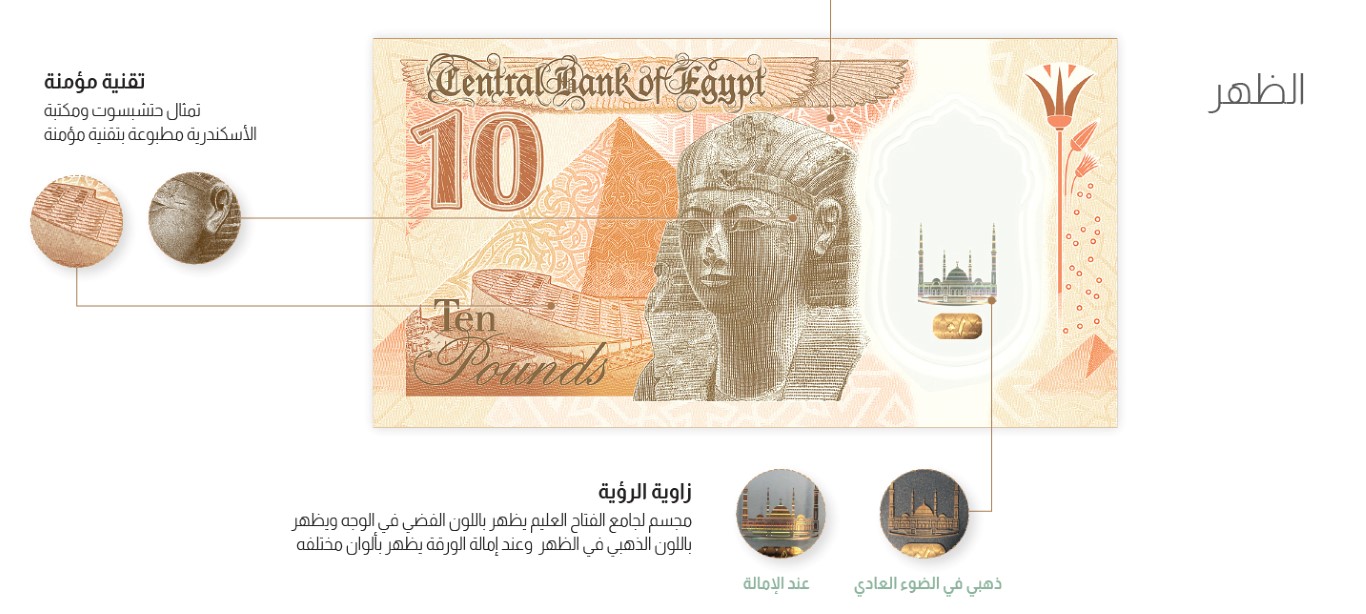
As we mentioned earlier, the back of the coin bears an image of a statue of the Egyptian Queen Hatshepsut, which reflects the identity of the ancient Egyptian state.
On the reverse side of the banknote, additional security features were added. The image of Queen Hatshepsut's statue and the Library of Alexandria were printed using a secure technology. Furthermore, the holographic images of the Al-Fattah Al-Aleem Mosque and the number 10 appear silver on the front of the note but gold on the back when exposed to normal light. When the note is tilted, different colors appear. This technique is known as KINEGRAM® It is a holographic technology from Kruz that has three dimensions.
How to identify genuine banknotes
The Central Bank explained in its report that the piece can be identified by the texture of the raised surface using advanced engraving technology, in addition to the change in the angle of view and through the light passing through the transparent window. Experts can also easily examine the details of the paper using a magnifying glass and under ultraviolet lamps.
,Ruth Yoling, CEO and Managing Director of Currency, said, “Being able to support the Central Bank of Egypt in delivering the first polymer banknote is a proud moment for De La Rue. Thank you to everyone who contributed to bringing this note to life.”.

Sources:
Central Bank of Egypt
De La Rue Company
banknote-industry-news
You can read more selected articles from the Arab Collector through The following link:
Egyptian polymer banknotes…when will they be issued?