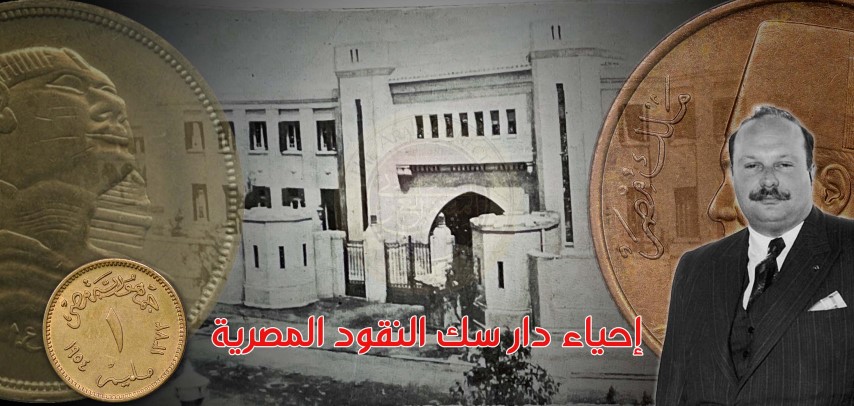
Reviving the Egyptian Mint
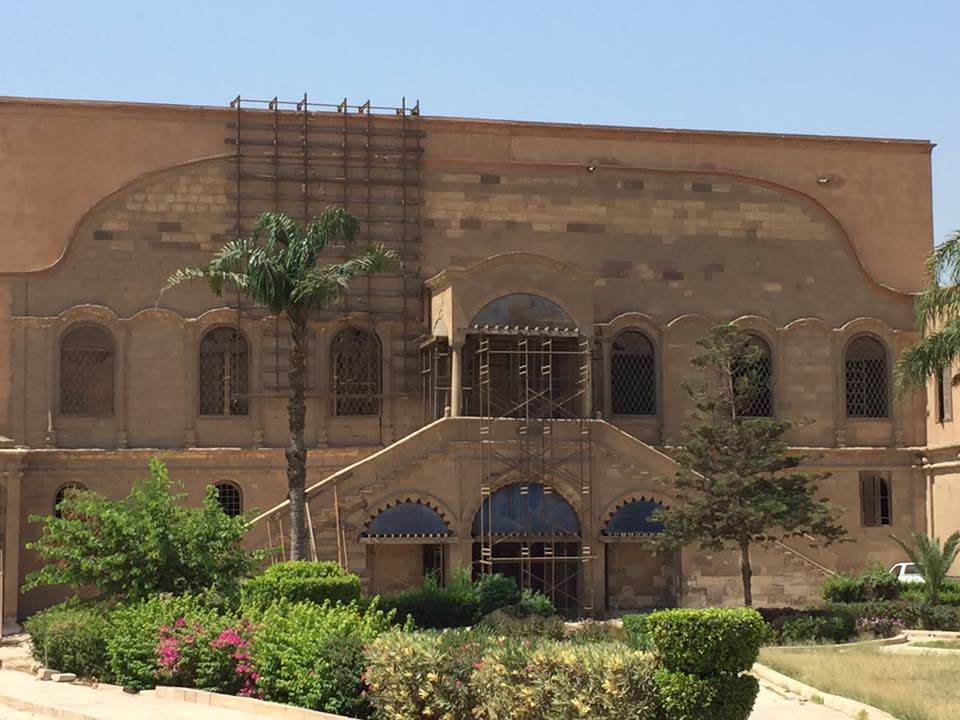
The Ottoman governor Ibrahim Pasha al-Qabtan established the first Egyptian mint, or as it was known, the Darbkhana (mint house), in the Citadel between his mosque and his palace in 1709 AD (1121 AH). It remained there until it was renovated by Muhammad Ali Pasha in 1812 AD (1227 AH). It remained under his care, as he ordered an increase in it and the addition of places for scales, gold testing, and a prayer room for performing religious duties in 1824 AD (1242 AH).
The mint employed a large number of minters, reaching approximately 500 by 1812. Egyptian coins minted there were renowned throughout the world, with some saying that none were more accurate or reliable due to their quality, craftsmanship, precise weight, and the fineness of their gold and silver. Egypt ceased using its mint during the reign of Sultan Abdul Hamid II in 1883 and began minting its own coins for extended periods, lasting for over a century, in London, Paris, Bombay, Birmingham, Budapest, and other cities, alongside the many other currencies in circulation, such as English, Indian, and French.
The need for minting currency in Egypt
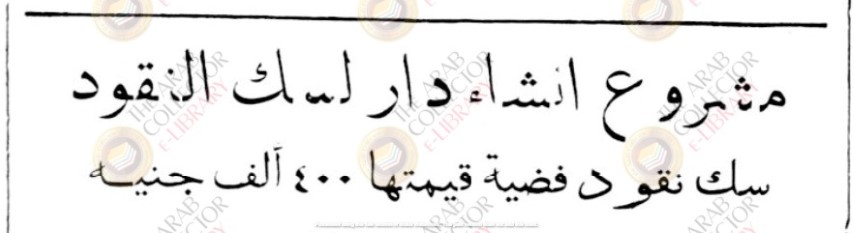
The beginning was in March 1937, when the Minister of Finance indicated in a statement the intention to establish a mint in Egypt, as this would open up a new field of work. It was mentioned in a publication in Al-Ahram newspaper on May 13, 1937, by some senior technicians, that establishing this house requires many annual expenses, as it needs a technical director who receives about 1400 Egyptian pounds annually, in addition to what others receive and what is spent on the other affairs of the house. However, despite these considerations, the matter was put under consideration.
With the outbreak of World War II, Egypt faced a currency crisis, particularly in Change Due to a shortage of silver coins arriving in the country, the Egyptian government put forward the idea of minting coins in Egypt for consultation in 1941. The first two-piaster silver coins were minted in November of that year and continued to be produced until 1942 by the Weights and Measures Authority. See the relevant article. Two piasters in 1942… They deceived you when they said
Egyptian Mint
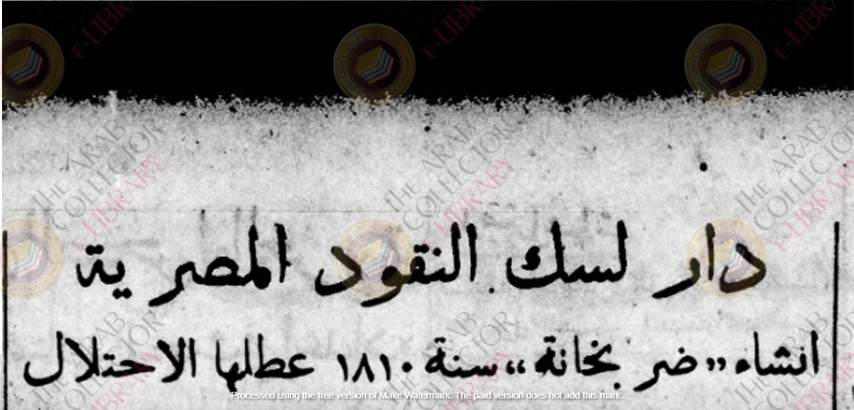
In August 1948, the task of researching the establishment of a mint for Egyptian coins in Cairo was assigned to both the Ministry of Trade and Finance, under the leadership of Mahmoud Sirry, Director of the Weights and Measures Authority, who gave an interview to Al-Ahram newspaper on 18-8-1948, beginning by pointing out that minting Egyptian coins outside the country would harm national pride and a manifestation of economic independence, especially in the current era in which the state is keen to Egyptianize public facilities.
He pointed out that the implementation of the new project will open up job opportunities for a group of young people with technical education, in addition to saving the money that the state spends on importing money from abroad. He mentioned that the initial expenses for the project do not exceed 50,500 pounds, of which 7,500 pounds are for salaries and wages, 15,000 for building construction, and 28,000 for purchasing various machines and tools.
In June 1949, the budget of the mint was discussed for the fiscal year, and in August of the same year, the Minister of Trade and Industry announced an international competition to develop the latest design for the mint in Cairo. One of the antiquities inspectors at that time, Professor Hussein Abdel Wahab, suggested that the location of the new mint should be adjacent to the old mint (the mint) and that its style should be inspired by the era of Muhammad Ali to match the existing group around it and to revive the memory of the Egyptian mint.
Mint tenders
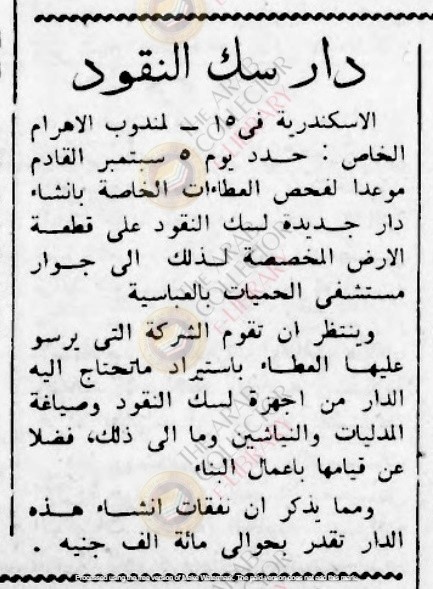
The Ministry of Trade set September 5, 1950, as the date for reviewing bids for the construction of a new mint on the designated plot of land adjacent to the Fever Hospital in Abbassia. The winning company would be responsible for importing the necessary equipment for minting coins, manufacturing medals and decorations, and carrying out the construction work. It is worth noting that the estimated cost of establishing the mint this year has changed and is now approximately one hundred thousand Egyptian pounds. The opening of the bids was overseen by Mr. Mahmoud Suleiman Ghanem, Minister of Trade and Industry.
Meanwhile, a delegation headed by Mr. Abdel Hamid Hassan, Undersecretary of the Ministry of Trade and Industry, went to the mints in Vienna, Belgium and Rome to examine the latest minting equipment at that time, in order to ensure that the Egyptian Mint would be one of the most modern mints in the world in terms of providing modern machinery and systems.
The area of the buildings was estimated at about four thousand meters, in addition to another four thousand for the garden and other annexes. The Egyptian budget for the year 1950-1951 included an amount of 80 thousand pounds for the construction of the building and 120 thousand pounds for the purchase of the necessary machinery. The tender was awarded to a German company for an amount of 75 thousand pounds, but the Ministry of Trade saw fit to add some equipment and machinery and raised the expenses to 92 thousand pounds.
Production of 75 million pieces annually
The number of coins the Mint was expected to produce in December 1950—gold, silver, nickel, and bronze—was estimated at approximately 50 million pieces per year, potentially increasing to 75 million under normal circumstances, based on a minting rate of 120 coins per minute. This figure excludes medals, decorations, hallmarks, weights and measures, and the seals of various government departments and ministries. It was also proposed that the Mint mint produce coins for sister Arab states after meeting the country's own currency needs.
Re-minting Egyptian currency
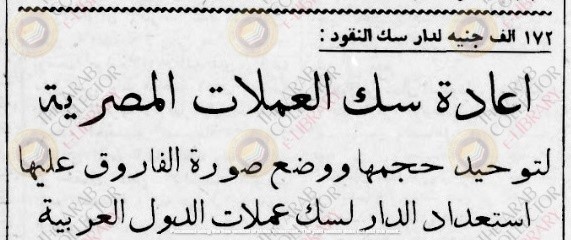
Since Egyptian coins varied in value at every denomination, differing in shape and size, and bearing different images of various Egyptian kings, it was decided to re-mint all coins in a uniform design. All coins would bear the image of King Farouk, and their design would be standardized, eliminating the distinction between five-millime coins with perforations (like those of Sultan Hussein Kamel) and those without, or between round and zigzag shapes. The number of coins to be re-minted was estimated at approximately 160 million, aiming to provide a unified national currency. The mint was named the "Royal Mint.".
Enactment of legislation for the Mint
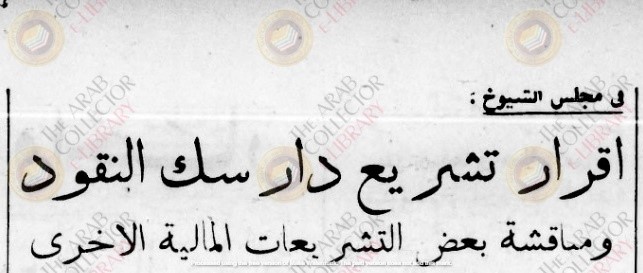
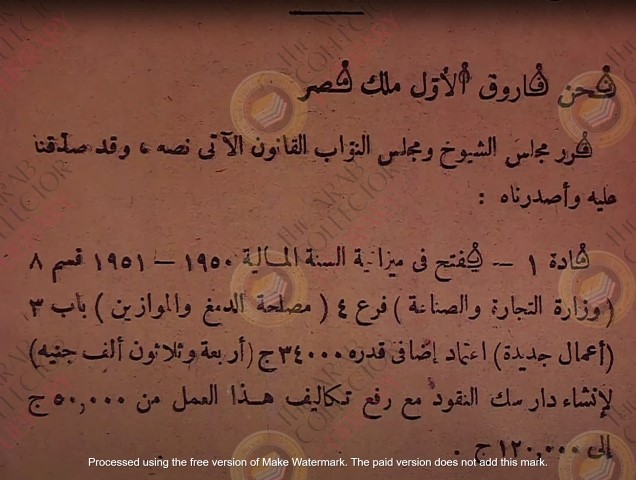
On December 3, 1950, the Egyptian Senate discussed the draft law approving 24,000 pounds for the establishment of the mint, raising the costs of this work from 50,000 pounds to 120,000 pounds and raising the costs of establishing the mint building from 50,000 to 80,000 pounds. The members of the council asked what the government spends on minting coins abroad now and about the annual costs of the mint in order to compare the two cases.
The Minister of Trade responded that the government was not considering the project in terms of all costs, but rather believed in establishing Egypt's own mint, as was the case in other countries. He emphasized the necessity of reviving the ancient heritage of the Egyptian mint, regardless of the expenses. The Senate did not object to the decision; on the contrary, they viewed it from a purely national perspective and approved the principle of legislation. Law No. 178 of 1950 was issued on December 14, authorizing an additional appropriation in the 1950-1951 fiscal year budget.
Supreme Committee of the Mint
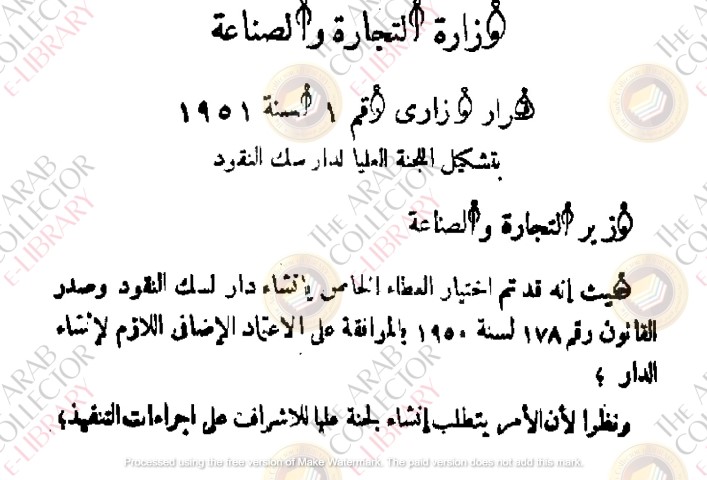
On January 15, 1951, Resolution No. 1 was issued forming the Supreme Committee for the Mint, headed by the Minister of Trade and Industry, and the following members: Mr. Abdel Hamid Hassan, Undersecretary of the Ministry of Trade and Industry – Ali Farid, Undersecretary of the Ministry of Public Works for Building Affairs – Mahmoud Sirri, Director General of the Weights and Measures Authority – Sayed Abdel Gawad, Director of the Mechanical and Electrical Authority – Hamed Khader, Director General of Administration and Supplies – and Dr. Youssef Girgis Barsoum, General Supervisor of the Industrial Property Authority.
The Supreme Committee is responsible for supervising the implementation of the tender that was selected for the establishment of the Mint House, reviewing laws and regulations, and forming an executive committee to implement the decisions of the Supreme Committee, headed by Mahmoud Serry Bey, Director General of the Weights and Measures Authority.
Central Bank project and monetary system reform
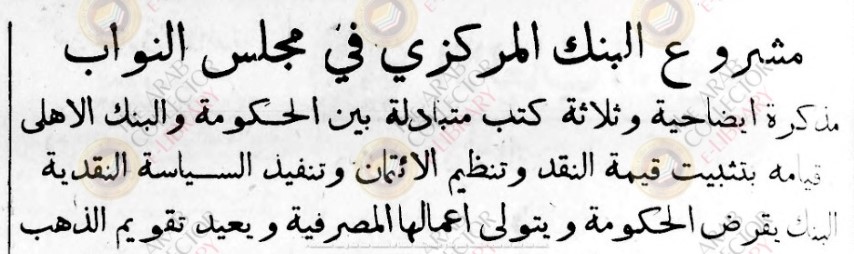
In February 1951, an explanatory memorandum was presented by the Finance Committee of the House of Representatives on behalf of the Egyptian government and the National Bank of Egypt regarding the draft law to transform the National Bank into a central bank without any amendments. The draft stipulated that the privilege of issuing banknotes would remain granted to the National Bank and that the banknotes in circulation would be permanently backed by a reserve consisting of gold and foreign securities.
Based on that memorandum, the Egyptian Finance Committee announced in March 1951 the draft report of the Special Law (Law 185) to determine the weight of gold in the pound and amend some provisions of the Special Law on Money in the country by re-evaluating the gold balance by placing it in a special account as a reserve to support the value of the currency. It was also authorized to amend the weight and purity of gold and silver coins.
Starting the project
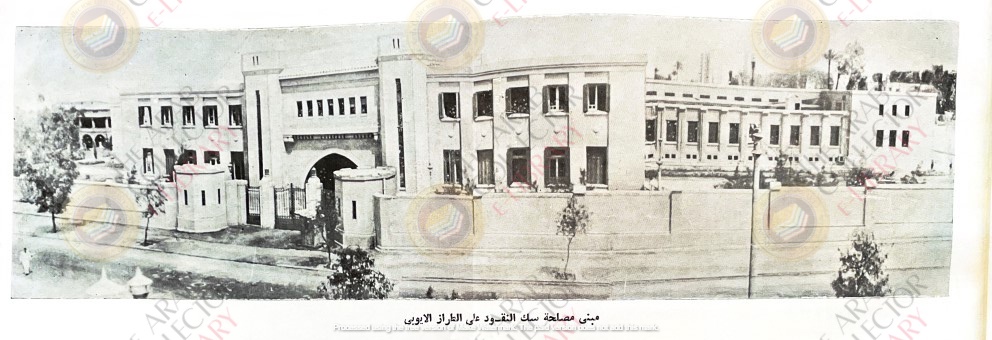
After the Egyptian government completed the preliminary procedures and contracted for the construction of the mint, its foundation stone was laid in Abbassia in mid-1951. The company contracted by the Egyptian government then supplied most of the machinery, at a cost of approximately one hundred thousand Egyptian pounds. A plan was devised to ensure that the mint's machinery would produce at least one and a half million coins annually, consisting of the riyal, half-riyal (10 piasters), quarter-riyal (5 piasters), and two-piaster coins.
Twenty million nickel coins of the piaster (10 millimes), half piaster (5 millimes), and two-millime denominations, and five million bronze coins of the millime denomination, in addition to half a million gold coins of the five-pound, one-pound, half-pound, and gold riyal denominations, along with the production of the technical departments tasked with crafting medals, decorations, and seals. Furthermore, it is prepared to supply sister nations with their required coins.
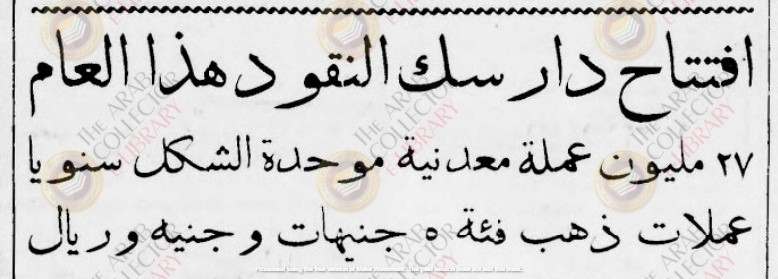
The project's steps progressed rapidly, and all the necessary machinery arrived at the mint. In March 1952, the Egyptian government announced in Al-Ahram newspaper its intention to open the new mint at the end of that year. On May 30, 1952, Dr. Zaki Abdel-Motaal, Minister of Finance and Economy, held a meeting with the ministry's undersecretaries to discuss the process of withdrawing the currencies from the era of King Fouad, and that the first task entrusted to the new mint should be issuing coins in the name of His Majesty King Farouk to replace the withdrawn currencies.
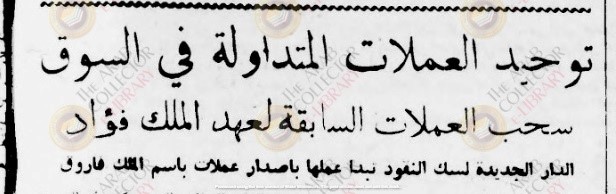
He also discussed the process of gradually dispensing with ten-piaster and five-piaster banknotes due to their inability to withstand long-term circulation and replacing them with silver coins in order to achieve greater currency uniformity. The new Egyptian Mint building was designed in the Ayyubid style, but circumstances prevented King Farouk from witnessing the opening of the Mint, as he was deposed during the events of the July 23, 1952 revolution.
Minting the new currency
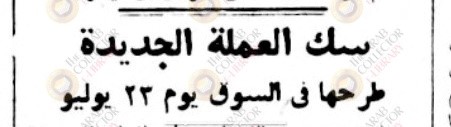
The new mint was scheduled to begin its work in mid-1953, and announced its readiness to introduce new coins into the market starting from July 23, 1953. It was initially agreed to mint a silver coin of the twenty piaster, ten piaster, and five piaster denominations, and a bronze coin of the ten millimes, five millimes, and one millime denomination.
The idea of issuing coins in denominations of two piasters and two milliemes was also discussed, including whether the two piasters would be minted in silver or bronze. The Ministry of Finance and Economy prepared a draft law, which it sent to the Cabinet, outlining the standard and weight of the new coins. It was agreed that the bronze coins would have a uniform design featuring the three pyramids, as would the silver coin. The Ministry of Finance tasked the Survey Department with developing several designs for the new silver coin, from which the Minister of Finance would select the most suitable.
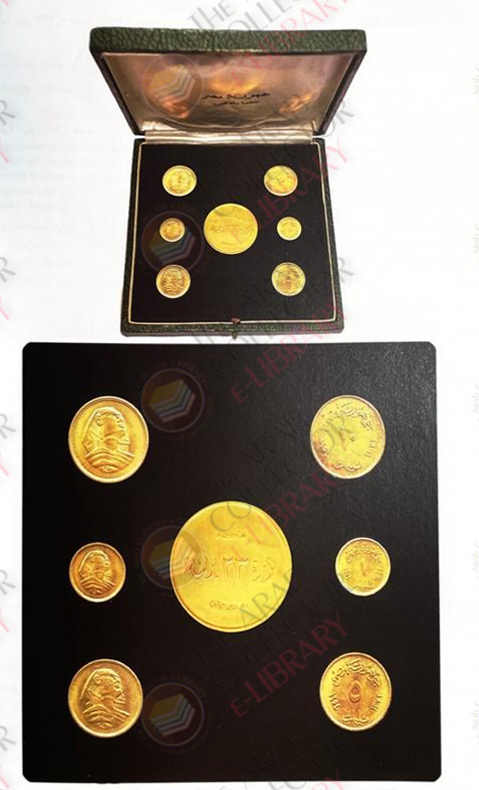
Nevertheless, work actually began at the Egyptian Mint at the end of 1954, and the design of the coins bearing the image of the Sphinx was issued and implemented, which is considered the first issue of Egyptian coins in the republican period.
Resources
1- Al-Ahram Egyptian Newspaper – Various Issues from 1937-1954
2- Minting coins – Egyptian Ministry of Treasury 1960
3- Encyclopedia of Currencies and Catalog of Egyptian Currencies – Coins – Magdi Hanafi
4- Arab Currency Legislation Egypt 1922 – 1951 – Al-Muqtani Al-Arabi Library
5- History of the Egyptian Mint
For similar topics, you can browse the Arab Collector website. the Link the next:
Sale of royal coins at the Egyptian Mint
Striked in Egypt, the history behind the coin inscriptions