
The postal service is one of the oldest organizational systems devised by human societies to ensure the transmission of information and messages between individuals, institutions, and nations. It was not merely a means of communication, but a fundamental administrative, political, and economic tool that contributed to nation-building, governance, regional connectivity, and the promotion of trade. The history of the postal service serves as a living record of the evolution of communication methods and reflects the level of institutional organization at each historical juncture.
This article aims to review the development of postal systems throughout the ages, with a focus on mail in the Arab world, and to demonstrate the essential relationship between mail and postage stamps as a direct product of this system.
Evolution of postal systems
Postal systems began in a rudimentary form with the need to transmit orders and official messages in ancient civilizations. In Mesopotamia and ancient Egypt, messengers were used to carry correspondence between rulers and administrations. In the Achaemenid Persian Empire, a structured postal system was established, relying on a series of stations to transmit messages quickly; this is considered one of the earliest semi-modern postal systems.
In Roman times, the postal service evolved to serve the imperial administration through an extensive network of roads and official stations, acting as a tool for centralized governance. However, the postal service remained a state monopoly and was not accessible to the general public.
The postal service underwent a significant transformation in the Middle Ages with the expansion of cities and the flourishing of trade, leading to the emergence of private postal networks serving merchants and religious institutions. With the rise of modern nation-states in Europe, the postal service became a formal, organized institution, governed by clear regulations and subject to fixed fees.
The most important transformation came in the nineteenth century with the introduction of the postage stamp, which made it possible to pay postage in advance and contributed to expanding the use of the post to include the general public, and not just the ruling or commercial elites.

Mail in the Arab world
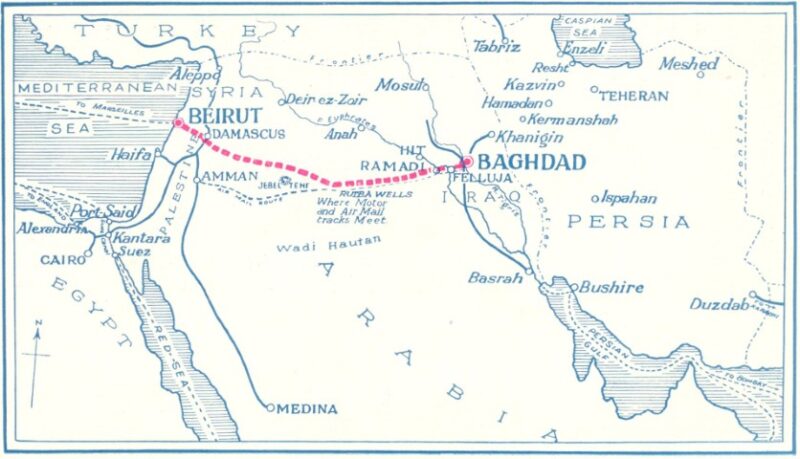
The Arab world had early postal systems, particularly during the Islamic era, when the postal service was established as an official institution for transmitting messages and orders between caliphs and governors. This system was characterized by its precision and organization, and relied on fixed stations and various means of transport, from horses to camels.
In later periods, particularly during the Ottoman era, the Arab regions were integrated into a wider postal network, though efficiency levels varied between areas. With the arrival of colonial powers in the Arab world during the 19th and early 20th centuries, modern postal systems were introduced, often linked to European administrations.
Following independence, Arab states established national postal administrations and issued their own stamps, which bore symbols of national sovereignty and cultural identity. This period is considered one of the richest for postal studies, reflecting major political and administrative transformations.
The relationship between mail and postage stamps
Postage stamps are a direct product of the evolution of postal systems and cannot be understood in isolation from the postal context in which they were issued. Essentially, a postage stamp is proof of payment of postage and a regulatory tool for controlling and standardizing fees.
In postal studies, the stamp is not viewed as an independent item, but as an element within a system that includes:
- Postage fees
- Transport routes
- Seals and dates
- Actual use on messages
Hence, studying stamps without understanding the postal system is an incomplete study, while philately provides an analytical framework that links postal material with the administrative system that produced it.
The historical significance of postal history
The importance of studying postal history lies in the fact that it reveals:
- Development of state institutions
- Interregional communication patterns
- Level of administrative organization
- Political and trade relations
Postal letters sealed with a specific date and place are considered accurate historical sources that contribute to reconstructing events and understanding the administrative and social reality in different periods.
conclusion
The history of the postal service is a key to understanding the development of societies and states, as it served as an administrative and organizational system predating many modern state institutions. By studying postal systems and their associated stamps, history can be reinterpreted from the perspective of communication and organization, not solely through the lens of political events.
Documenting the history of the postal service, especially in the Arab world, not only enriches historical studies, but also contributes to preserving an administrative and cultural memory that forms an integral part of the institutional identity of countries.
The history of modern states cannot be read in isolation from their three instruments of sovereignty; while the history of the postal service reveals communication networks and administrative organization, the picture is completed by studying the financial system through the science of Paper Money Which strengthens economic confidence, and Numismatics Which studies the evolution of sovereignty through coinage.
For a deeper understanding of the methodological differences between these fields of knowledge and how to distinguish them as serious sciences rather than mere hobbies, we invite you to read our comprehensive guide on The difference between numismatics, stamp science, and paper currency science.