
Notaphily
introduction
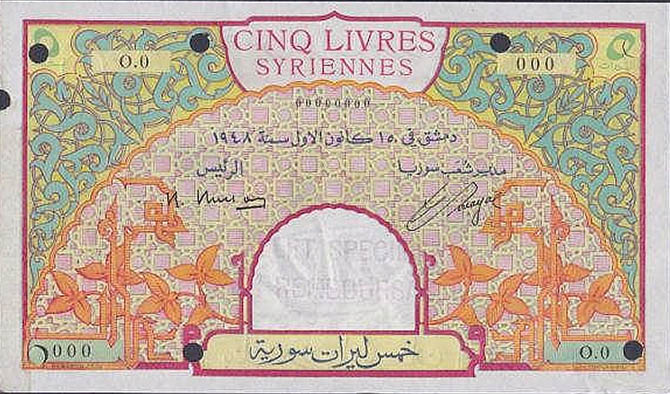
Notaphily is a specialized field of knowledge that studies banknotes as official documents issued by monetary authorities, reflecting integrated economic, sovereign, and administrative systems. This field is not limited to collecting or acquiring banknotes, but rather examines them as analytical tools for understanding the evolution of monetary systems, the building of financial trust, and political and economic transformations within countries.
This specialization arose in response to the unique characteristics of paper currency in terms of material, circulation function, and issuance and protection techniques, characteristics that cannot be fully contained within the framework of traditional numismatics.
Definition of paper currency science
Numismatics is the systematic study of banknotes in terms of:
- Its issuing systems
- The monetary authorities responsible for it
- Its economic functions
- Its design and security features
- Context of its use and circulation
In this context, the banknote is not just a means of payment, but a documented historical and economic source that reflects the nature of the state, its level of institutional development, and its political priorities.
Origin of the term Notaphily
The term Notaphily To a linguistic structure that combines:
- Nota (Latin): Meaning a written paper or sign
- Phily (Greek): It means care or love
The term emerged to distinguish the study of banknotes from numismatics, which traditionally focused on coins. It reflects the need for an independent field addressing the unique characteristics of banknotes in terms of printing, design, security features, and modern circulating functions.
The difference between numismatics and coin collecting
The two fields are clearly distinguished in terms of both objective and methodology:
| The science of banknotes | Collecting paper money |
| It focuses on the monetary system that issued the paper. | It focuses on the banknote as a collectible item. |
| It studies actual usage and circulation | It focuses on scarcity, condition, and market value. |
| It analyzes monetary policies and economic conditions. | It depends on the catalogual classification |
| Its purpose is understanding, documentation, and analysis. | Its purpose is hobby or investment |
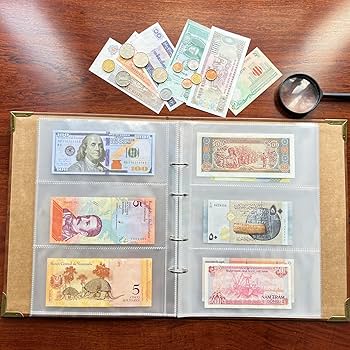
The collection of banknotes is concerned with the banknote itself, while the study of banknotes is concerned with the monetary system that issued and used them.
The relationship between numismatics and paper money
The science of banknotes is related toNumismatics They are closely related, as they both study monetary authority and economic sovereignty, but they differ in:
- MaterialPaper versus metal
- Production techniquesPrinting versus minting
- Trading patternsLarge-scale versus traditional trading
- Security challengesForgery and complex printing
The study of banknotes is a complementary field, not a minor branch, ofNumismatics.
Fields of Banknote Science
This field of study encompasses a number of specialized areas, most notably:
- Central bank issues
- Temporary paper currencies
- Emergency currencies and crisis periods
- Colonial paper money
- Private and semi-official banknotes
- Counterfeit banknotes for educational purposes
- Security design and sovereign symbols
Historical and economic importance
The importance of the study of banknotes lies in the fact that:
- A tool for understanding monetary policies
- A source for documenting economic crises and inflation
- Witness to building trust between the state and society
- A means of analyzing political transformations through symbols and designs
Paper currency is one of the most widely used and influential documents in daily life.
Paper currencies in the Arab world
Arab banknotes reflect important stages of modern history, including:
- Transition from foreign currencies to national currencies
- periods of independence and building central banks
- Major political and economic transformations
These papers are considered essential sources for studying the development of the modern state in the Arab world.
Relationship with other sciences
The study of banknotes is linked to several fields of knowledge, most notably:
- Economics and Monetary
- Political history
- Printing Arts
- Information security
- Documentation and Archiving Science
It is therefore an interdisciplinary science, inseparable from the general context of the humanities and economics.
conclusion
Notaphily is an independent field of study that examines banknotes as both economic instruments and sovereign documents. Through this discipline, one can understand the nature of monetary power, the evolution of economic systems, and the political transformations experienced by modern states.
Developing specialized studies in the science of banknotes, especially in the Arab context, opens new horizons for re-reading monetary and economic history through documented material sources.
The difference between numismatics, philately, and paper currency

 EN
EN  AR
AR