Numismatics
Egyptian civilization on American currency
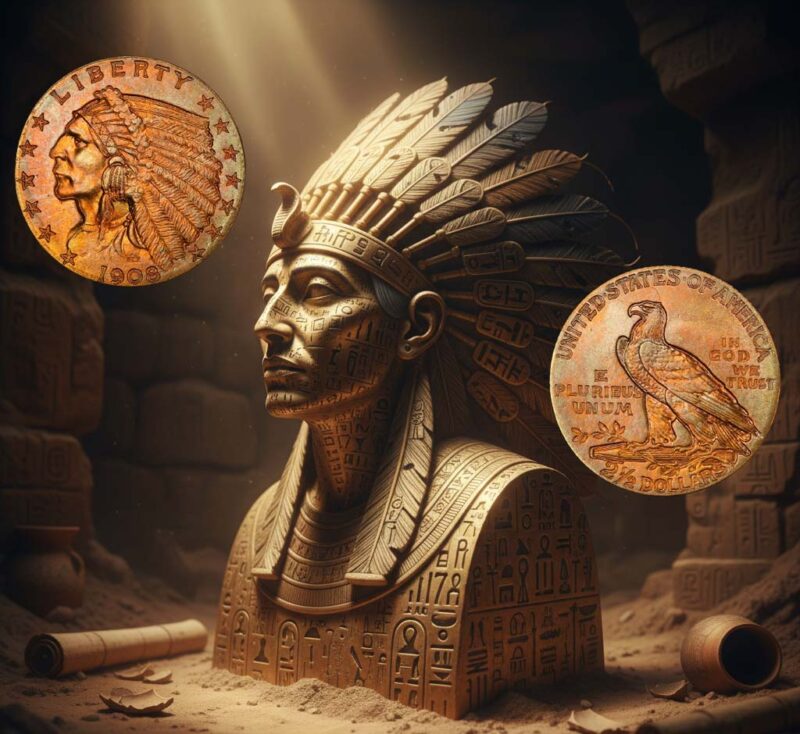
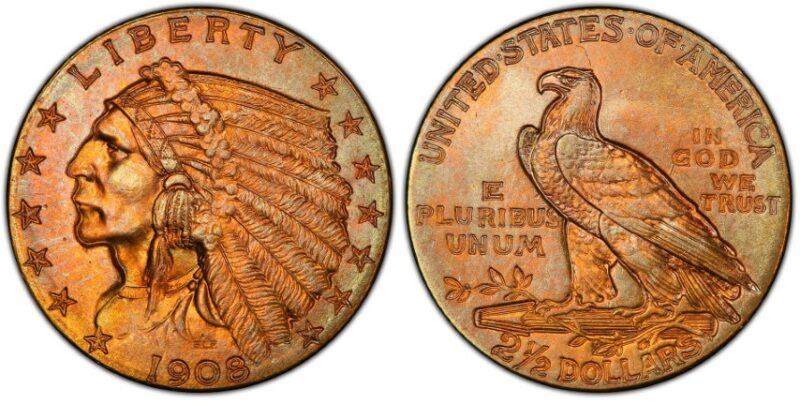
The year 1908 saw the introduction of two new denominations of American gold coins, the $5 and $2.50, with a design inspired by and intended to honor Native American culture. These coins became known as the Half and Quarter Eagles (the ten-dollar bill was called the Eagle, hence the five-dollar coin was called the Half Eagle and the 2.5-dollar coin the Quarter Eagle, while the twenty-dollar coin was called the Quarter Eagle).Double EagleBella Leon Pratt was behind the captivating design of these two coins, which were distinguished from all previous and subsequent American coins by the fact that the images were engraved below the surface of the coin instead of being raised above it.
Native Americans on gold
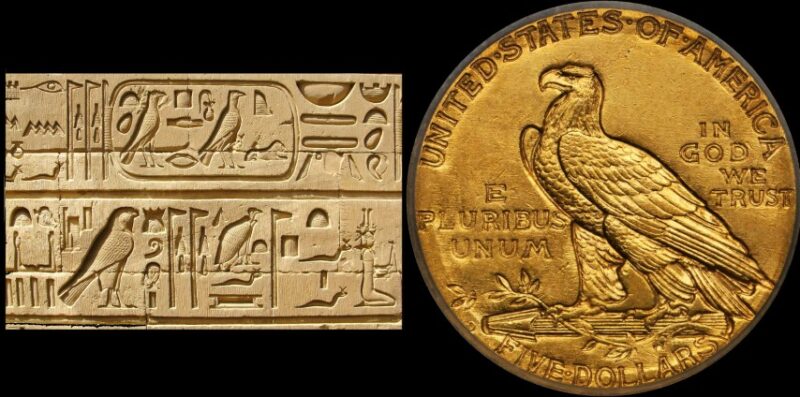
Native American culture wasn't the only one represented in this design. Ancient Egyptian culture was also present, represented by hieroglyphic symbols that suggested the unusual practice of carving inscriptions beneath the surface of the coin. William Sturgess Bigelow (an art enthusiast and close friend of President Theodore Roosevelt) conceived this innovative idea during a visit to the Museum of Fine Arts in Boston, where he viewed the Egyptian artwork on display. Bigelow later proposed the concept to Roosevelt, who was impressed and directed that it be incorporated into the design of the new coins by Bella Leon Pratt.
Public reception of the new gold coins was mixed. Many experts and coin collectors appreciated the innovative design and the cultural tribute it paid to Native Americans. The engraving design was particularly praised, not only for its distinctiveness and durability but also for its practicality in reducing surface wear.
Public fear of germs
However, there were also some objections, with some critics feeling that the engraved design represented a radical departure from traditional coins and made them more difficult to stack and handle. Additionally, there were concerns that germs and dirt would accumulate in the lower inscriptions, making them very difficult to clean and potentially posing a health risk.
The reproduction and circulation of these two coins continued between 1908 and 1915, and then again between 1925 and 1929, after which their production ceased and the experiment of embossed coins instead of raised ones ended, but these two coins retained their distinctiveness and high demand among collectors.
Did you know? Facts about the gold Incuse coins
-
Design philosophy: This is the only time in American history that inscriptions have been engraved “down” (incuse) rather than raised, and the goal was to emulate ancient Egyptian seals.
-
The germ myth: In 1908, a Boston doctor published an article claiming that dirt would accumulate in the pits and spread epidemics, causing panic among the people at the time!