Ancient CoinsByzantine CoinsRoman CoinsHistoryNumismatics
Antinopolis commemorative coins
In 130 AD, the Roman Emperor Hadrian was visiting Egypt as part of a large-scale tour of the eastern parts of his empire. Naturally, Hadrian took his "favorite" page, Antoninus, with him. Fate would have it that the page drowned in the Nile River, causing the emperor great sorrow. It was then that Hadrian decided to build a city on the banks of the Nile bearing the name “Antinopolis”In commemoration of his beloved, he went even further when he deified the boy and made him the idol of that city located on the eastern bank of the Nile River, south of Mallawi in the Minya Governorate, and now known as the site of Sheikh Abada. In any case, what concerns us here is that Hadrian was not content with building a city in the name of his boy, but he ordered that the name of Antinous be placed and his image be depicted on the Egyptian currency in a deified form.
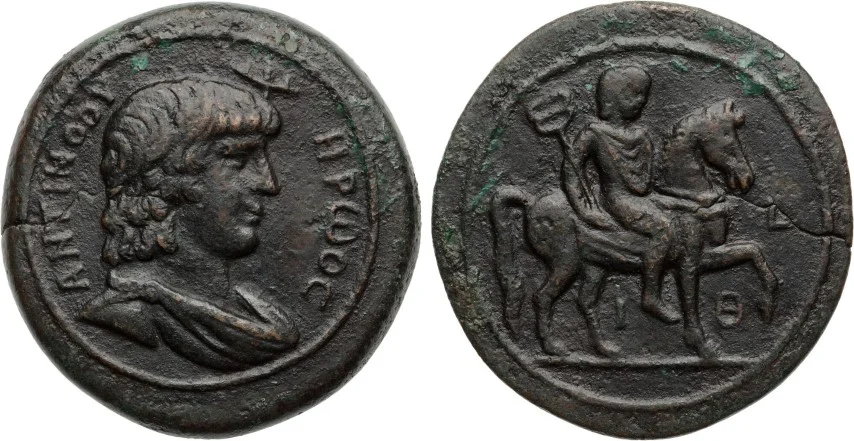
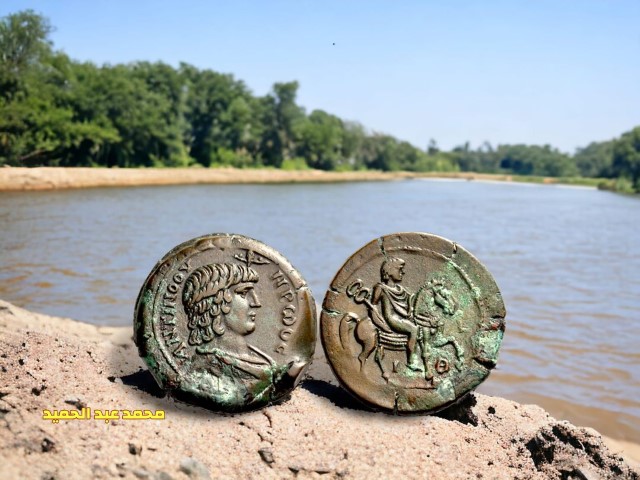
Here we present a bronze edition of Alexandria in the drachma category. On the obverse we see a profile depiction of Antinous, and an inscription on the margin.
ANTINOOV – HPⲰOC (Antino – The Hero)
On the back we see a depiction of Antinous in the form of Hermes, riding a horse and carrying Cadizius – the staff of Hermes – and on the margin is written the year of minting L1T, that is, the nineteenth year of the emperor’s reign, which corresponds to 135/134 AD.
We clearly see enough features to classify those issues as commemorative coins intended for propaganda purposes. It is worth noting that the cult of Antinous spread throughout large parts of the empire, and the Alexandrian mint was not the only one that minted commemorative coins for him.
Antinopolis
The city of Antinopolis was located on the east bank of the Nile River, south of Mallawi in the Minya Governorate. It is now called Sheikh Abada due to its proximity to this city. There are remains dating back to the time of Ramses II, before the city was built by Hadrian. Ramses II built a temple for himself at Antinopolis. We do not know if there were any structures there before Ramses II.

For more similar topics, you can browse the Arab collector's website through the Link the next: