Encyclopedia of Egyptian Protocol
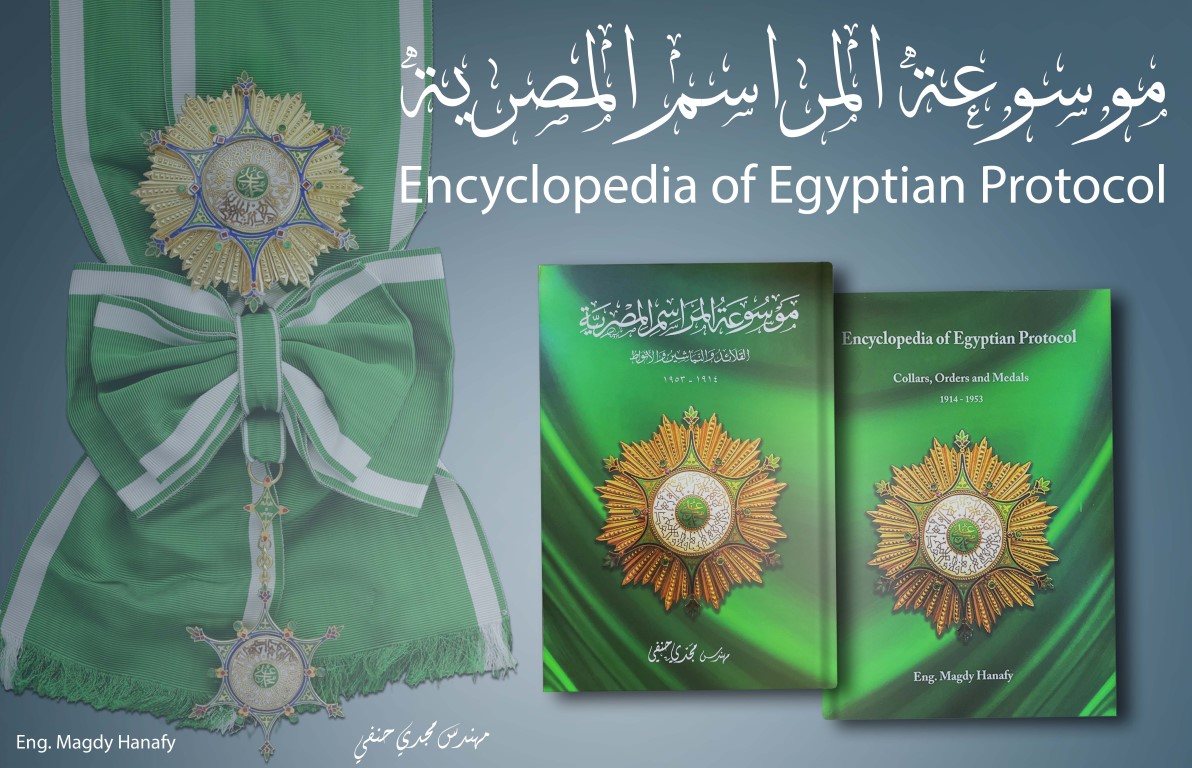
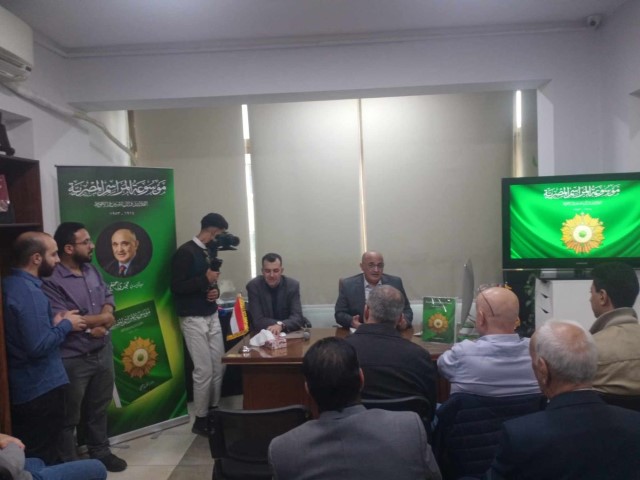
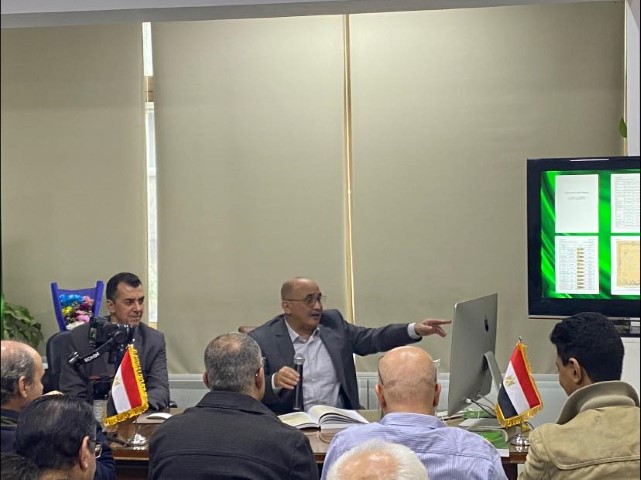
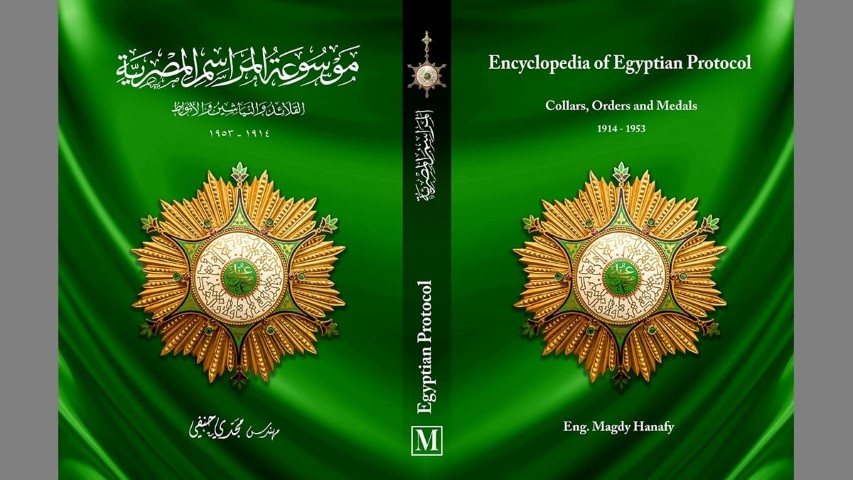
During a special event, Engineer Magdy Hanafi announced the release of his latest book, entitled "Encyclopedia of Egyptian Ceremonies," at a seminar on Saturday, December 16, 2023, during which attendees were welcomed and then a seminar was held to introduce the encyclopedia and its contents.
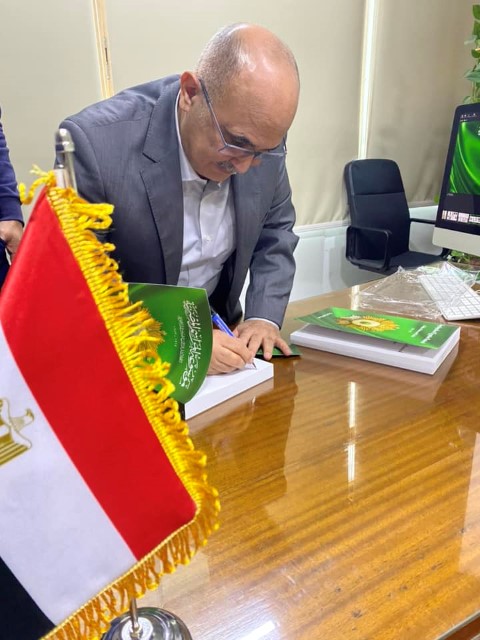
Then, during the seminar, questions and discussions were held with the author, and the new encyclopedia was signed. The encyclopedia contains information about medals, decorations, and awards from 1914 to 1953, and the most important details about those holdings.
Contents of the Egyptian Ceremonial Encyclopedia
The Encyclopedia of Egyptian Ceremonies contained three main chapters in more than 400 pages, explaining the journey and history of the medals and decorations issued in Egypt after the separation from the Ottoman Empire until the establishment of the Republic after the 1952 revolution.
The ancient Egyptians knew the art CeremoniesImages, inscriptions, and drawings have been discovered on temple walls indicating their interest in these arts. They had funeral rites and authored books containing written rules to regulate transactions. One of their most famous books is the “Book of the Dead,” which includes a collection of these rules.
Chapter One
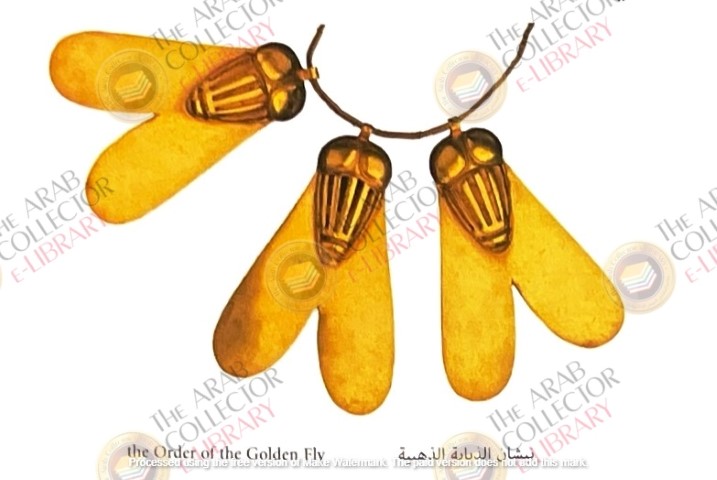
It is about the origin and development of medals in Egypt since the time of the ancient Egyptians and their uses in decoration or honoring as an award or reward for distinguished work, whether civilian or military. Engineer Magdi Hanafi presented one of the most famous of these medals, which is the Order of the Golden Fly, which symbolizes the idea of determination and continuing to pursue and confront the enemy. From here, the Order of the Golden Fly was created, which indicates courage and heroism.
One of the most famous recipients of this medal was Queen Ahhotep (1560-1530 BC) for her role in the War of Independence. The idea of the fly remained in the Egyptian memory until they replaced it with the word (the wasp) and applied it to the star that adorns the military uniform.
Then he moved on to the stages of development of medals and decorations through different eras, passing through the Islamic Caliphate, which began to set rules for ceremonies and was known as the “dress of honor” or “garment of honor” in the Islamic era, which is a gift from the Caliph for honor and recognition. He continued with the developments of decorations until their appearance in the new concept during the Renaissance in Europe.
He continued to mention the different stages of development during the Ottoman state and the Egyptian-Ottoman wars, passing through the rule of Muhammad Ali and his sons and the various sultans and the British occupation until the establishment of the Egyptian Sultanate and its transformation into a monarchy during the reign of King Fuad, passing through King Farouk, and until the July 23 Revolution of 1952 and the declaration of the republic.
Engineer Magdy Hanafi also presented the royal decrees and orders that were issued for a large number of decorations and medals that were issued, and he mentioned the basic distinctions and differences of each of the necklace, decoration, medal, badge, medal, ruler, miniature medals, sash and other protocols.
Chapter Two
Chapter Two of the Egyptian Ceremonial Encyclopedia is dedicated to explaining a number of medals and decorations from the period between 1914 and 1953, and among the most important of these pieces are:
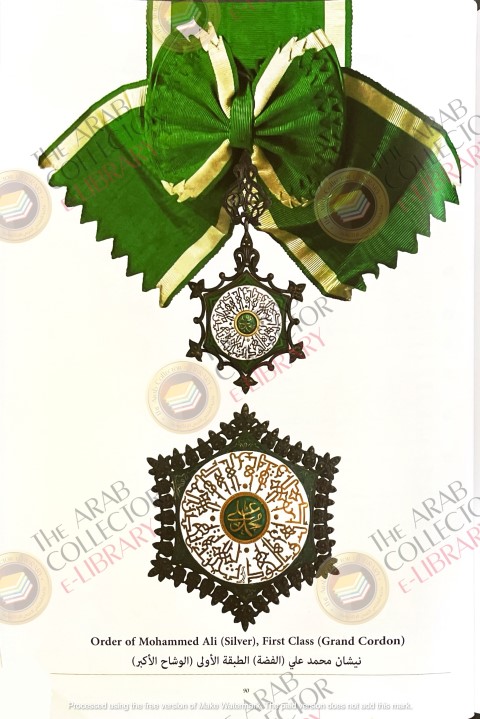
The Silver Medal of Muhammad Ali: which was issued during the reign of Sultan Hussein Kamel to commemorate the founder of the Alawite dynasty and is awarded to those of exceptional merit or those who render an exceptional service to the country.
The Order of Fuad I: Issued during the reign of King Fuad and awarded to crowned heads and princes sitting on the royal platform and members of their household, as well as to heads of state and government and members of the royal family.
The Order of Ismail: It was considered a reward for those who rendered a great service to the country and included four different classes.
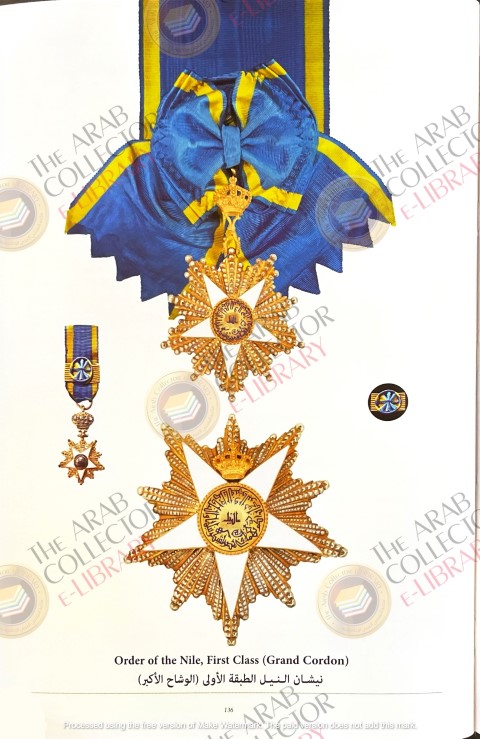
Details were also mentioned about various pieces such as the Order of the Nile, the Military Star of Fuad, the Order of Agriculture, the Order of Perfection, the Medal of Merit, the Medal of Satisfaction, the Palestine Medal, and the Order of Liberation.
Chapter Three
The author, Magdi Hanafi, mentioned details of the royal courts, such as the court of His Majesty the King, the court of the Chief Chamberlain, the court of the Chief Chamberlain, the Royal Guard, the entourage of Her Majesty the Queen, and the protocols related to each court, such as banquets and celebrations.
It also presented the titles and ranks during the Alawite dynasty period and the history of its establishment in Egypt, starting from the Abbasid era. It touched on civil and military ranks and presented the official clothing of civilians and military personnel.
This chapter also discusses the manufacture of medals and the metals used in manufacturing, such as gold and silver, and the different methods of shaping, decorating, hollowing out, perforating, and inlaying, as well as boxes of different sizes and shapes for storing medals.
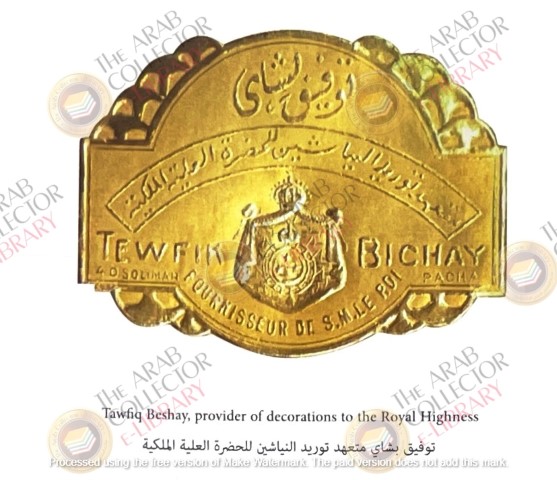
The types of precious stones used in the manufacture of medals include diamonds, rubies, and emeralds. He also mentioned the most famous people who made medals in Egypt, such as Job Lats and the Tawfiq Bishai family.
He also described the types of Arabic script that were used to write on necklaces and medals, as the Royal Court employed the most skilled calligraphers to write phrases and words on necklaces and in writing patents and certificates. Among the most famous calligraphers who worked in the Royal Court's office were Youssef Ahmed and Hussein Hosni.
This chapter reviewed the patents, which were considered decrees granted by the ruler as a favor with a rank or medal. At the top of them was written the name of the Sultan, then the name of the recipient, the rank and its grade, and the medal and its class. They were written in Diwani script in the signature pen of the Royal Court.
I conclude this chapter by mentioning the hallmarks, their history and their importance to necklaces and medals, and the badges of the judiciary and the Senate and House of Representatives, which were made of both silver and gold to be worn over the sash on occasion.
Book signing ceremony for the Encyclopedia of Egyptian Ceremonies
Where can I buy the encyclopedia?
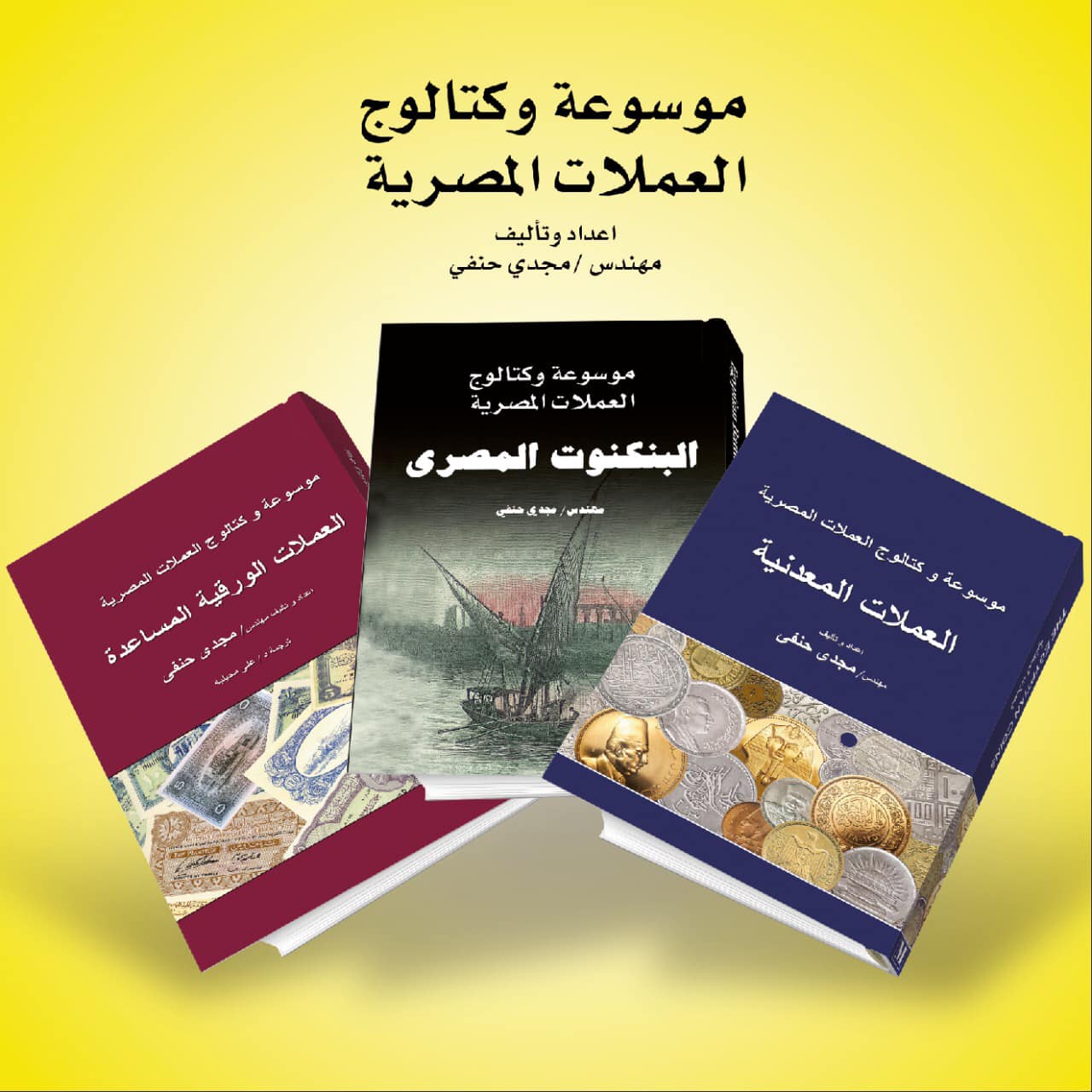
For more similar topics, you can browse the Arab collector's website. the Link the next:
Encyclopedia and Catalog of Egyptian Money