Theft of Syrian currency
Our article today takes place in the port of Alexandria, Egypt, specifically in February 1921. It is a special report, the details of which were published in Al-Ahram newspaper on February 24, 1921. The article does not reflect the views of Al-Muqtani Al-Arabi magazine or the reporter.
Major financial theft
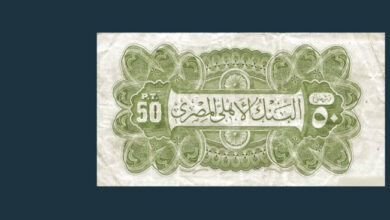
Syria needed currency in general and banknotes in particular to fix the economic conditions. The country had been subject to the French mandate system, and the Syrian bank, which was derived from the Ottoman bank, was the bank through which money was leaking into the country. It recommended printing banknotes for use in both Syria and Lebanon. It is worth mentioning that the aforementioned Syrian banknotes were printed in London and in the same printing house that produced Egyptian banknotes.

In the same month, the Syrian Bank sent from London the sum of one million Syrian pounds in four boxes, each containing 25,000 ten-pound notes. The company entrusted the shipment of this financial consignment to Syria on one of its ships, after securing insurance for the amount. The company sent it on the ship “Scotch Prince” to Alexandria on Saturday, February 8, 1921, where its voyage ended. The company used the ship ”Egyptian Prince” for navigation between Alexandria and Beirut. The money was transferred from the first ship to the second ship, and then it sailed to Syria. No one suspected anything about this transfer because the four boxes were handed over to the ship ”Egyptian Prince.”

A suspicious appearance of the Syrian currency
On Wednesday, February 12, 1921, large sums of Syrian paper currency appeared on the market. Initially, three money changers, Moroccan Jews residing in France and holding French citizenship—Khawaja Raphael, Shimon, and Mardukh Baz—were responsible for selling it. Other money changers then sold the currency they purchased to banks. Some were sold to the Comptoir Bank, some to the Crédit Lyonnais, and others to various banks. The sellers offered the Syrian pound at an exchange rate between 32 and 34 Egyptian piasters. The banks readily accepted the paper currency, recognizing its authenticity and the financial benefits of using it.

authorities' investigations
The large number of Syrian banknotes being offered for sale aroused suspicion, so the Ottoman Bank informed the local authorities of the matter. The police then investigated the matter and asked the banks who had sold them the papers. They pointed out the sellers, and they were all money changers. An investigation was conducted into who had delivered the money to them, and they said it was from the Khawajat Baz. It was deduced that Khawaja Raphael had bought it, according to his description, from a patriotic man who was over sixty years old and blind in one eye. He also said that they were both Turks, and one of them was called ”the Captain,” which revealed that this man and his two partners were the ones who had taken the money from the ship and sold it.
The three brothers, known as Khawajat Baz or simply "Baz," were French citizens. The French consulate summoned and questioned them, but the Egyptian police took no further action against them, accepting their statements and entrusting them with assisting the police in identifying the individuals who had sold them the Syrian banknotes. The public prosecutor's office launched a local investigation into the incident, and the consulate sent a telegram to the Syrian bank in Beirut inquiring whether it had received the four boxes and how it had come into possession of them.

Banks' position
As for the banks that purchased the Syrian paper money that was presented to them, they wrote to the money changers from whom they had purchased it, informing them that the Syrian bank refused to pay the value of that paper money, so they would be obligated to pay the value that they had received. On February 17, 1921, the Ottoman Bank published news of the theft of four parcels of Syrian banknotes of the 10 lira (pound) denomination that had arrived from England for Beirut and were stolen on February 8.
Have the thieves been arrested and the stolen banknotes recovered, or have they reached the hands of citizens without anyone noticing?.
Dr. /Mazen Ibrahim
Sources:
Al-Ahram Egyptian Newspaper, February 14, 1921
Al-Ahram Egyptian Newspaper, February 17, 1921
Al-Ahram Egyptian Newspaper, February 24, 1921
Investigation file of the Alexandria Port Police Station and Department – Major Kamal Al-Tarabulsi Effendi