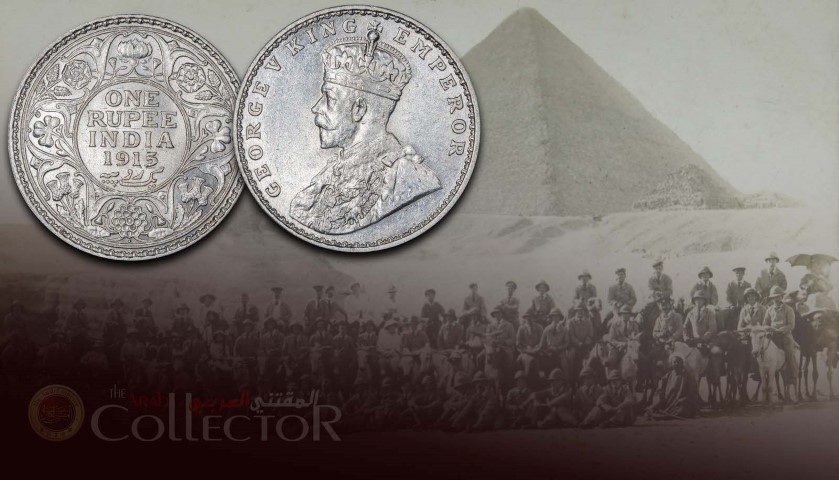
The Indian rupee is a currency used in Egypt.
What circumstances led to the circulation of the Indian rupee in Egypt?
World War I
As a result of the severe shortage of gold, silver, and nickel coins in Egypt following the outbreak of World War I in 1914, due to people’s fear of the war and its potential consequences, especially after the rise in silver prices, and also due to the disruption of the commercial situation in 1915 because of the shortage of silver coins, the first decision of the Egyptian government was to take out the gold coins of the British pounds held by the Ministry of Finance to exchange them for silver coins from the public for fear of falling into a serious currency crisis.
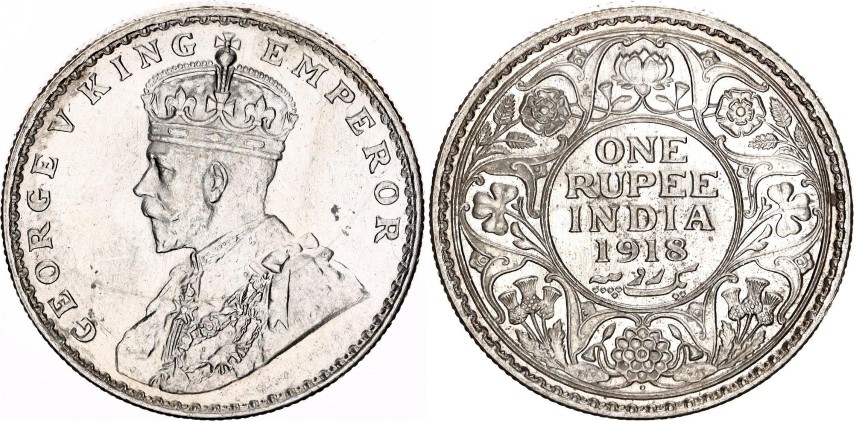
Indian silver rupee
When the Egyptian Ministry of Finance found that replacing the gold currency was insufficient given the large number of troops stationed within the country, the high demand for silver coins for transactions, and the insufficient amount of silver in circulation to meet this need—especially since large quantities of silver coins sent to Egypt were lost en route and a long time would be required to send replacements—the government decided that this situation necessitated the use of the Indian government's silver currency, known as the rupee Large quantities of which were in the Egyptian treasury. As a result, a decree was issued on 2 Jumada al-Ula 1334 AH – 6 March 1916 AD, stipulating that the Indian silver rupee should have a legal price in Egypt like the Egyptian silver currency on a temporary basis until a new order is issued. Consequently, any payment made in that Indian currency for any reason whatsoever would be a valid payment as if the payment had been made in Egyptian currency. The value of the rupee was set at 65 milliemes of the Egyptian pound.
Egypt's separation from Türkiye
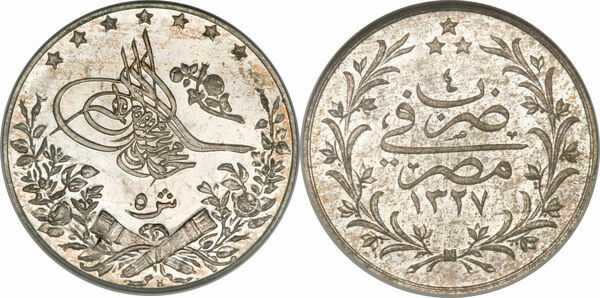
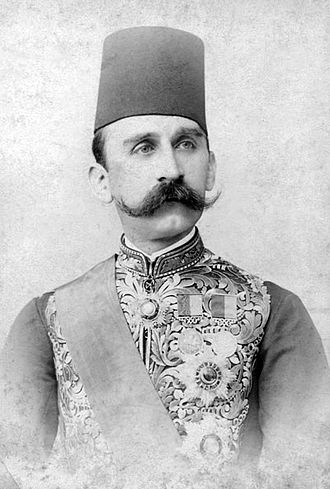
On October 18, 1916, after Egypt separated from Turkey, it was decided that the unit of currency was the Egyptian pound, divided into 9 to 100 piastres or 1000 millimes. At that time, the minting of silver coins began in the year (1916-1917) in the mints in India in Bombay and in England in Birmingham in the name of Sultan Hussein Kamel, with different denominations. However, due to the inadequacy of the quantities minted, especially due to the circulation of Egyptian coins in some countries neighboring Egypt and due to the shortage of silver, the Egyptian government approved on June 15, 1918, a license to issue banknotes of the denomination of ten piastres, which would have the same value as the silver coins. Then, another decision was issued on July 18 to issue banknotes of the denomination of five piastres with the same conditions for the circulation of the ten piastres.
Rupee Decree Cancellation
The Indian rupee remained in use in Egypt until a decree was issued on April 7, 1920, stating that the reasons that led to the acceptance of the Indian silver rupee had disappeared, and therefore the decree of March 6, 1916 was cancelled, so that the Egyptian government could begin a new phase of minting coins at the London Mint in the name of Sultan Fuad I in the denominations of ten, five and two piasters.
Source: The Book of Money by Hussein Abdel Rahman – Al-Etemad Press, Egypt
And to the tune of the music, Sayed Darwish sang to us: "Be amazed, gentlemen, a liter of jazz for a rupee!"
You can browse similar topics on the Arab Collector website through the Link the next:
The rupee in Egypt