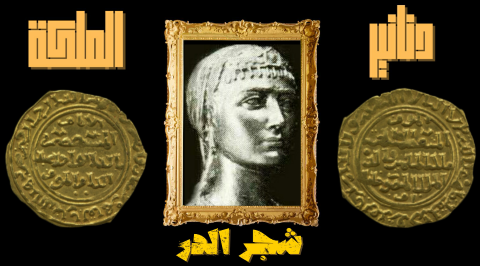
Shajar al-Durr dinars
Shajar al-Durr... Queen of the Muslims, protector of the world and religion, Umm Khalil al-Salihiyya
Shajar al-Durr, a slave of Turkish origin, was one of the slaves of King al-Salih Najm al-Din Ayyub. She possessed sharp intelligence, a strong personality, and captivating beauty—a combination that, if combined in a woman, would greatly influence men. If these men were kings, then her influence would extend to the destinies of entire countries and peoples. In addition to the abilities that Shajar al-Durr possessed, she quickly became one of the closest confidants of King al-Salih.
There is also a historical context that paved the way for her to become the first queen of Islamic Egypt and the third queen in the history of Muslims. In one way or another, Shajar al-Durr played important roles in the history of the East and West, and her influence continued after her tragic death. When Shajar al-Durr concealed the news of the death of King al-Salih in the midst of a fateful battle with the Crusaders, she was able to control the Mamluk princes of al-Salih and push them to a decisive victory that completely eliminated the Seventh Crusade. When she then incited the same Mamluk princes to kill Turan Shah, her husband’s son and the legitimate heir to the Ayyubid Sultanate, and when the princes and dignitaries submitted to her authority and recognized her as their queen.
With all of the above and more, she was putting an end to the great Crusades against the Levant, bringing with it the end of the Ayyubid state in Egypt and the Levant. At the same time, she was writing the first line in the history of the Mamluk state. Even when she chose Al-Mu'izz Aybak Al-Turkmani as her husband and abdicated the throne to him, it was not just a transfer of power, but a preference for one element over the rest of the Mamluk elements. This element would continue to dominate the government for more than a century. Therefore, when we talk about Shajar al-Durr, we are not talking about a slave girl who became a queen by chance before being beaten to death with clogs and her body thrown from the top of the castle walls. Rather, we are talking about an exceptional woman whose historical imprint is still clear to the skies even after the passage of centuries.
First model
Shajar al-Durr ruled as queen for less than three months, but that period was enough for her to mint coins in her name exclusively in Cairo. Of course, dinars were at the top of those coins. It seems that the exceptional nature of Shajar al-Durr's personality cast its shadow on her dinars. In general, the Shajar al-Durr dinar is considered one of the most important and rarest Islamic coins. After a lengthy search, we found only three published examples. This search was not easy, as the Shajar al-Durr dinar never appeared in any of the international auctions. We cannot be certain that these three examples are all that we have of Shajar al-Durr's dinars, as there may be other unpublished examples.
The following sayings are inscribed on the face of the dinar of “Shajar al-Durr”:
believers
Al-Musta'simiyya Al-Salihiyya
Queen of the Muslims, Mother
King Al-Mansur Khalil
prince
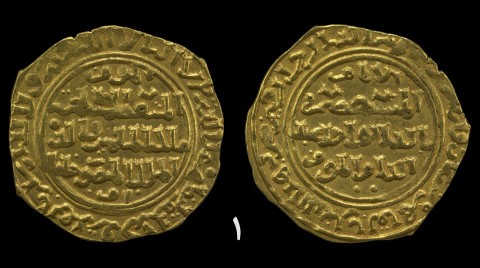
We notice in that formula the clarity of the political purpose, as if we are dealing with a queen seeking legitimacy, at one time attributing herself to Caliph Al-Musta’sim and at another time to King Al-Salih, her deceased husband, then she grants herself the title of “Queen of the Muslims,” which is an unprecedented title, and she does not forget to mention that she had given birth to a son for King Al-Salih who was nicknamed Al-Mansur Khalil. This son was, in fact, a ticket to freedom for her as a former slave, and although this “Khalil” died at a young age, she nicknamed him “the King” on her dinar.
Nor should we overlook the subtle allusion in the use of the name Khalil followed by "Amir" (Commander) below and "al-Mu'minin" (the Believers) above, as if it were a title in itself: "Khalil, Commander of the Believers." Here, the name transforms into a title, and it is no wonder that someone later called himself "Qasim, the Commander of the Believers." The gradation of meaning here is worthy of contemplation. In short, Shajar al-Durr sought with cunning and shrewdness to gain legitimacy, and we see this clearly in traditions and titles that reveal to us, centuries later, what was going through the mind of the woman who moved from the harem to the throne behind the walls of the Citadel.
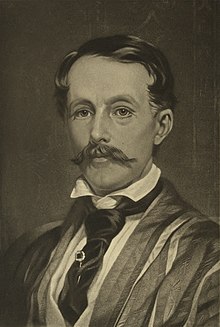
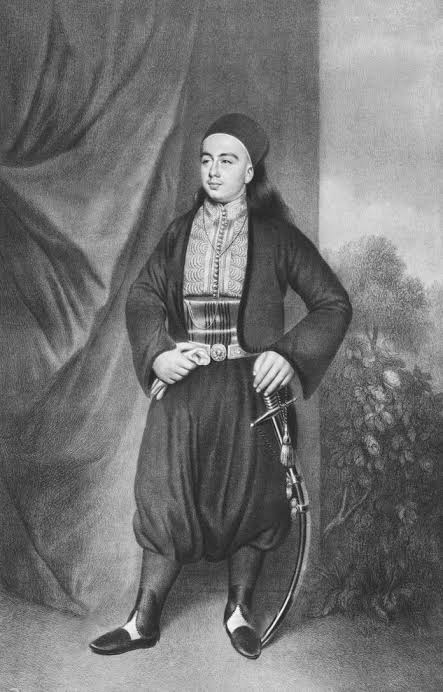
The three published examples of Shajar al-Durr's dinar that we have mentioned; the first of which is currently in the British Museum in London. This dinar belonged to Khedive Ismail, grandson of Muhammad Ali Pasha, and it appears that he gifted it to the British Consul in Egypt, Sir Charles Augustus Murray, who in turn gifted it to the British Museum in 1849. Ismail was young at the time, less than twenty years old, and had not yet assumed power. We cannot be certain how he acquired the dinar or the circumstances of its gift to the British Consul. It is worth noting that Sir Charles Murray served in Egypt as British Consul General between 1846 and 1853. During this period, he not only transported the first published dinar of Shajar al-Durr but also the first hippopotamus to reach Europe since the time of the ancient Roman Empire.
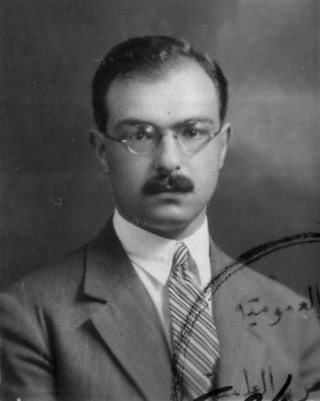
The second model
The second dinar was part of the collection of the famous collector and numismatic expert, Dr. Paul Balogh, and he published it in 1964 in his most famous book:
“The coinage of the Mamluk sultans of Egypt and Syria”
At the end of his life, Baluj bequeathed a large number of items to the Israel Museum in Jerusalem – 5,358 coins – including the dinar of Shajar al-Durr, which he had purchased from a local merchant during his stay in Egypt after emigrating there in 1926 and working as a doctor. However, I have not been able to obtain a modern image of this dinar and only have the old one published in Baluj's book. It seems that this dinar has not received the attention it deserves from the Zionist museum in terms of a separate study and publication that would provide updated and detailed information about it, thus complementing the work Baluj began long ago.
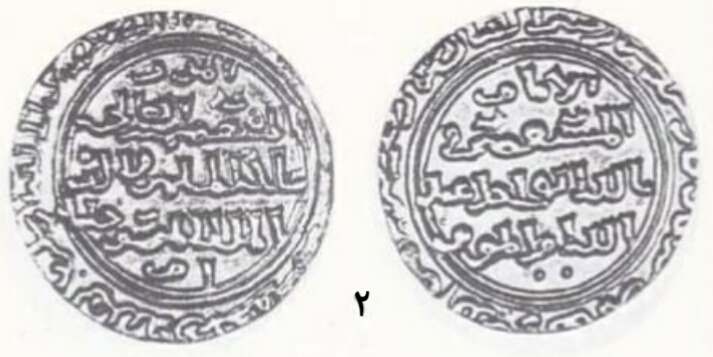
The third model
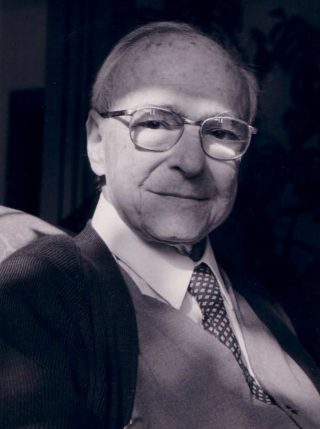
The third dinar is currently located in the United Arab Emirates within a private collection. Its owner is Professor Yahya Jaafar, an expert in Islamic numismatics with numerous research papers in this field. Egyptian researcher Iman Arafa studied and published this dinar in 2016 – with the owner's permission, of course – in a comprehensive study entitled
“The legitimacy of SHAJAR AL-DURR reign as represented in light of a Rare Dinar”
We have no information on how this dinar came into the possession of its current owner.
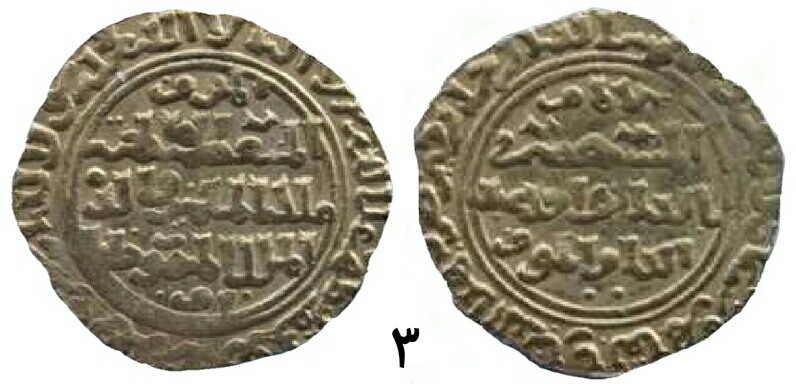
We cannot conclude this article without a brief look at the three models we discussed. In short, we can confidently assert that the three dinars were not minted using the same die. To put it more clearly, we are dealing with two, or perhaps even three, different die types. This has significant implications, as it suggests that the number of dinars minted in the name of Shajar al-Durr was not as small as we had thought. Perhaps they were melted down and re-minted at a later stage; or perhaps the earth still holds some surprises that may or may not reveal themselves at some point.
Resources
Disclaimer
The author obtained prior permission to publish the third dinar from its owner, Mr. Yahya Jaafar, to whom we extend our sincere thanks and appreciation. As for the second dinar, the author contacted the administration of the Israeli Museum in Jerusalem to request a recent photograph of it, but the requested photograph was not sent despite the museum administration's initial welcome. Therefore, we settled for the old photograph previously published by Dr. Paul Balogh. As for the first dinar, the author consulted the general publication license of the British Museum in London, which permits the publication of a photograph of the dinar without obtaining special permission, provided that the source of the photograph is mentioned, and this is what we did.
For more similar topics, you can browse the Arab collector's website. the Link the next:
01 Shajar al-Durr