Ancient CoinsByzantine CoinsRoman CoinsHistoryNumismatics
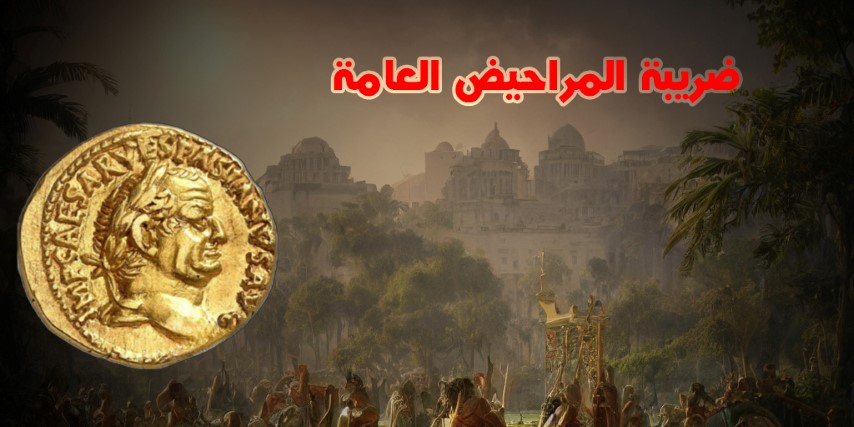
Public toilet tax
During the year 69 AD, the Roman commander Vespasian was besieging the city of Jerusalem to suppress the revolt when he decided to entrust the task of the siege to his son Titus so that he could go to Alexandria and from there to Rome to claim the disputed throne of the emperor. In Alexandria, he received news of the defeat of his rival Vitellius and that the Senate had recognized him as emperor and Augustus, so he decided to stay in Alexandria to collect some money and strengthen his position among the legions stationed there. Vespasian - the new emperor - imposed a long series of taxes to compensate for Rome’s losses during the turmoil of the Year of the Four Emperors.
Toilet tax
One of the strangest taxes was the tax imposed on public toilets, also known as the urine tax. In the middle of the year 70 CE, Vespasian departed for Rome, and in the same year, his son Titus stormed and destroyed Jerusalem, then followed in his father's footsteps, intending to... Alexandria He remained there for some time. During that period, gold coins were minted in Alexandria, perhaps for the first and last time during Roman rule. We do not know for certain whether they were minted during Vespasian’s presence in Alexandria or during his son Titus’s presence, but it is almost certain that those coins were allocated to enhance the status of the new emperor and his son among the soldiers, meaning that they were not minted for general circulation in Egypt.
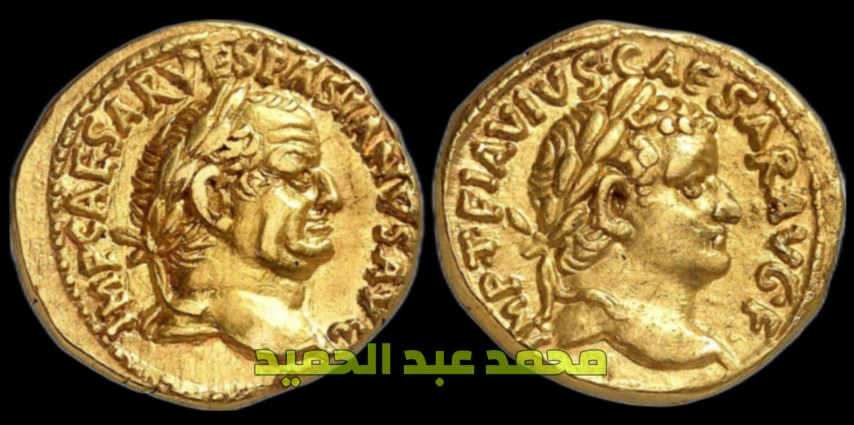
Here we present a model of that gold coin, and the first thing we notice is that the writings are Latin and not Greek as is customary on Alexandrian coins, and this indicates the identity of those targeted by this criticism. We also note that there is nothing to indicate the Alexandrian mint except for the artistic features of the design as well as the manufacturing techniques. On the obverse we see a profile portrait of Emperor Vespasian, and on the margin is written in a circular shape his name and titles in Latin.
IMP CAESAR VESPASIANVS AVG
(Emperor Caesar Vespasian Augustus)
On the back we see a profile portrait of Titus, with his name and titles written in Latin in a circular pattern in the margin.
IMP T FLAVIVS CAESAR AVG F
(Emperor Titus Flavius Caesar, son of Augustus)
It is worth noting that Titus's name was followed by titles almost identical to his father's, and he also wore a laurel wreath like his father. This led some experts to speculate that he harbored intentions of a coup, assuming that the mint was indeed struck after Vespasian's departure from Alexandria. However, this hypothesis cannot be confirmed. We can also interpret it as the new emperor's attempt to consolidate his son's position and the rule of the Flavian dynasty after the chaos that ensued following Nero's death, due to his inability to produce sons to inherit the throne.
For more similar topics, you can browse the Arab collector's website through the Link the next:
The first Abbasid currency issue in Egypt