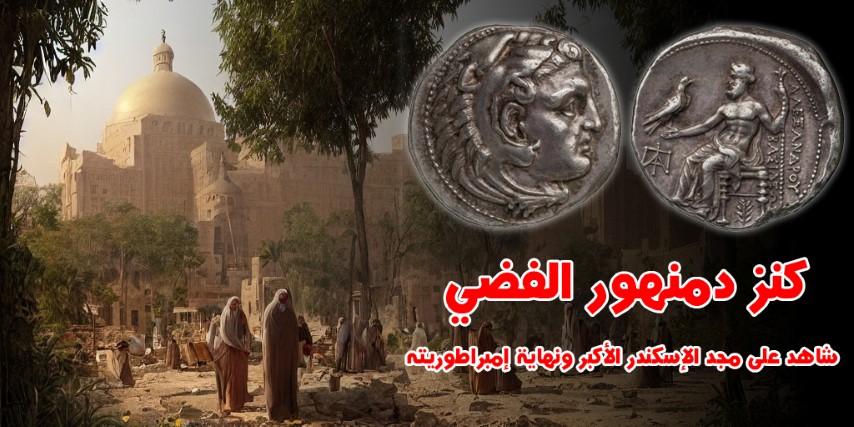
Damanhur Silver Treasure
Near the town of Damanhur, the capital of the Beheira Governorate, a small number of residents found a huge treasure of silver coins. This was in the year 1905 AD, when more than 8,000 silver coins of the “Tetradach” type came to light. Most of them were minted during the life of Alexander the Great in the various cities he conquered throughout his historic campaign to the East. I regret to say that the available information about the story of that treasure before it left Egypt is almost non-existent. We only know an approximate location for its extraction, but we do not know who found it, how it was extracted, to whom it was sold, or who smuggled it out of Egypt.
Our knowledge of the Damanhur hoard begins with the documentation of its pieces by the American Numismatic Society in collaboration with the Ashmolean Museum. Subsequent scholarly research has been conducted using other specimens of this important hoard.
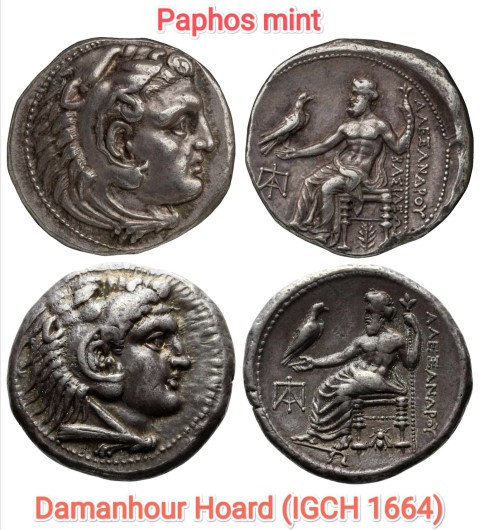
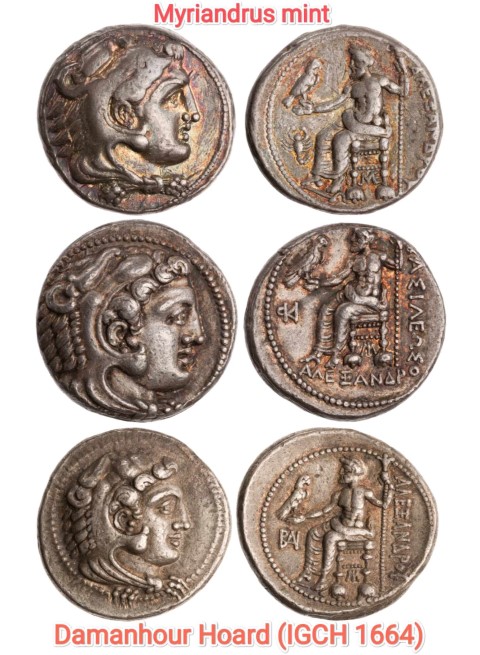
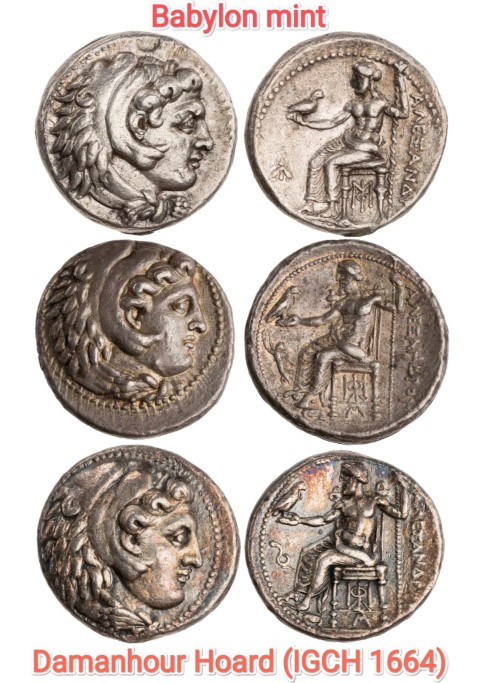
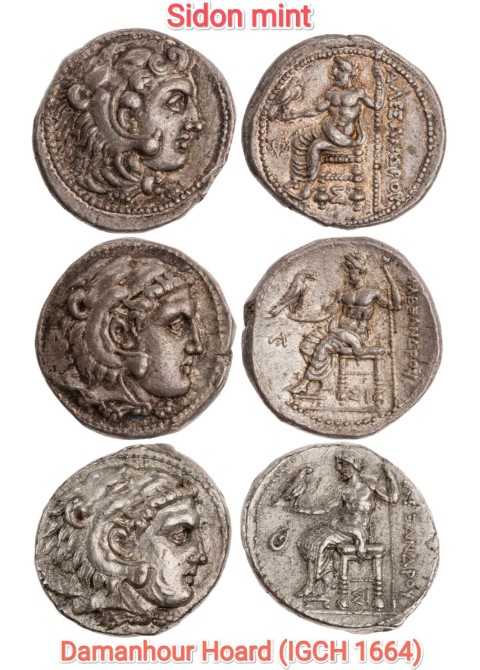
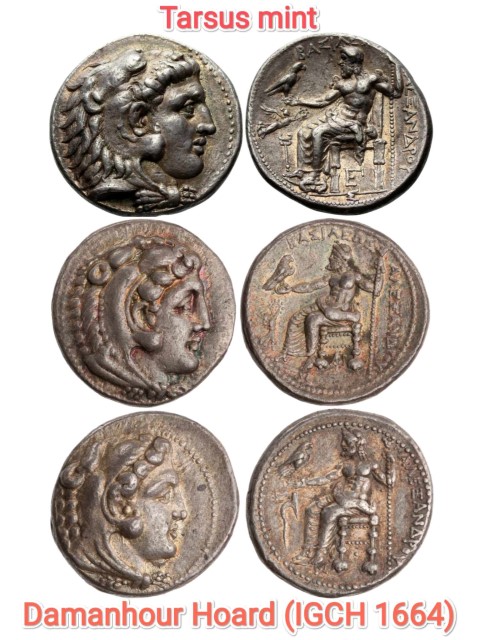
 What makes the Damanhur hoard, also known as IGCH1664, so interesting is the great diversity of minting cities represented in the coinage. Nearly 30 cities are featured in this hoard, each with its own unique symbols and markings, despite similarities in overall design.
Alongside a large number of artifacts from an unknown city, the hoard contains over 137 kilograms of minted silver collected from various locations around the world. This silver was then buried underground in Damanhur for over 2,300 years before being unearthed and eventually redistributed across the globe.
In this analysis, we aim to delve into the intriguing story of the Damanhur treasure by examining the available information and piecing together the tale of how a mysterious figure amassed a vast fortune, only to meet a tragic end, leaving behind a legacy shrouded in mystery. Through the remnants of this treasure, we gain insight into the lives and characteristics of ancient civilizations, marked by violence, intricate craftsmanship, artistic achievements, cultural shifts, and the rise and fall of empires forged through conquest. The story of the Damanhur treasure is a testament to the complexities of history and the enduring power of wealth in shaping the course of human events.
Study of the Damanhur Silver Treasure
When we look closely at the treasure, we learn some important information:
1. All the coins in the hoard are silver tetradrachms, each weighing slightly over 17 grams, with a consistent main design but different city symbols. The majority of these coins were minted during the reign of Alexander the Great, with a few during the reign of Philip III. Some were also minted during the reign of Ptolemy I of Egypt before he declared himself king and pharaoh. Based on the minting date of the last hoard, it is estimated that it was buried between 320 and 305 BC.
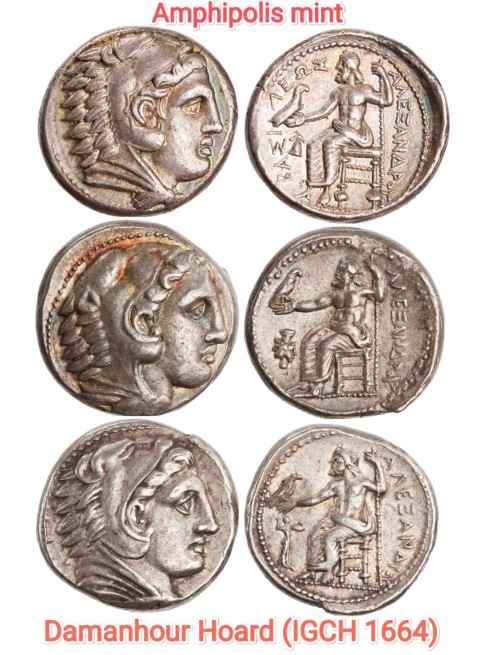
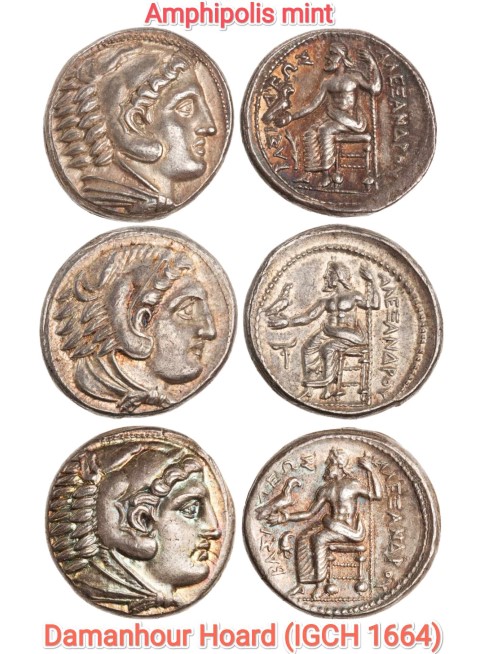
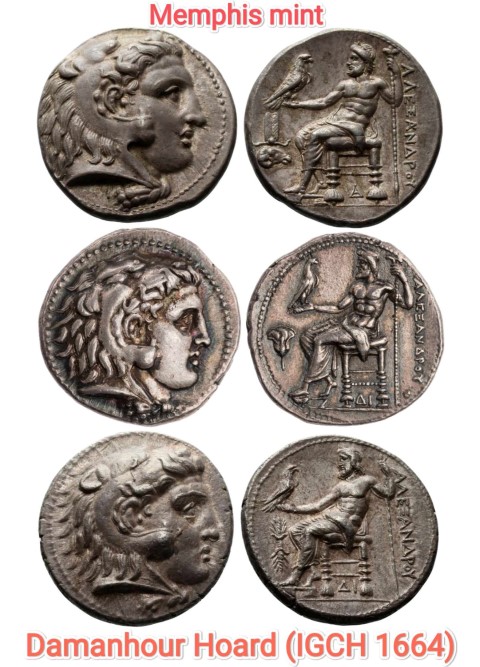
2- When we draw the locations of the cities where the treasure pieces were found on the map and connect them with lines, we may be surprised to discover that we are following the same route taken by the horses of Alexander the Great when he conquered the Achaemenid Empire in the East.
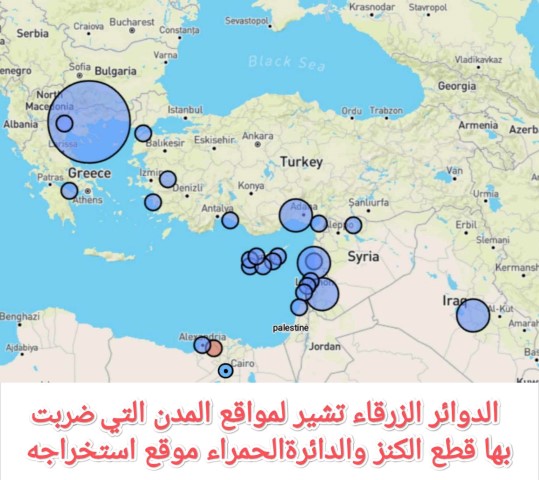
3- After counting the cities where coins were minted and organizing them based on the amount of treasure found, we observe that Macedonia is where Alexander the Great began his conquests, while Babylon is where he ultimately met his end. Could this be mere coincidence, or is there a deeper connection?
4- The number of coins produced in Egypt is much lower compared to other regions such as Alexandria and Memphis, which puts it at the bottom of the list of cities with the most presence in the Damanhur treasure collection.
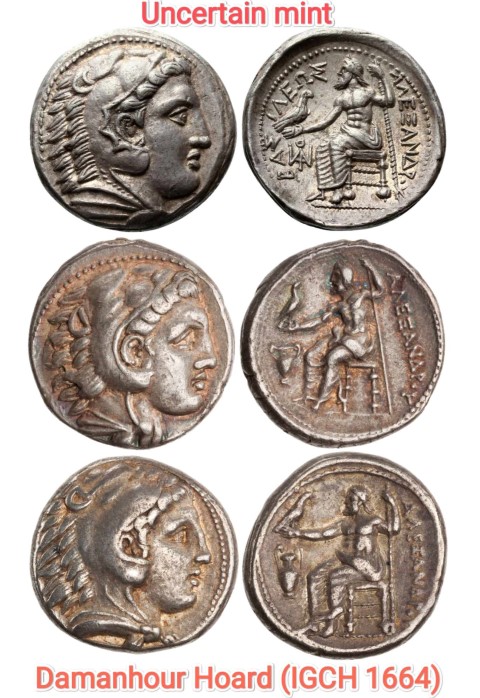
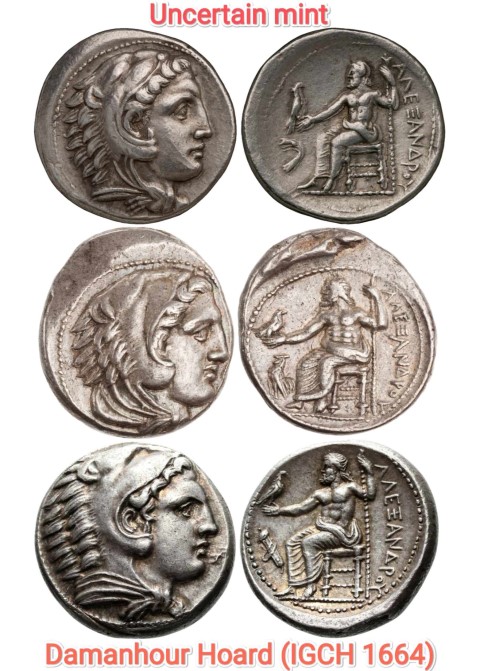
5. The Damanhur hoard contains a large collection of coins whose origin remains a mystery. These coins are believed to have been minted either in unknown cities or in military mints during campaigns to finance the war effort. While there may be other possible explanations for the unknown coins, their abundance in this particular hoard is of great significance.
6. The majority of the treasure pieces are in excellent condition, and many are in better than excellent condition. Overall, it is clear that the treasure was well preserved during its burial, suggesting that it was likely stored in well-made and tightly sealed jars, which effectively protected it from deterioration caused by corrosion over the years.
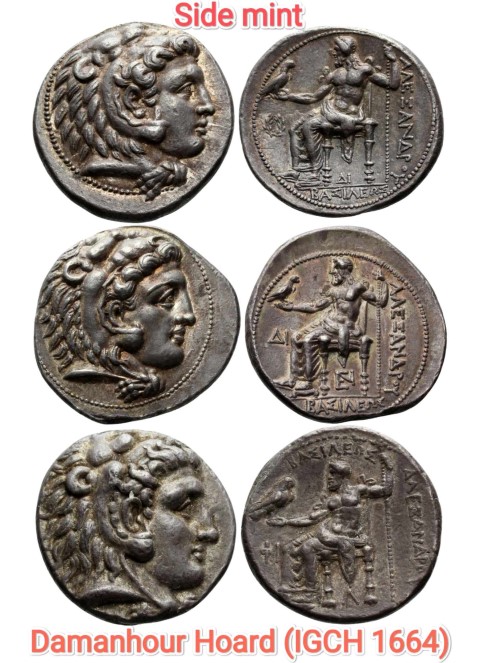
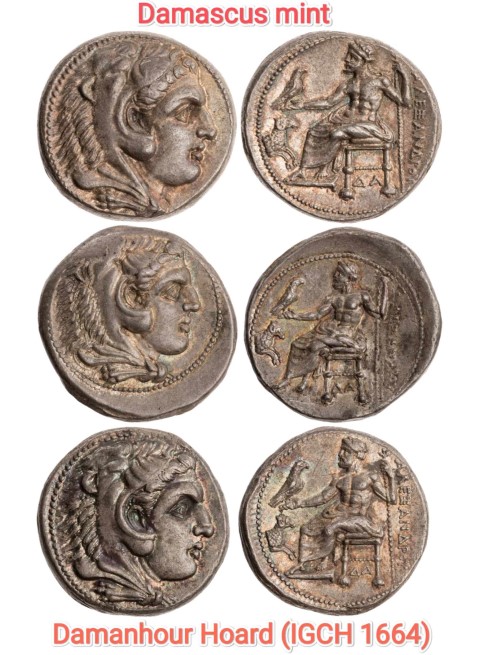
7- The treasure was discovered in an approximate location within the boundaries of an ancient city known as Hermopolis Micra (Ερμουπος Μικρα), its Greek name during the Hellenistic period. This city flourished during that time due to its strategic location near Naukratis, the oldest Greek trading colony in Egypt. Furthermore, Hermopolis Micra's proximity to Alexandria, the seat of the new government and a center of trade and wealth, further enhanced its importance.
8- The Damanhur hoard is of immense historical importance, as its origins can be traced back to a time filled with significant events. These precious artifacts were minted during the victories and conquests of Alexander the Great, while also witnessing the power struggles and conflicts among his successors who vied for control of the vast empire he left behind after his sudden death in Babylon.
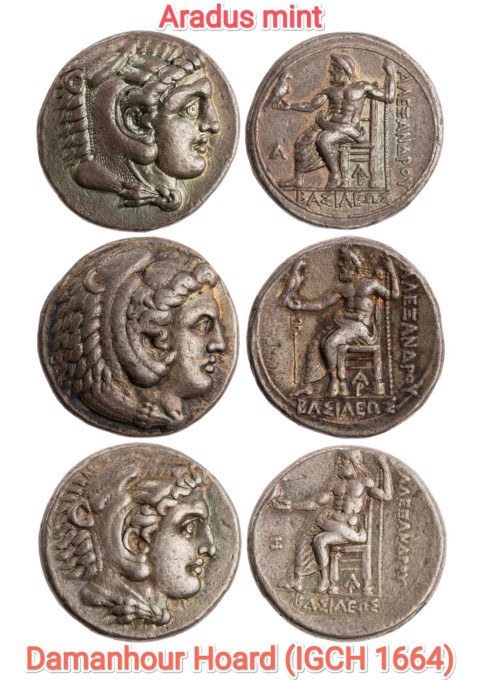
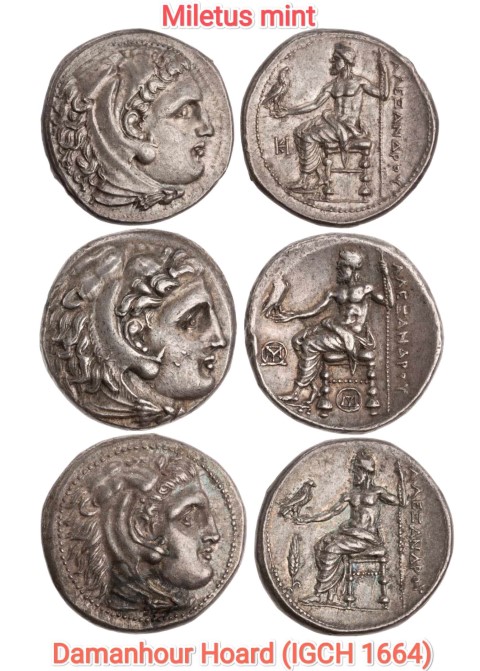
9. The individual who possessed the vast wealth accumulated in Damanhur was undoubtedly an extraordinary person. In the context of that era, such coins symbolized immense wealth, leading us to speculate that this person was not of Egyptian origin. It can be suggested that he was either a prominent merchant or a Greek military commander who fought alongside Alexander the Great and later settled in Egypt under Ptolemy. While alternative theories exist, what can be confirmed is that the owner of this wealth belonged to the upper classes of society, in accordance with the social norms of his time.
The Damhor hoard, in its various forms, can be found in the collections of many prestigious institutions around the world. These include the American Numismatic Society (ANS) in New York, the Ashmolean Museum in Oxford, and the National Library of France (BNF) in Paris. These artifacts are valuable historical objects and offer insight into the rich cultural heritage of the region from which they originated.
the reviewer:
Margaret Thompson & Otto Mørkholm & Colin M. Kraay, An Inventory of Greek Coin Hoards American Numismatic Society-
Frederique Duyrat, The Tresor of Damanhour (IGCH 1664) and the Circulation Monitor in Hellenistic Egypt-
MJ Price, The Coinage in the Name of Alexander the Great and Philip Arrhidaeus, The British Museum – Swiss Numismatic Society-
Sylloge nummorum Graecorum, Volume V, Ashmolean Museum Oxford-
http://coinhoards.org/id/igch1664
From Al-Ahram Gate online
https://gate.ahram.org.eg/News/4735049.aspx?fbclid=IwAR2UHEYKOf2TZl0BWLQ95LF-tgY3AMf-cfZB7NQI7521fGFFczRMIWgii-g
For more similar topics, you can browse the Arab collector's website through the Link the next:
Public toilet tax