About the Egyptian Post
Post offices
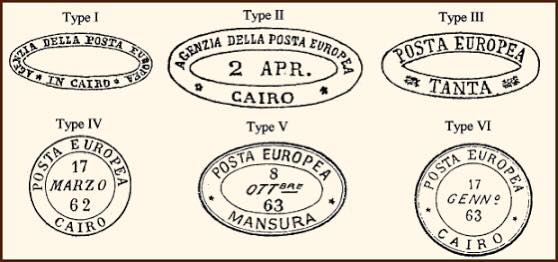
 Upon the death of Meratti, his nephew Tito Chini took over the affairs of the Posta Europea company, and he brought on board his fellow countryman, the brilliant manager Giacomo Muzzi, who kept opening new offices one after another and using the latest means of transportation. He even took advantage of the railway line linking Cairo and Alexandria to transport his mail as soon as each stage of it was opened, until he finally reached Cairo in 1856. Muzzi's operations expanded, and he won the government tender to transport mail in Egypt for ten years in 1862. However, the project met with great success, which led the Egyptian government to buy the company with all its supplies on the condition that Muzzi Bey remain as its general manager, which the latter agreed to until his resignation in 1876. After that, he returned to his homeland and passed away in the city of Florence on May 12, 1898, at the age of 77. The memory of zajal will remain immortal in the history of Egypt, as it is considered the father of the modern Egyptian postal service in its current form.
There are many situations that prove to us the extent of “Mozzi’s” worthiness and competence as a manager. We mention one example of it here. It is said that in one year when the Nile flood was very severe, which led to cutting off all communications between the capital and the provinces, in the midst of all this, the employees of the Egyptian postal service were the only ones able to deliver letters on regular and highly accurate times, without deviating from it even once. At that time, the Crown Prince of the United Kingdom was visiting the Upper Nile and expressed his great admiration for the dedication and sincerity of the Egyptian postal service, which brought his letters from England every evening. Sometimes, he would even arrive by his Nile steamer to inspect the English garrisons on the Nile and find the letters waiting for him there. That is, the Egyptian postal service was always able to outpace his modern English steamer! Upon the Crown Prince’s return to Cairo, he requested to meet this successful administrative figure and expressed the British government’s gratitude to the Egyptian postal service. At the end of the visit, he presented him with his personal ring as a memento.
Egyptian Postal Authority
After the resignation of “Mozzi”, Mr. Alfred Caillard, who is today the Director of the Customs Department, took over the Egyptian Post Office, followed by Walter Horton Pasha in 1880, and then the current Director of the Department, Saba Pasha, whose fame as a successful administrator has spread far and wide, even beyond the borders of Egypt to all kingdoms. Today, there is no other country in the world that has a postal system as advanced and integrated as the Egyptian Post Office.
Despite this testimony, there is also no postal system in the whole world that faces difficulties like the Egyptian postal service. All populated areas are on the banks of the great Nile, which rises every year, making even riding the strong ferries and bridges a risky matter. In some other areas, mail must be carried in different weather conditions, vast areas of deserts, facing the scorching sun and violent sandstorms, or in places of torrents that turn small roads into seas that reach the middle of the person, and so on.
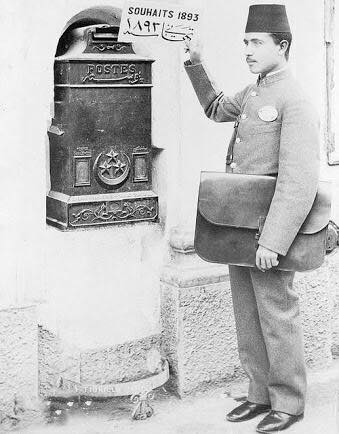 But that's not all. The troubles caused by nature are no less than the troubles caused by humans to the Egyptian postal service. Egypt today is a wonderful mosaic of peoples and ethnicities, and for this reason, the Egyptian postal worker must accept and deliver letters in all the languages used in Egypt now: Arabic, Turkish, Armenian, Hindi, Greek, Italian, French, English, German, Russian, and Maltese. He must also converse in these languages in a polite and courteous manner. It is known that anyone applying for a postal worker position in the Egyptian government is required to be proficient in a minimum of 3 languages: Turkish, Arabic, and English or French. However, most of them know 4 or 5 languages instead of just 3.
We mentioned earlier that Egypt today has one of the most modern postal systems in the world, and its offices - which have exceeded 1700 offices and stations - are the greatest evidence of this, and now we prove this with numbers:
For more similar topics, you can browse the Arab collector's website. the Link the next:
Journal of the Egyptian Philatelic Society
Egyptian Post Day 2021





 EN
EN  AR
AR