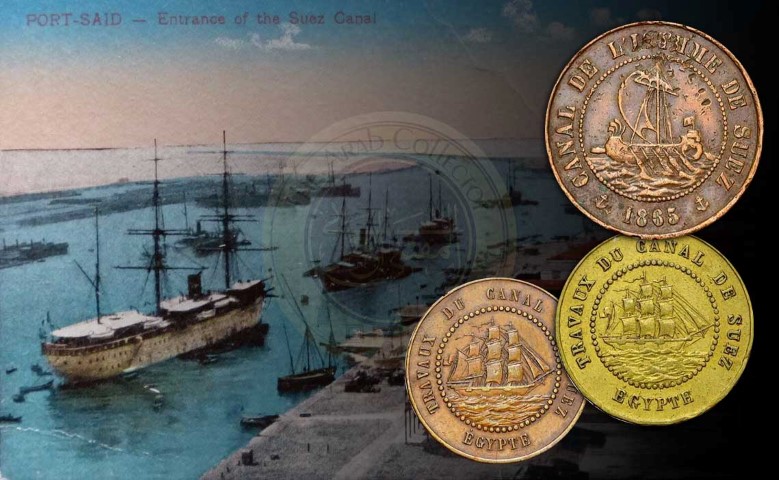
Port Said's currency…the unknown history
Ahmed Abdullah – Researcher in Contemporary Egyptian History
Why was the Suez Canal the reason for issuing Port Said currency? And how is it considered an unknown part of Egyptian history?
Construction of the Suez Canal
Following the decision to begin work on establishing Port Said by the Khedive Said, the governor of Egypt, on Monday, April 25, 1859, and Ferdinand de Lesseps began digging the Suez Canal (1), Egyptians and foreigners alike began to flock to the city. Gradually, this was followed by the announcement of the establishment of branches of some foreign banks, the first of which was the Ottoman Bank, which established a branch in 1863, followed by an English bank in 1876, then the French “Corblat” bank, as well as some branches of the “Anglo-Egyptian” bank in 1881. A Greek national also submitted a request to establish a commercial exchange in the city.
The expansion of foreign commercial activity in the city and the increased influx of foreigners led to a decrease in the prices of foreign currencies traded there, as they were lower than their counterparts in other parts of Egypt. As a result, the Suez Canal Company requested the publication of advertisements with currency prices in Port Said so that transactions between the locals and merchants could be conducted accordingly. The French franc became the most traded currency in the city, which at that time was mostly populated by European nationals. The Egyptian currency was in little circulation. Although the Ministry of Finance set the prices of Egyptian currencies in 1876 for use in all government agencies, financial transactions between the Canal Company and the Port Said Governorate were conducted on the basis of the French franc. The franc was also the currency traded among merchants, and Egyptian currencies such as the Egyptian riyal and others were not accepted by these merchants. As a result, various foreign currencies were traded.
Port Said private currency
In addition to the foreign currencies that were traded in Port Said, the city witnessed the circulation of coins that were minted specifically for circulation in Port Said, which were later called Port Said coins, or Port Said coins. Port Said coins are considered special coins that were minted in France and transported to the city by ships coming from Marseille. They were of different denominations and were equal to one franc, two francs, five francs, half a franc, and a quarter of a franc. The main reason for sending them was to disburse them as salaries to workers in the Suez Canal. They were also traded among merchants in Port Said, as they accepted dealing with them. There are some sources that indicate their circulation and spread in other cities within Egypt, including Cairo, Alexandria, Damietta, and Suez. The same sources confirm that exchange offices were established specifically to convert this currency into ordinary French francs (2).
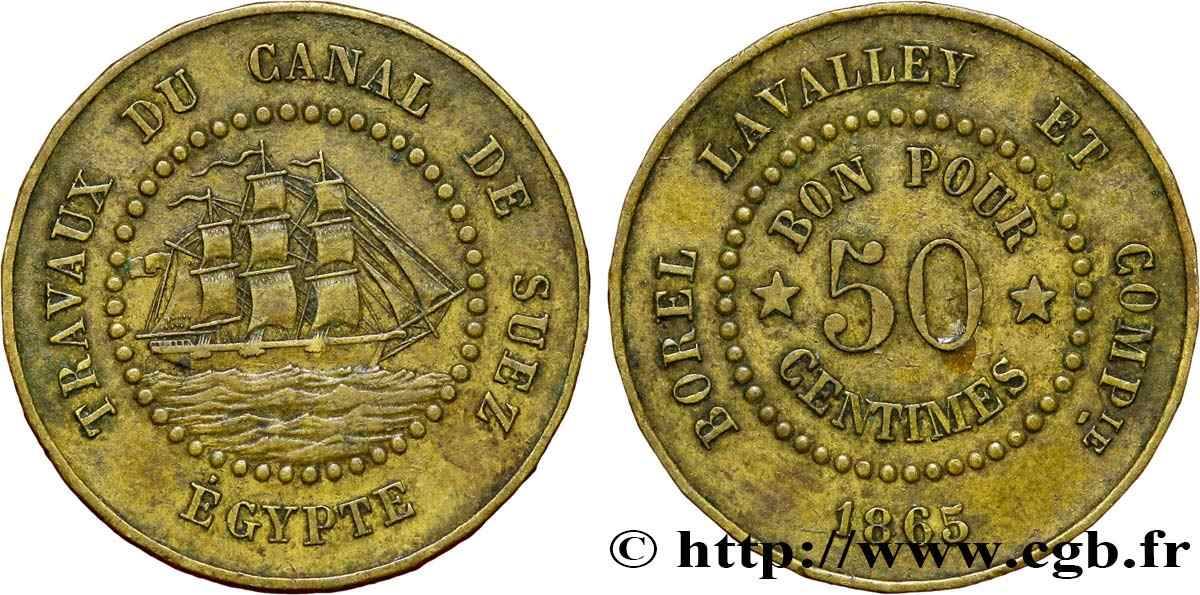
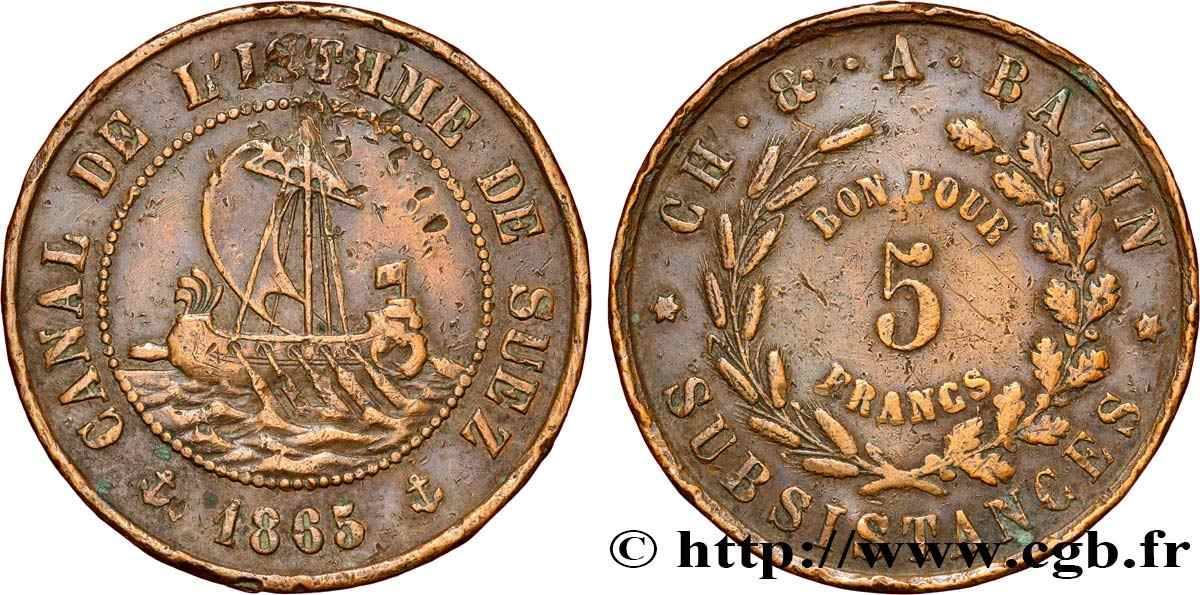
It is worth mentioning that the Port Said coins (Borel Lavalley et Cie) (3), which were minted in France specifically for circulation in Port Said, were in French and did not include any other language. The first side bore the phrase (TRAVAUX DU CANAL DE SUEZ- EGYPTE), while the second side bore the phrase (BOREL LAVALLEY ET COMPIE- FRANC – BON POR1865) - with a change of denomination on the second side of the coin and a fixed image of a ship carrying a sail, as several pieces were circulated, including the denominations: 1 Franc – 2 Franc – 5 Francs – 20 Centimes – 50 Centimes(4).
It is also noted that some foreign currencies were not popular in Port Said, such as Spanish currencies, which were not accepted by foreign merchants and money changers in the city. Khedive Ismail also issued an order to prevent the circulation of the Austrian currency within Egypt, and all authorities were notified of this decision. Port Said was also known for counterfeiting of currencies at that time, and several people were arrested after being accused of counterfeiting Egyptian money, such as the Majidi riyal, where copper was coated with some materials to make it white. Foreign coins were also counterfeited, and foreigners participated in the counterfeiting process, especially Greeks, as well as Austrians, Italians, some Jews who came to the city, Egyptians, and Levantines. The Port Said Governorate worked to collect these currencies and warn the consuls of foreign countries about them in order to warn their citizens about these currencies and to help in controlling them and preventing their circulation (5).
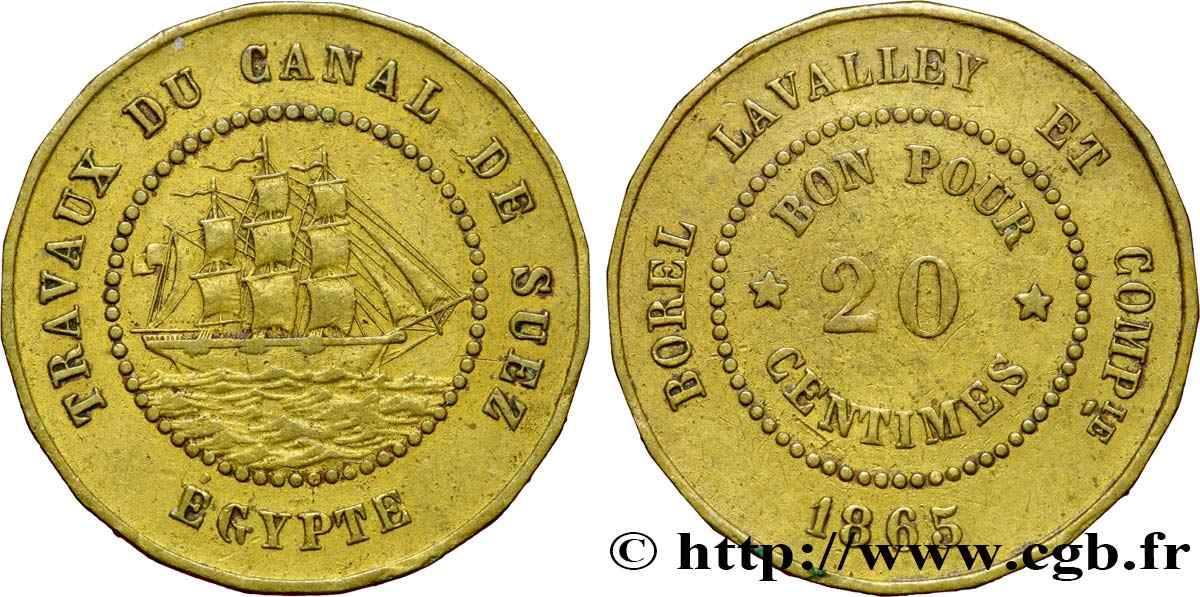
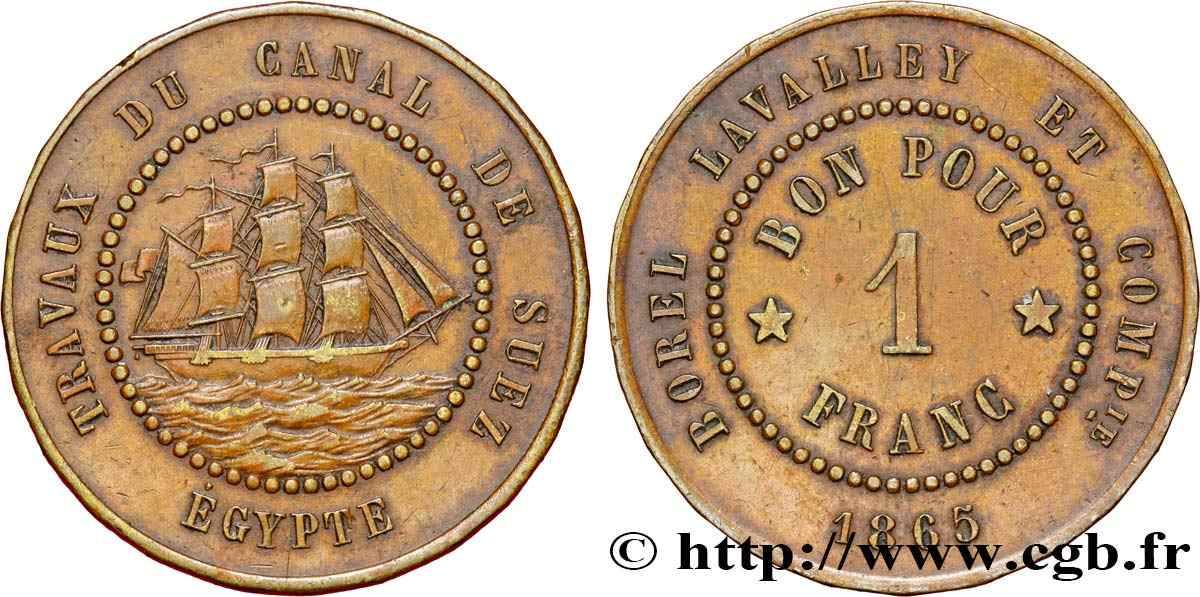
The Port Said coins (Borel Lavalley et Cie) now enjoy international renown among coin and token collectors, especially since some consider them unusual coins minted for limited circulation. Several websites contain detailed information about them, their circulation period, and their specific characteristics, such as the most famous website in the world of numismatic information (en.numista). They are still sold through major international coin auction houses such as (cgbfr) (6), the French website (inumis), and the website (http://coins.ha.com/ ) American, as well as through online selling sites such as eBay and other well-known sites in this field. The price of special coins reaches large sums of money depending on the case, as some of the denominations reach more than 500 euros (7), while some denominations range between 250 and 300 US dollars.
Some international websites warn hobbyists against buying the aforementioned coins before thoroughly examining them and determining whether they are genuine or fake, especially given the mastery of counterfeiting rare coins, including, of course, the (Borel Lavalley et Cie) coins (8).
Finally, the coins that were circulated in Port Said in particular remain an important part of the history of modern Egypt in general and the history of the city of Port Said in particular. They should receive the attention of researchers to learn more details about the reasons for their circulation, the period that the circulation process took, when it stopped, and other details. The relevant authorities in the state should also help researchers in this regard by informing them of the available information and sources related to that period, especially since this matter is of remarkable interest to Western researchers and enthusiasts. Egyptian museums should also work on establishing a special section for these coins and displaying them in a proper manner through which the public can be introduced to an important part of the history of Egypt.
Sources:
(1): The free encyclopedia Wikipedia – The creation of Port Said.
(2): The book Port Said, its history and development from its inception in 1859 until 1882 - Dr. Zain Al-Abidin Shams Al-Din Najm - The Egyptian General Book Authority 1987 AD - pp. 168-170.
(3) : http://www.kiac-usa.com/SuezCanalTokens.html(4) : http://en.numista.com/catalogue/pieces17493.html(5): The book Port Said, its history and development from its inception in 1859 until 1882 - Dr. Zain Al-Abidin Shams Al-Din Najm - The Egyptian General Book Authority 1987 AD - pp. 168-170.
(6) :http://www.cgb.fr/egypte-canal-de-suez-1-franc-borel…(7)
http://www.kiac-usa.com/SuezCanalTokens.html
You can follow similar topics on the Arab Collector website through the Link the next:
https://arabcollector.com/%d8%a7%d9%84%d9%86%d9%82%d9%88%d8%af-%d8%a7%d9%84%d9%81%d8%b1%d9%86%d8%b3%d9%8a%d8%a9-%d8%a7%d9%84%d8%ae%d8%a7%d8%b5%d8%a9-%d8%a8%d9%82%d9%86%d8%a7%d8%a9-%d8%a7%d9%84%d8%b3%d9%88%d9%8a%d8%b3/