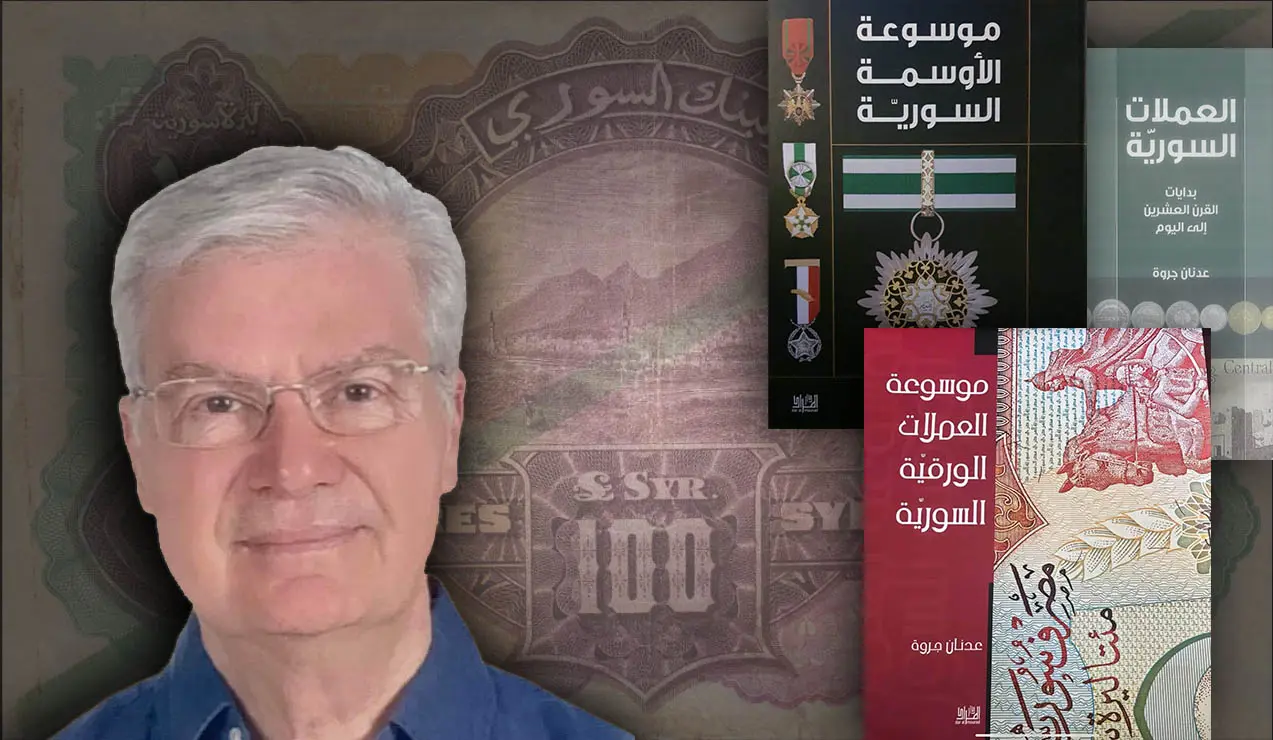
Encyclopedia of Syrian Currencies
The Encyclopedia of Syrian Currencies, specifically paper currency, is an important documentary work that examines banknotes issued in Syria from the beginning of the last century to the present day.
Author's Profile
Name: Adnan Jarwa
(2005) Encyclopedia of Syrian Paper Currency
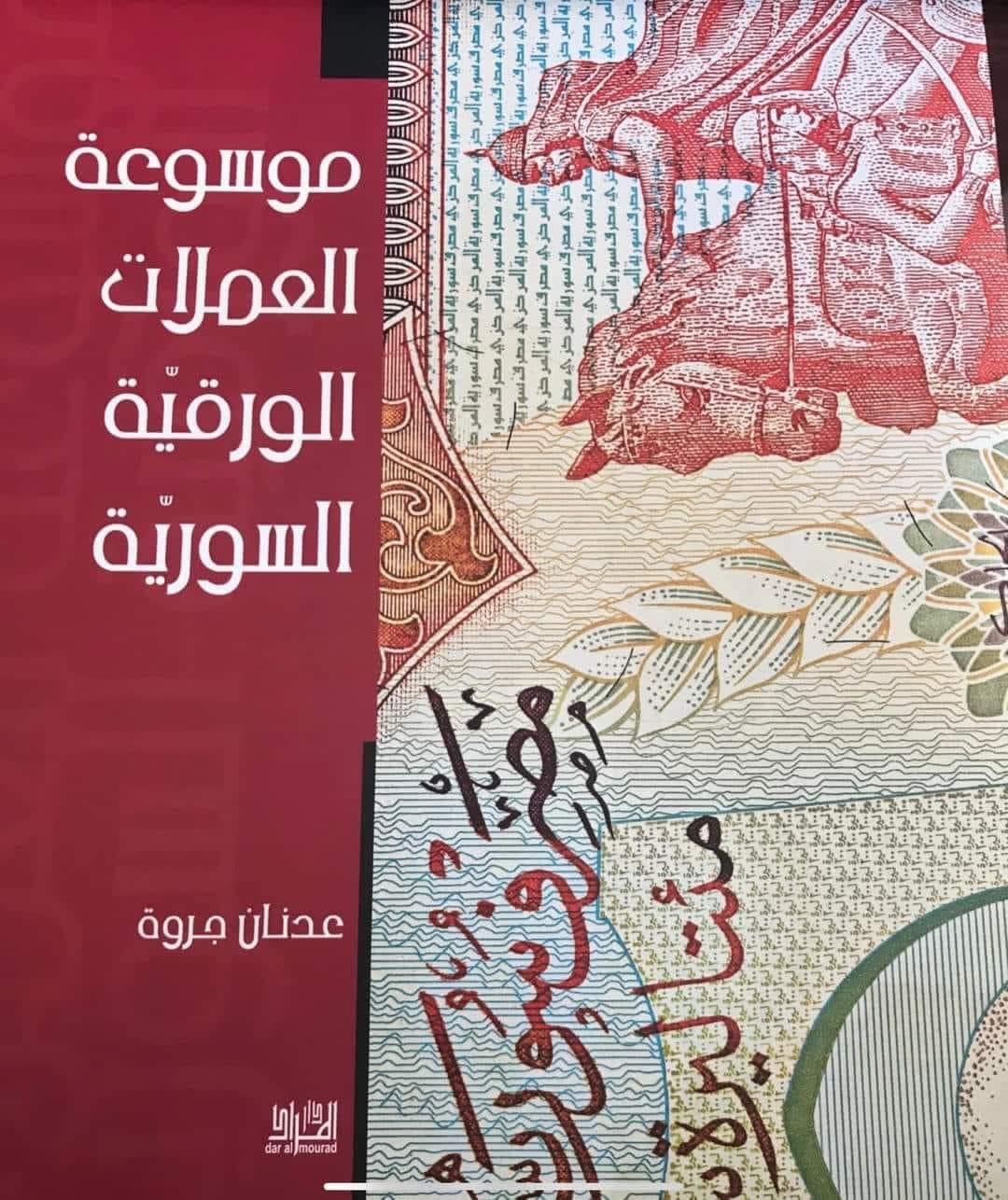
Publisher: Dar Al Murad, 2005, Beirut, Lebanon.
“The economic standing of modern states is determined by the standing of their currency, especially paper currency, as it reflects their cultural identity and artistic heritage, and above all, their awareness of the need to prove their existence in an era of astonishingly rapid developments. This existence is meant to remain untouched and undiminished, just as the currency itself is meant to be.”.
These statements appear in the introduction to researcher Adnan Jarwa's book, "Encyclopedia of Syrian Banknotes," which earned him the International Banknote Association's award for best book on currency and money for 2006. He presented a unique and comprehensive collection of Syrian banknotes of various denominations and issuance dates, arranged chronologically from the early 20th century and the French Mandate period to the modern era of Syria.
The difficulties that Adnan Jarwa faced in finding old and rare banknotes were almost impossible. Likewise, delving into the field of money itself is thorny and complex and requires extensive research in several sources, despite their scarcity, “whether foreign or Arab.”.
Professor Adnan stated, ”This individual project has been the result of eight years of diligent work and strenuous effort, interspersed with periods of difficulty, especially since the failure to store banknotes in good conditions caused them to become distorted and deteriorate significantly.”. Other categories were not available due to the replacement, withdrawal, cancellation, or destruction of paper currency at that time, in accordance with the issuance of decisions to that effect.”
This forced the researcher to stand up to all the challenges by insisting on completing what he had started by launching a campaign of numerous and extensive correspondence and communications and many trips to various countries around the world to visit specialized libraries.
The encyclopedia contains 200 different rare and contemporary banknotes, arranged with their images and information according to their issuance year and denomination. These banknotes represent 49 issues of Syrian paper currency (1919-1998). It also includes a large number of experimental banknotes and international reference models of Syrian banknotes, in addition to historical overviews of the designs and watermarks on the banknotes, dozens of decrees, laws, and resolutions that preceded the currency issues, and various glossaries, tables, and data.
Key chapters of the Encyclopedia of Syrian Paper Currency
Banknotes: Origin and Circulation
Banknotes have undergone various forms and designs in response to significant historical, economic, and political changes. Therefore, documenting these currencies has been instrumental in documenting history at every turn, particularly in the case of Syria, which experienced remarkable phases and transformations throughout the last century.
The purpose of countries issuing paper money is to facilitate and streamline transactions. These banknotes are issued either by government initiatives or through major banks, each issue subject to specific terms and conditions. At first glance, they appear to be nothing more than pieces of paper, inexpensive to print, yet their intrinsic value is significant as they provide countries with a cost-effective means of raising funds and the ability to flexibly increase or decrease their value.
As for the external specifications (aside from the millimeter dimensions), each banknote bears its denomination printed on it, along with a corresponding image in a specific color. The note also includes the year of issue, the issuing authority and location, and the signatures of the issuing officials. In addition, it features a watermark (a design printed on the paper pulp and visible through transparency) and other subtle markings that are invisible to the naked eye and can only be detected by specialists from the issuing authorities. Therefore, the idea of counterfeiting or forging banknotes is virtually impossible, making us appreciate the considerable effort invested in their development.
The history of criticism in Syria
At that time, Syria was part of the Ottoman Empire, and the monetary unit was based on the Ottoman gold, silver, and metal lira, in addition to Ottoman paper money. In 1918, Allied forces occupied Syria, leading to the Egyptian pound replacing Ottoman paper currency for transactions. The British army is there.
Following the placement of Syria and Lebanon under French mandate, the High Commissioner abolished the use of the Egyptian pound and ordered the use of Syrian and Lebanese banknotes, and the Syrian pound became equivalent to 20 French francs.
In 1919 and 1920, the Syrian Bank issued Syrian-Lebanese banknotes in various denominations, which remained in circulation in both Syria and Lebanon until 1924. In 1924, the Syrian Bank's name was changed to the Greater Bank of Syria and Lebanon. The Syrian-Lebanese banknotes continued to circulate until 1939.
In 1939, the name of the "Greater Bank of Syria and Lebanon" was changed to "Bank of Syria and Lebanon," and paper currency was issued that remained in circulation in Syria until 1949, when Syria gained its monetary independence from France, unlike Lebanon. This paper currency continued to circulate until 1964. During the period of independence in Syria, paper currency was issued in small denominations of 5, 10, 25, and 50 piasters. A name “The name ”Syrian Republic” remained in use until 1949.
Central Bank of Syria
Also in 1953 it was decided to establish the Central Bank of Syria, which has the right to issue Syrian currency, appoint the governor and director of the bank, and create a Council for Currency and Credit in cooperation with the National Bank of Belgium with its experts and advisors under the management of the Central Bank of Syria, and to monitor banks and direct their activities to reach their final form.
The first honorary copy of the encyclopedia was presented to His Excellency President Dr. Bashar al-Assad, President of the Syrian Arab Republic. The signing ceremony of the encyclopedia took place on the evening of Friday, December 23, 2005, in the Umayyad Hall at the Shahba al-Sham Hotel in Aleppo.
(2013) Syrian Currencies – Beginning of the 20th Century to the Present Day
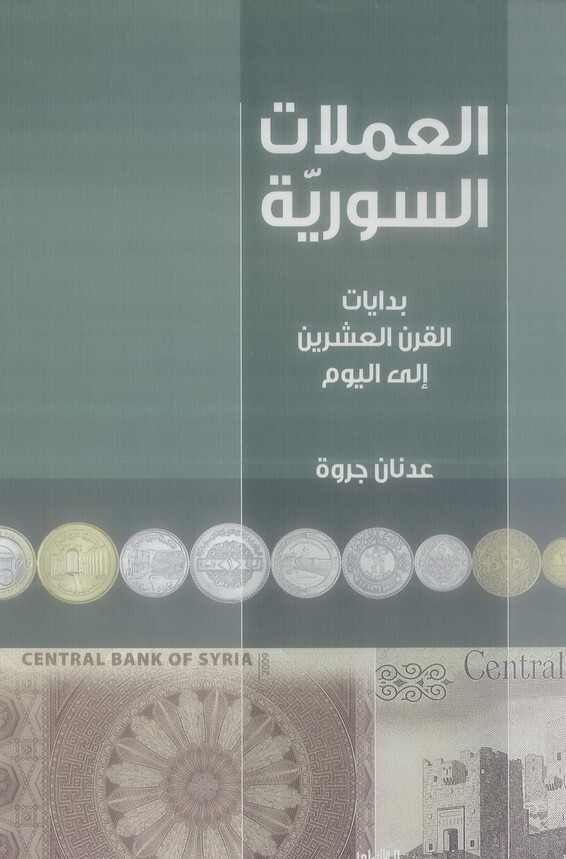
- It contains 210 different banknotes, both old and new, representing the first complete collection of Syrian banknotes, from rare to contemporary. They are arranged by denomination and then by year of issue, with images, information, and what distinguishes each issue from the others. The collection comprises 52 issues of Syrian paper currency (1919–2009).
- It also contains 63 experimental banknotes with their final circulating notes, which are the result of 20 issues or attempted issues.
- 32 global reference models of Syrian banknotes for various old and new issues.
- 38 verified signatures of individuals during whose reign Syrian banknotes were issued, along with their names and positions.
- 12 watermarks visible in the folds of banknotes, arranged according to denominations and years of issue.
- Detailed security guarantees and features for 8 newly circulated banknote categories in Syria, along with their modifications and characteristics (1997-1998-2009).
- The companies that print Syrian banknotes are diverse.
- There are flaws and defects in the printing of a number of banknotes put into circulation.
- 92 metal coins that were put into circulation in Syria from 1920 to 2003 are illustrated and explained according to tables.
- 3 denominations of experimental coins.
- 35 rare symbolic metal pieces used in Syria, of various categories and origins, with an explanation of them and the entity that minted them.
- Dozens of decrees, laws, decisions and indications paved the way for the issuance of Syrian paper and metal currency.
- In addition to lengthy historical introductions, dates of the most important events, explanations of the modest drawings on the coins, and various glossaries, tables, and statistical data.
(2019) Encyclopedia of Syrian Decorations
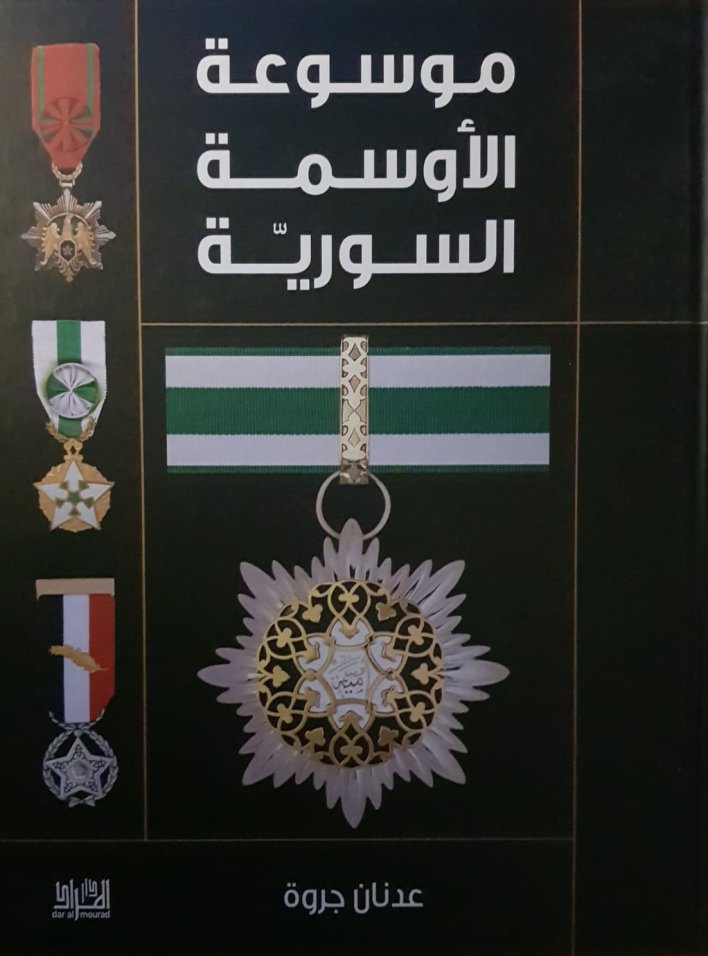
Publisher: Dar Al Murad, 2019, Beirut, Lebanon.
The book contains 241 medals, decorations, and emblems, arranged with their pictures and information about them, and divided according to the countries that participated with Syria in issuing them, and are divided as follows:
126 decorations, 59 medals, 13 badges and 43 emblems.
105 Syrian medals, 26 medals of the United Arab Republic, 16 Syrian Arab medals, 59 medals during the French Mandate period, 25 Syrian-Russian medals and 10 Syrian international medals.
4 scarves, 15 brooches, 70 badges, 32 patents, an administrative order, and a purchase permit.
A historical introduction in which the author talks about decorations in the historical and civilizational stages that Syria has known throughout the ages, up to the classical stage represented by the Greeks, Romans and Byzantines, then the successive Arab stages and the Ottoman era, ending with the modern stage of the Arab Revolt, Faisal’s rule and the French Mandate, then independence with its successive stages, with a touch on the stage of the United Arab Republic and what followed it until today.
4 chapters containing the following topics:
Chapter One:
Common things in decorations, the difference between a decoration and a medal, a glossary of decrees and decisions, the most important terms related to decorations, in addition to the factories that mint them and how to wear them.
Chapter Two:
It includes all medals with their various specifications.
Chapter Three:
It includes a chronological list of medals according to their seniority, ending with a general table of medals with all the information related to them.
The final chapter:
23 terms specific to badges are listed with a detailed explanation and an image for each term.
It also contains 11 models of the Syrian flag from the Ottoman period to the present day.
Sources:
The following individuals contributed to writing parts of this article:
Dr. Robert Salahian (President of the Syrian Philatelic Club in Aleppo)
Mustafa Elias (Group Admin) The good old days for collectors of coins, stamps, documents, and more )
You can follow similar topics on the Arab Collector website. The following link:
Encyclopedia and Catalog of Egyptian Money



 EN
EN  AR
AR