
Slavery in postage stamps
A historical and visual reading of the memory of freedom as documented by stamps around the world
the introduction
The issue of slavery on postage stamps is one of the most compelling examples of the role of mail as a human archive. On the occasion of the International Day of Remembrance of the Victims of Slavery, we explore how these small pieces of paper became documents that chronicle the transatlantic slave trade. Studying slavery on postage stamps is not merely a hobby; it is a journey into the memory of suffering and the path to liberation, a journey immortalized by nations around the world through their official publications.
Coinciding with the International Day of Remembrance of the Victims of Slavery and the Transatlantic Slave Trade, observed annually on March 25, this historical analysis sheds light on the postage stamp as an artistic and human document. The study seeks to examine one of the most impactful issues in human history, where the stamp transcends its traditional function to become a witness preserving the memory of human suffering and, simultaneously, immortalizing the epic struggles for liberation and emancipation waged by peoples.
Slavery has been a profoundly impactful historical phenomenon in the structure of human societies. For centuries, it was intertwined with complex economic, political, and social systems that institutionalized the exploitation of human beings by their fellow human beings. This system reduced human beings to mere instruments of production and commodities traded in markets, making it one of the darkest and most brutal chapters in history. It involved the crushing of individual dignity and inherent rights, leaving deep cultural and psychological scars that have been passed down through generations.
The transatlantic slave trade and the transformations of history
The transatlantic slave trade is considered the most tragic phase that entrenched the modern system of slavery. During this era, millions of Africans were forcibly transported to the Americas in conditions that fell far short of basic human standards. These victims embarked on what became known as the "Middle Journey," a harrowing sea voyage characterized by suffocating overcrowding, severe shortages of food and water, and the spread of deadly epidemics, resulting in the deaths of countless people before they even reached their final destinations.
This period was not merely a human tragedy, but also a cornerstone of the economic transformation of European colonies in the "New World." Major industries such as cotton, sugarcane, and tobacco cultivation arose on the backs of enslaved people, generating immense wealth and economic prosperity for some colonial powers, at the cost of indelible human suffering.
The emergence of liberation and abolitionist movements
With the dawn of human consciousness in Europe and America during the 18th and 19th centuries, social and intellectual movements emerged, calling for an end to the slave trade and the complete abolition of slavery. Humanitarian organizations and religious groups played a crucial role in exposing the dangers of this system and its devastating effects on the social fabric. Literary and intellectual works also contributed to mobilizing global public opinion, placing governments under moral pressure that compelled them to revise their laws concerning slavery.
This intellectual movement paved the way for the issuance of the first legislations that criminalized the slave trade, which were later followed by comprehensive laws aimed at liberating people within countries and their colonies, thus announcing the beginning of a new historical era in the struggle for freedom and justice.
The postage stamp as a historical and human document
Since their introduction in the mid-19th century, postage stamps have transcended their role as mere tokens of payment, evolving into miniature historical documents imbued with political and cultural significance. Stamps have played a prominent role in documenting milestones in the abolition of slavery, honoring national and international figures who spearheaded liberation movements, and capturing pivotal moments in the struggle for dignity.
Many countries have issued special editions commemorating the anniversary of the abolition of slavery and honoring the leaders, thinkers, and activists who changed the course of history through their resilience. These editions often feature highly symbolic visual imagery, such as broken chains, sunrises, and doves of peace—visual metaphors that embody the transition from the darkness of bondage to the light of freedom, and from humiliation to the realm of human dignity.
The history of slavery in world postage stamps
With the dawn of the 20th century, the issue of slavery gained prominence in global cultural and historical discourse. Governments sought to document this era through postage stamps, recognizing them as a widespread and deeply influential means of communication that resonated with the collective memory of nations.
In the United States, prominent stamp issues commemorating the Emancipation Proclamation emerged, such as the 1963 stamp marking its centennial and the 2013 stamp commemorating its 150th anniversary. These issues demonstrated a remarkable evolution in artistic treatment, blending pure historical documentation with modern symbolic style. Similarly, in Europe, particularly in France and Portugal, stamp issues focused on commemorating the end of slavery in their former colonies. The Caribbean remains one of the regions that has most extensively utilized stamps to address this issue, given its deeply intertwined history with the tragedy of the slave trade.

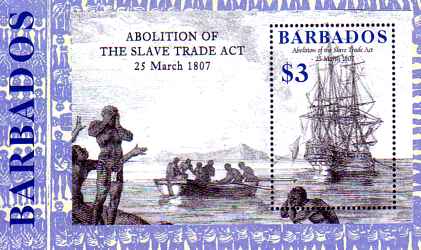
Design language: A reading of colors and symbols
Looking at designs that addressed the theme of slavery, we find that the pattern became a platform for visually charged expression. “Chains” served as a central symbol of confinement and subjugation, while “broken chains” represented the ultimate moment of liberation.
The human face also featured prominently in the designs, with artists focusing on highlighting features that reflect resilience, hope, and the indomitable human spirit. Colors played a dramatic role in enhancing meaning; dark shades were used to depict sadness and suffering, while bright colors prevailed to express the dawn of freedom and the beginning of a new era of equality.
Through this historical overview, we realize that the postage stamp was not merely an administrative tool, but a visual witness to the evolution of human consciousness. These small pieces accompanied societies on their journey from oppression to liberation, making them a unique archive that preserves pivotal events in symbolic forms, easily accessible to future generations.
Conclusion: Lessons for the Future
In conclusion, this study demonstrates that stamps commemorating slavery and its abolition are not merely collector's items, but rather a vibrant visual record that narrates humanity's epic struggle for freedom. They carry messages that transcend borders and time, reminding us that freedom was not a free gift, but the fruit of bitter struggle and immense sacrifice.
Preserving and analyzing these stamps ensures that current and future generations remain connected to this history, to draw inspiration from the values that affirm that human dignity is the supreme and sacred value that must be defended in every era and country.





 EN
EN  AR
AR