Parts of paper currency
Anatomy and components of paper currency: Beyond the design
“Understanding the parts of banknotes is not just superficial knowledge, but the science that helps enthusiasts detect both rare and counterfeit banknotes. Every line, signature, and watermark on a banknote tells a historical and technical story. In this interactive guide, we take you on a journey to dissect a banknote and understand its hidden symbols.”
Anatomy of paper currency: Marks and symbols
Tap the numbered dots to explore the security details.
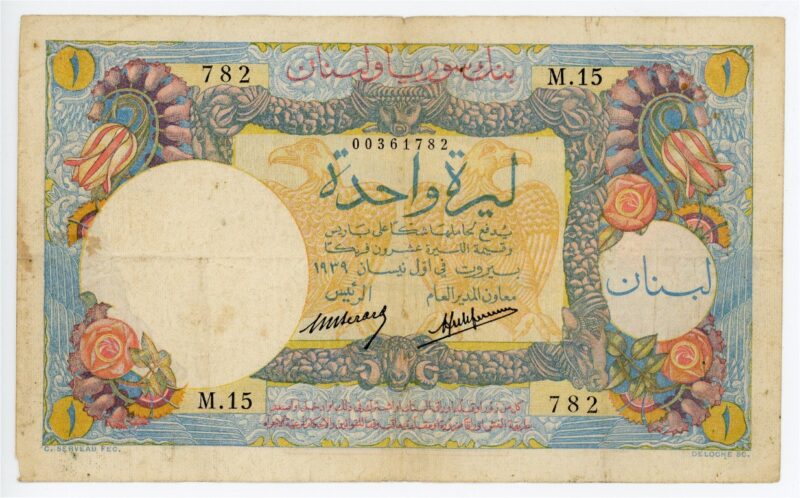
The most important technical components of banknotes
Paper currency consists of a complex blend of art and security engineering, the most prominent of which are:
-
Security Features: These include security threads and watermarks that are made during the paper manufacturing process itself.
-
Signatures: The signature of the central bank governor is what gives the document its legal status, and changing the signature often means a new issue that is of interest to enthusiasts.
-
Currency denomination: It is usually written in numbers and words, and in old Arab currencies it was written in authentic Arabic script.
-
Geometric background: These are the intricate patterns (Guilloche) that protect the paper from scanning and reprinting.
The serial number and signature are considered the most important parts, as they accurately determine the rarity of the paper and its issue date.
It is located in a white area free of dense printing so that it appears clearly when exposed to penetrating light.
It changes with the change of officials at the central bank, and each signature represents a specific time period.
You can identify the unique serial numbers of banknotes through Serial Number Detector
 EN
EN  AR
AR